
























Eric Deaton is a Southern blues musician who has played across the world on many stages with numerous other artists, including The Black Keys. Five years ago, Deaton recorded his first collaboration album with The Black Keys, with their newest album, “Peaches!” releasing May 1, 2026.
“Both records I have done with The Black Keys are covers, so it’s nothing anyone has written for the project,” Deaton said to The Daily Mississippian. “We’re just coming in and doing songs that we all love and, in some cases, have played all our lives.”
Songs on the album include “Where There’s Smoke, There’s Fire,” “Tell Me You Love Me” and the Feb. 6 early-release track “You Got to Lose.”
Originally from North Carolina, Deaton moved to Mississippi 30 years ago to pursue a music career. Early in life, he felt drawn to the blues, eventually realizing that many of the artists he admired traced their roots back to the genre. That discovery deepened his appreciation and ultimately shaped the path he chose to follow.
“Pretty soon, I discovered that there was a really happening blues scene in Mississippi at the time, and a lot of great old guys were still around,” Deaton said.
As he immersed himself in the Mississippi blues scene, Deaton began to use his voice and guitar skills to carve out his own identity within the hill country blues tradition. He spent many nights at the now-closed Junior’s Place in Chulahoma, Miss.
“I started going down to Junior Kimbrough’s juke joint every Sunday night and playing with him and R.L. Burnside,” Deaton said. “That was my higher education, Kimbrough University.”
Moving to Mississippi opened a plethora of opportunities for Deaton, allowing him to root himself in the genre’s traditions and build relationships within the tight-knit blues community.
“Once I moved here, that’s who I sought out, all of the active, living blues men here in the state,” Deaton said. “I really zeroed in on the hill country because I thought that was really the most exciting and powerful stuff that was happening.”
Beyond following the musicians he admired, Deaton found himself sharing stages with them, learning firsthand from the very artists who defined the hill country sound.
“At the age of 18, I started playing with my musical heroes, which was the experience of a lifetime,” Deaton said.
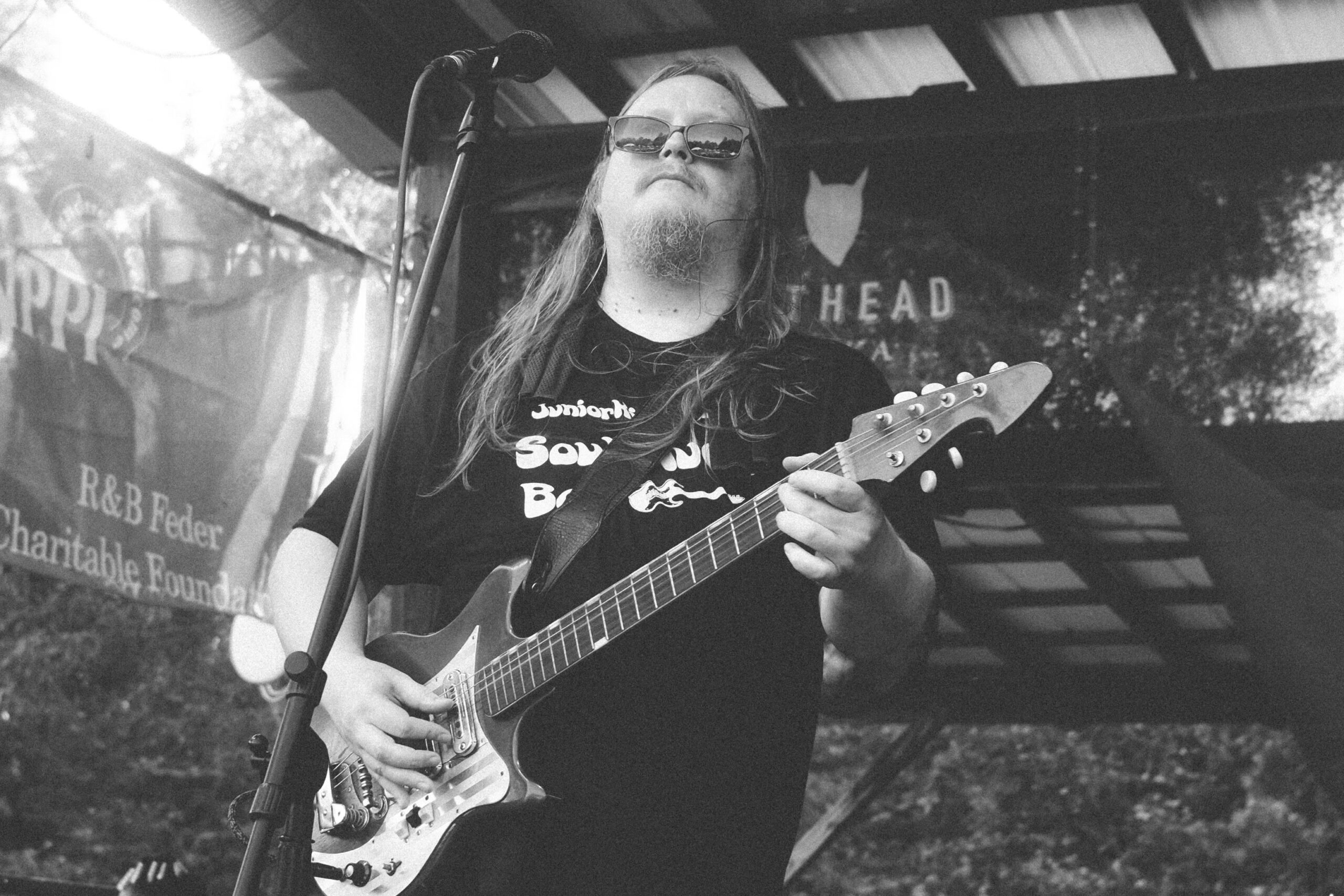
While sharing the stage with blues legends like R.L. Burnside and Junior Kimbrough early in his career was unforgettable, Deaton found that the steady rhythm of nightly performances shaped him most. It was the simple act of showing up, taking in the sound and learning in real time that left a lasting mark.
“Every night was just absolutely the highlight of my life, one of the best things I’ve ever done, just soaking up that music and learning to play it in front of the crowd there, and it was an incredible scene,” Deaton said.
From North Carolina to Mississippi, Deaton was exposed to a variety of blues styles — from the rhythms of hill country to the electric edge of Chicago blues. Those years of working across diverse genres, performing and studying the craft laid the foundation for his own artistic voice.
“I just soaked it all up in my bones for years, so when I do my own original music, it’s always for that deal and that sound in it,” Deaton said. “It all grows and it all comes out of what I soaked up playing those years at Junior’s joint.”
As his career expanded, Deaton had the opportunity to travel internationally. Even while performing overseas and experiencing new cultures, he found that his musical personality remained rooted in Mississippi.
“The further away you get from home, the more of a big deal playing this type of music and being from Mississippi is,” Deaton said. “I’ve gotten to see countries I wouldn’t have seen otherwise, try new types of food and it’s a blast.”
Though his appreciation for Oxford has remained steady, the local music scene has shifted during his time in Mississippi. The steady circuit of venues that once gave musicians consistent opportunities to perform is not what it used to be.
“There used to be a lot more places to play locally,” Deaton said. “I would play locally back in the ’90s and early 2000s. I’d play multiple shows a week, and that’s not really possible anymore. I think as generations have changed, kids have changed, and there’s not the same interest in local music scenes that there was back when I was that age.”
He emphasized that the talent in Oxford has not disappeared, though. Instead, many musicians have had to adapt, pursuing other careers or taking their work on the road to find consistent opportunities.
“There’s still a richness of musicians here in this town, but I think, to some extent, people have gone on to other careers and are just leaving town to do most of their work like I am these days,” Deaton said.
Deaton remains committed to the music that first drew him south three decades ago. Whether performing abroad or closer to home, his foundation in Mississippi blues continues to shape every note he plays.
“Pure love of music is just who I am,” Deaton said. “It’s essentially part of me, and I am part of it, and there’s really no way to get away from it. It’s what I’m immersed in and it’s not going anywhere as long as I’m still here.”