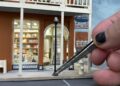





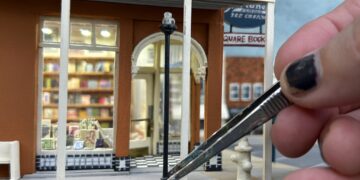


















Lee Harper is a local artist and miniaturist known for her tiny and incredibly detailed dioramas. The miniature objects in her projects, which are typically models of buildings around Oxford, incorporate her deep passion for history into the personality of beloved locations around Oxford.
Through her detailed dioramas, Harper brings familiar Oxford landmarks to life on a much smaller scale, paying close attention to the details that give each place its character. Her work combines artistic skill with storytelling, allowing viewers to recognize meaningful locations through carefully crafted miniature scenes.
Harper’s style reflects a lifelong appreciation for drawing, painting and illustration. Her interest in art began long before she started creating these intricate pieces. As a child, Harper was known for her ability to draw, often creating illustrations for those around her.
“I have forever drawn, illustrated, painted,” Harper said. “Even in third grade, I always had people giving me an order to draw ‘Peanuts’ characters … like Snoopy and Charlie Brown and all those guys.”
Her love of miniatures began when she was raising her son.
“A few years ago, I started doing little scenes for a Halloween shtick for my son,” Harper said. “Then, later, I thought I could do … architectural models, because I’m a huge history nerd.”
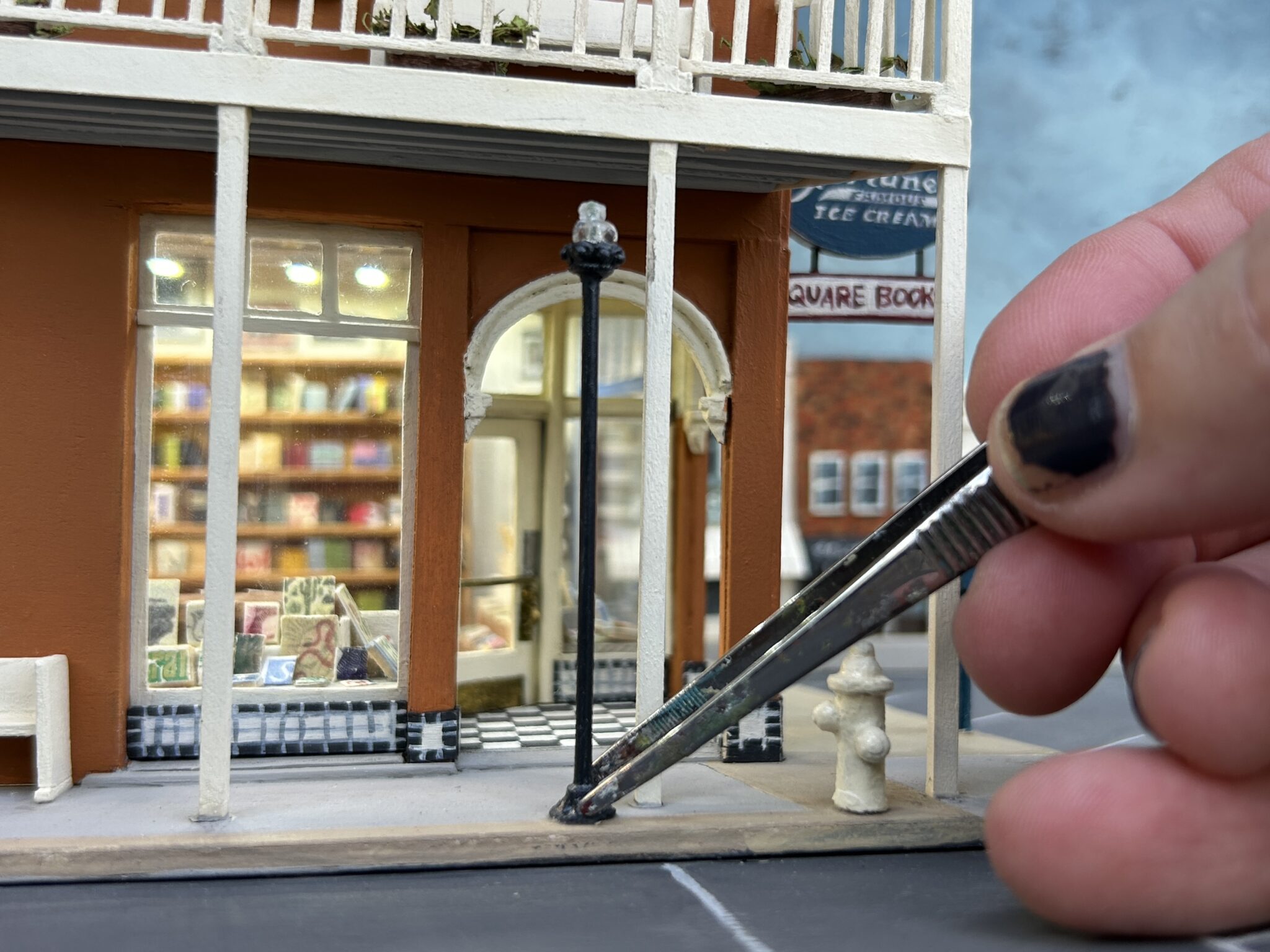
After that realization, it became a passion of hers to create tiny scenes that captured the minute details of each building.
“I’m a very detail-oriented person, and I love noticing little details,” Harper said. “They’re so fun, especially making little details where maybe you didn’t see it the first time. That’s where the stories people tell me come in.”
Harper’s book “Tiny Oxford: Volume 1” is an homage to Oxford in miniature, diorama form. It was her way to keep alive some of the town’s nostalgic landmarks that no longer exist today.
“I made a book called ‘Tiny Oxford’ that had ten places in it (from) old Oxford, only one of which still exists,” Harper said. “It sold hundreds of copies. If you grew up here, or you went to school here, it’s Smitty’s (Café), and Dino’s (Pizza Palace), The Hoka (Theatre).”
Her miniatures always elicit reactions from viewers that mainstream forms of art are unable to, Harper said.
“I’ve painted these places before, but I’ve never gotten the same response,” Harper said. “There’s something about looking at a three-dimensional thing that evokes a different response in people.”
Harper’s work enables her to speak with interesting people and learn about the characteristics that give each place its distinctive history.
“I’ve gotten to meet a lot of really cool, interesting people, and then they tell me neat stories,” Harper said. “It’s just amazing … researching the place, and getting to know the people, and listening to them tell (me) about the place.”

Harper’s process for building her miniatures is thoughtful and requires careful attention. She starts by getting a feel for the structure she plans to replicate, then constructs the exterior with different materials.
“You start with the frame, build all the crude stuff. You get in, start working on the walls, start working on the floors,” Harper said. “Then you start building the furniture. The very last is the most fun, like the drink, the drink napkin, with the little watermark on it.”
Harper believes that her work is not just preserving long-lost (but still-loved) landmarks, but that it is also a way to carry on the stories of people who have died.
“If I had any sense when I was younger, I could have interviewed my grandparents about their interesting stories, and once people are gone, their stories are gone,” Harper said. “Half of what I like to consider that I do is recording stories and history, because that’s what makes the world so interesting.”