























Just as the student newspaper at the University of Mississippi has gone through an evolution in naming, our print advertisements have evolved, too. Advertisements in our newspaper have long reflected changing consumer habits, cultural norms and dominant communication methods.
Cigarettes
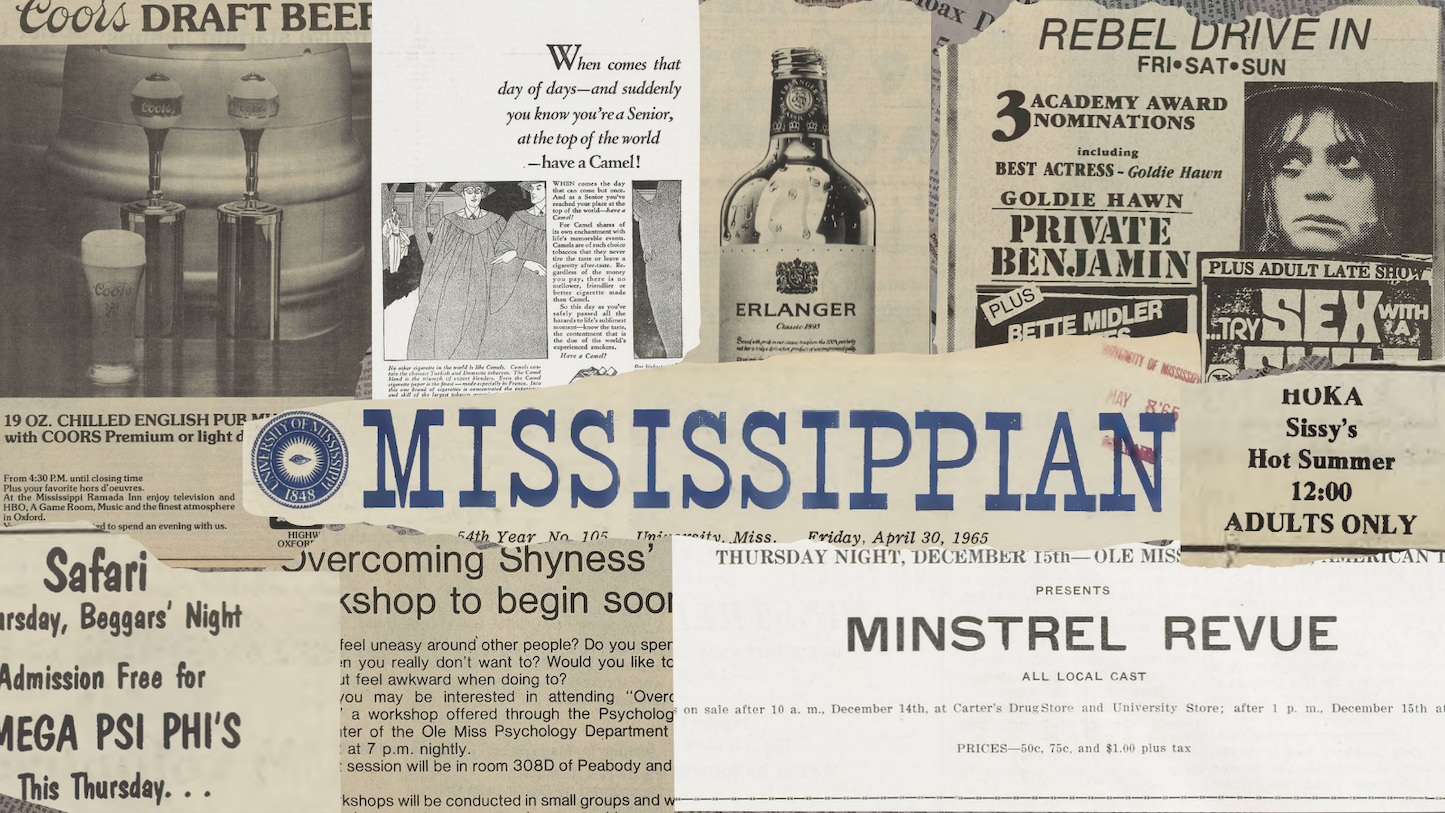
Cigarette advertisements were common in The Daily Mississippian for decades. Ads for brands ranging from Lucky Strikes to Virginia Slims played into scenarios specific to college students. In the May 20, 1926 edition of The Mississippian, an ad for Camel’s Turkish and Domestic blend cigarettes targeted recent graduates of the university.
“When comes that day of days — and suddenly you know you’re a senior at the top of the world — have a Camel!” the ad read.
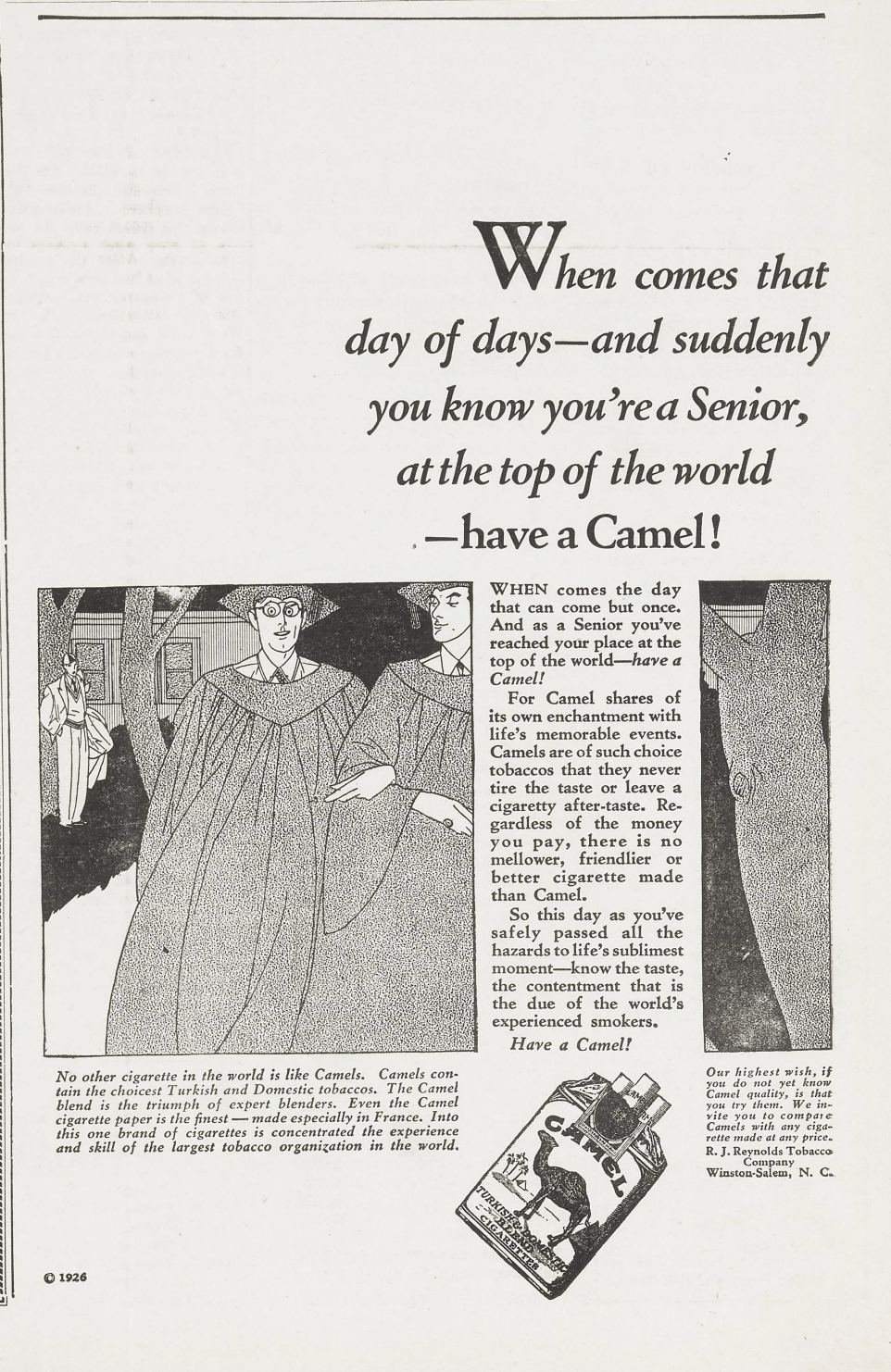
The ad included an illustration of two graduates with linked arms, with another illustration of an open pack of Camel cigarettes. In its May 6, 1955 edition, The Mississippian included ads for Camel, Lucky Strike and Herbert Tareyton cigarettes.
Now, in a generation of college students who grew up learning about the dangers of cigarettes from an early age, the idea of an ad for cigarettes in our student newspaper is almost inconceivable. The modern-day equivalent might be a photo of two recent graduates “double decking” nicotine pouches in an advertisement for Zyns, but don’t get your hopes up.
X-rated films
Despite Mississippi’s historically conservative nature, Oxford used to be home to movie theaters that aired X-rated films. These film screenings were advertised in the newspaper as “adult-only” features.
On the second page of the March 1, 1972 edition of The Daily Mississippian, a quarter-page ad run by The Ritz theater spread the word about “Maid in Sweden,” an X-rated film about the “coming of age” of the 16-year-old female lead, Inga. Even more scandalously, the ad was accompanied by three photos of (what is assumed to be) Inga moaning.
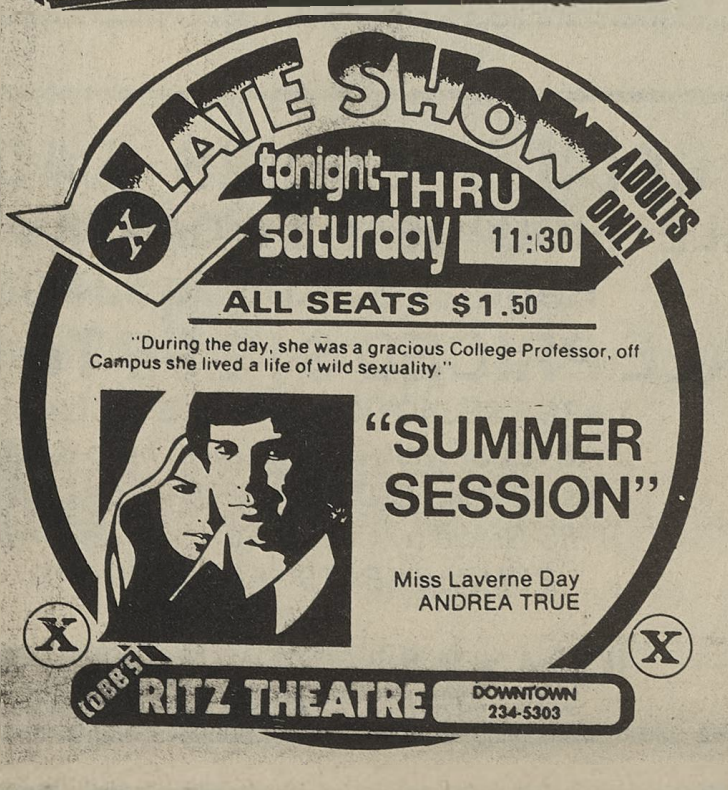
In 1981, the Rebel Drive-In ran a page 2 advertisement for its late-night adult showing of “Sex With a Smile,” a sex comedy film. The Hoka Theatre, an old movie theater known for art house films, also advertised adult-only film screenings during the 1970s and ‘80s. A documentary about The Hoka called “Sorry, We’re Open,” which was directed by Joe York, is available in the university’s Southern Documentary Project archives.
Minstrel performances
The university has a long, complicated legacy when it comes to the treatment of Black Mississippians. Some instances — like the violent riot aimed at preventing the university’s integration in 1962 — are more obvious than others. A lesser-known aspect of the university’s attitudes towards Black citizens is the history of minstrel shows in Oxford.
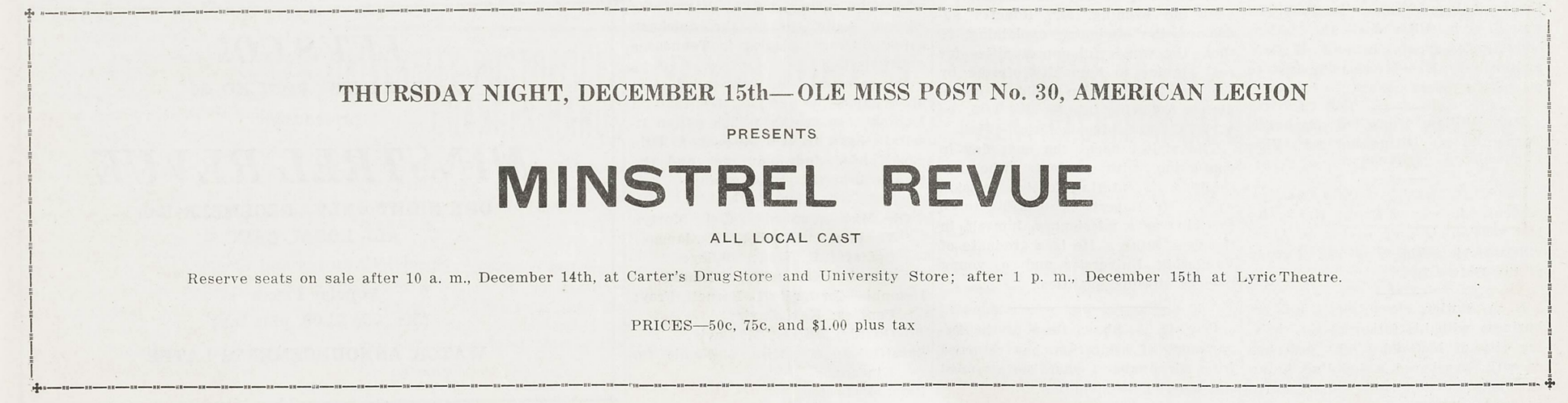
On December 9, 1921, The Mississippian included multiple advertisements and a story about a “minstrel revue” set to take place during the following week. Minstrel shows used white performers to portray racist caricatures mocking Black people. The revue mentioned in the 1921 paper was organized by the local American Legion chapter and was set to take place at The Lyric.
Alcohol
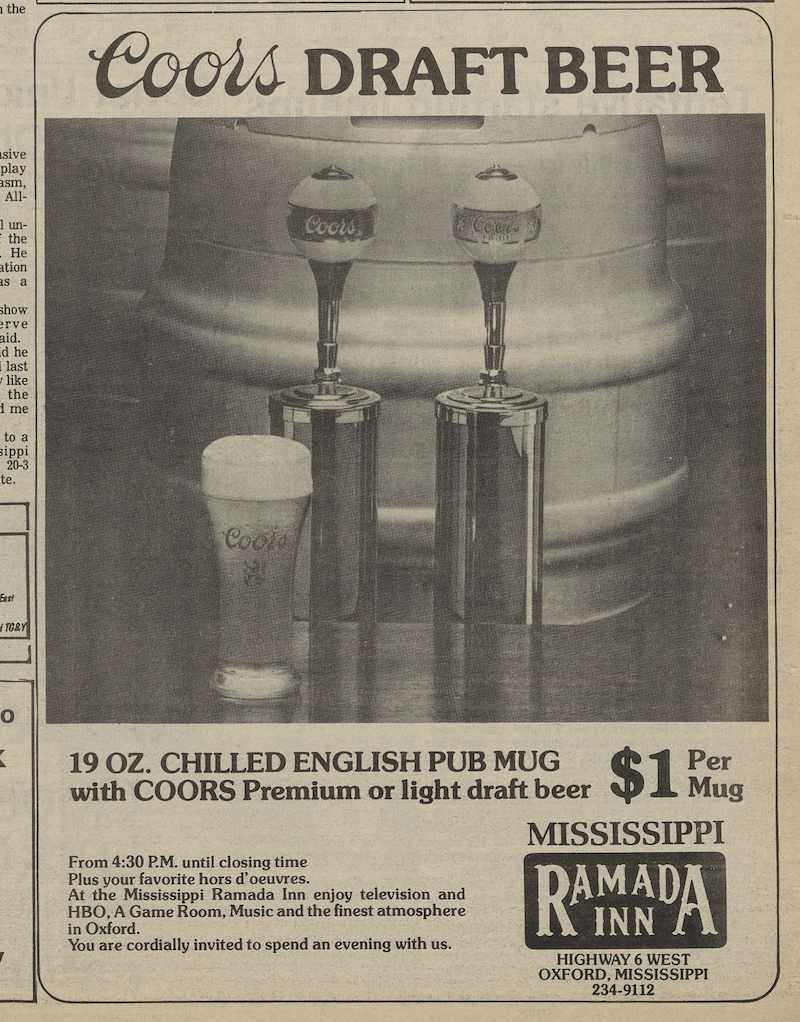
The legal drinking age in Mississippi has not always been 21. Until 1981, almost every student on campus was old enough to enjoy an alcoholic beverage. This, of course, meant ads for alcohol in our newspaper. In The Daily Mississippian’s Sept. 18, 1981 issue, an advertisement for Coors draft beer took up almost half a page. The ad was run by the Ramada Inn of Oxford, which guaranteed a rate of $1 per mug from 4:30 p.m. until closing time.
Shyness workshops
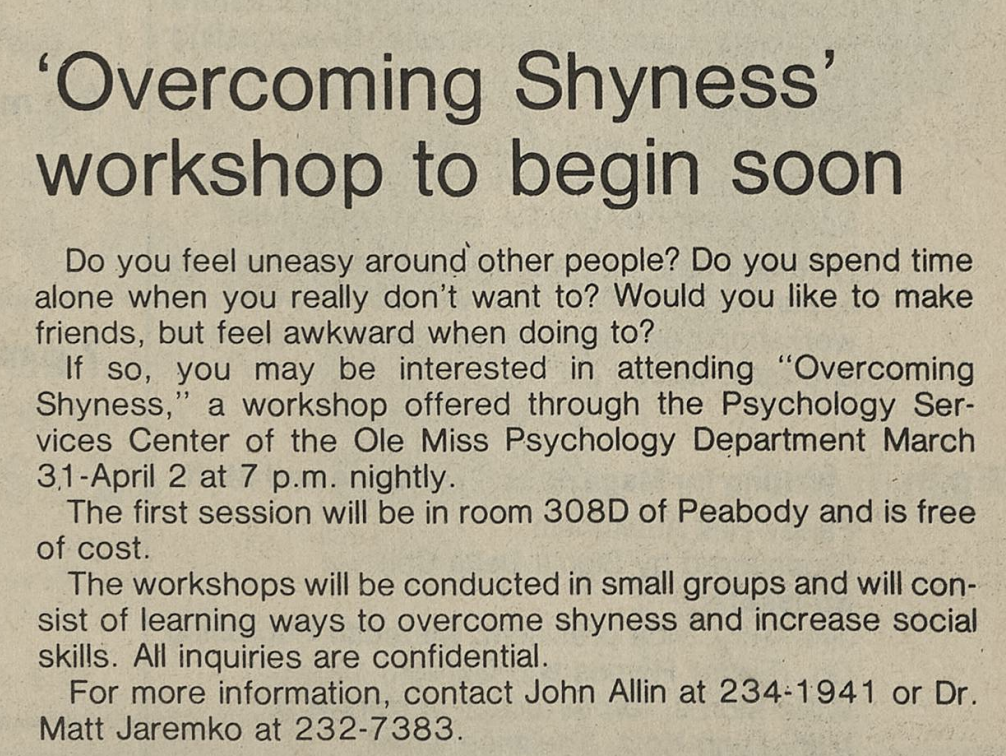
Before we had a better understanding of social struggles such as autism and social anxiety, there was a condition called “shyness.” From March 31 to April 2, 1981, the Ole Miss Psychology Department hosted nightly “shyness workshops.” According to the ad in the March 24 edition of The Daily Mississippian, students could make their way to Peabody Hall at 7 p.m. each night to participate in small-group, confidential sessions to help “overcome shyness and increase social skills.”
While one-on-one counseling services are now readily available to students on campus, perhaps a shyness workshop would do some of us well in an age of digitally driven loneliness.
CIA Recruitment
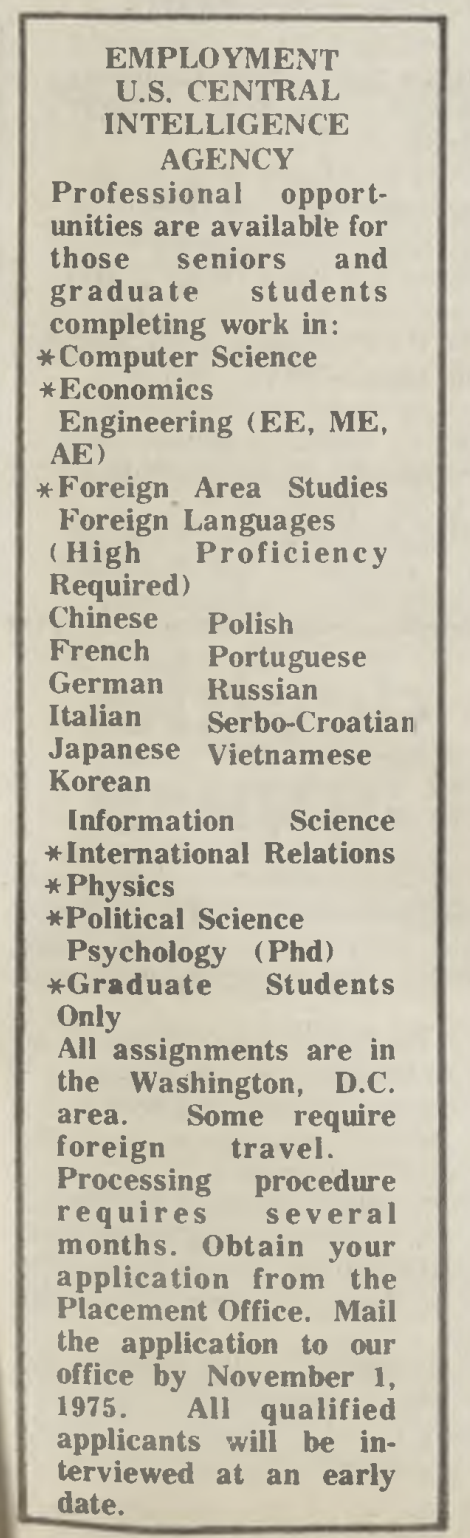
In the Sept. 25, 1975 edition of The Daily Mississippian, an unassuming, text-only advertisement called on students from a variety of fields to apply to the Central Intelligence Agency. From psychology to physics to economics, seniors and graduate students were encouraged to mail in their applications.
Ironically, 1975 was coined “the year of intelligence” due to the executive branch’s extensive inquiry into the intelligence community, which was later referred to as the “Rockefeller Commission.” Later revelations included Operation Mongoose, wherein the CIA committed a string of terrorist attacks against civilians in Cuba.