




















The sequel to the cult classic 1998 film “Practical Magic 2,” directed by Susanne Bier, begs the question, “Why make an original plot when you can rewrite the first one?”
The original “Practical Magic” is full of nostalgic autumn energy, midnight margaritas and generational love curses. The film is fondly remembered for its central message of sisterhood as the women in the movie create bonds with one another, even when those bonds stem from a skeptical, weary place. The original is also praised for the light it shed on domestic abuse.
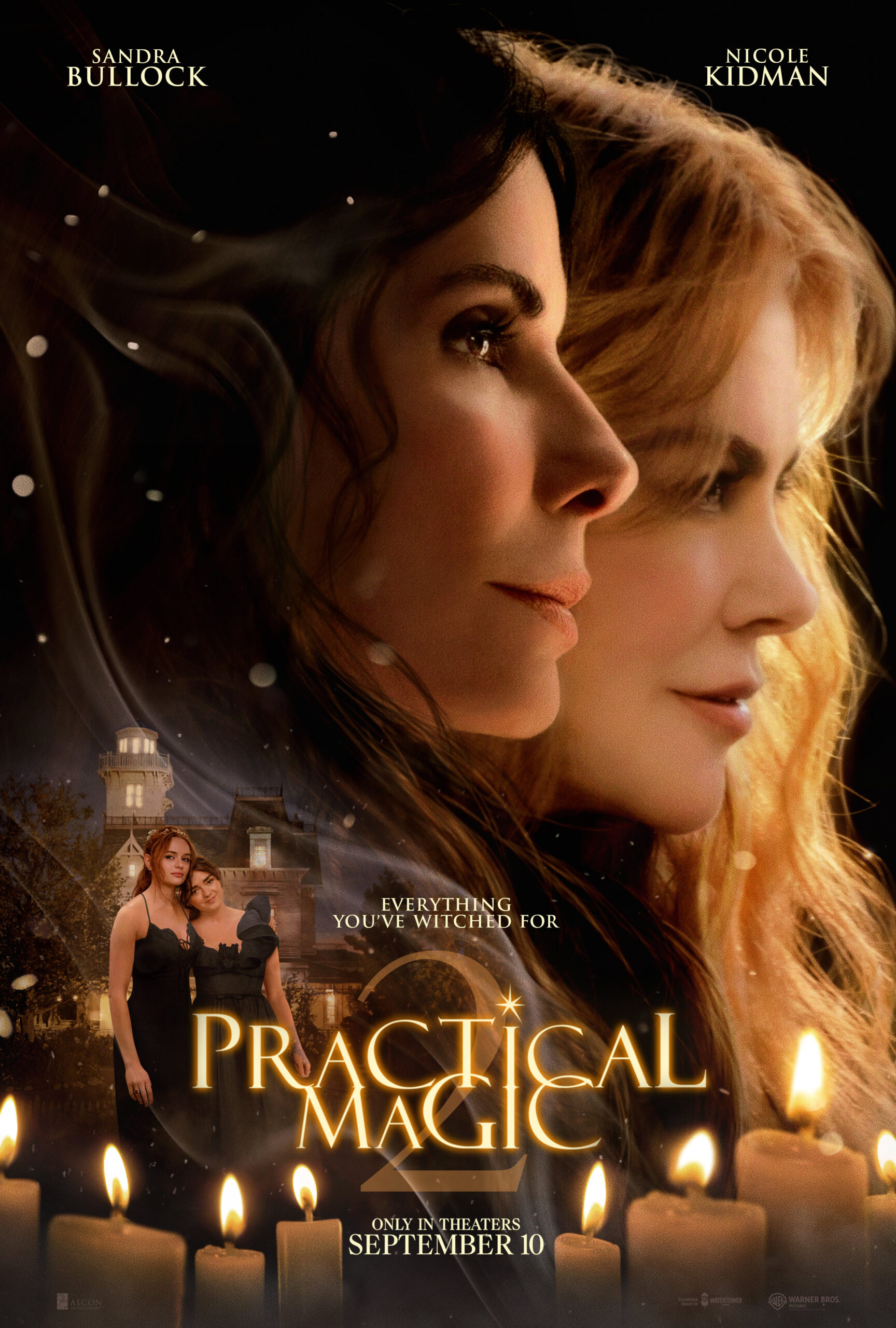
In “Practical Magic 2,” based on Alice Hoffman’s 2021 novel, “The Book of Magic,” sisters Sally Owens (Sandra Bullock) and Gillian Owens (Nicole Kidman) — nicknamed “Gilly” — bring an electric chemistry to their reprisals. The first film’s ending heavily implies that the Owens’ infamous family curse is broken after a community of women comes together to perform a dangerous exorcism. The sequel, however, opens with the revelation that the curse was not, in fact, broken.
Traumatized and shunning magic once again, Sally refuses to tell her 20-something-year-old daughters Kylie (Joey King) and Antonia (Maisie Williams) that they are from a magical family.
Did she not learn from the last movie that that tactic doesn’t end well?
When Kylie’s boyfriend, Gideon (Xolo Maridueña), is seriously injured because of the curse, she travels to England to find a way to break the curse using dark magic that she doesn’t understand, with Sally and Gilly trailing behind, trying to find her.
The movie tries to relate too much to the original. The returning Owens sisters seemingly experience no character development during their 30-year hiatus. Shouldn’t there be at least some growth in these characters in the year 2026? Though it is fun to watch Gilly’s throw-caution-to-the-wind attitude contrast Sally’s tightly wound disposition, it seems unrealistic for the pair to maintain the same attitudes from their 30s. There were many occasions, like Gilly’s multiple attempts to pants Sally, where the humor fell flat.
“Practical Magic 2” is such a letdown because it misses the mark on the two things that made fans fall in love with the first film.
The emphasis on sisterhood and unbreakable bonds between women, witches or not, sets the movie apart from other cult movies at the time, like “The Craft” (1996) or “Hocus Pocus” (1993). While the men in the first movie feel more like accessories, they are more centered in this film, shifting focus away from continuing themes of women uplifting other women.
The choice to keep Kylie’s boyfriend alive in a coma and not have him immediately die — like the many men before him — gives the plot a convenient, yet rushed, deadline to rescue him. His getting hit by a car recalls Sally losing her first husband, who died on the spot after also being struck by a car.
The film’s demand for Sally to have another love interest, Ian Wright (Lee Pace), instead of letting her remain content with her current strong relationships, backfires when considering her late husband, whom she accidentally created as a child by wishing for an impossible man so she wouldn’t fall in love. Having this relationship follow up a meant-to-be romance feels out of place.
The Owens sisters meet Ian, the local witchcraft authority, when traveling to a small English village in search of Kylie. Ian is quickly intrigued by Sally and helps her unblock the power she once renounced. Optimistically, the new couple’s dynamic does have meaningful interactions, with Ian pushing Sally to overcome her fears of her power and loss.
During the film, there is plenty of Sally and Gilly screentime. However, the other pairs of sisters spend most of the 130-minute run time apart.
Even the key supporting roles of Aunt Bridget (Dianne Wiest) — who sets the premise for the movie but dies shortly thereafter — and Aunt Frances (Stockard Channing) were set to the side, seemingly only used for a satisfying conclusion.
Kylie and Antonia are mirror images of a younger Sally and Gilly; Antonia is realistic and responsible while Kylie is impulsive and artistic. It’s especially disappointing when the focus is on Kylie leaving Antonia, the medical student, in a hospital room for the whole movie looking after the boyfriend in a coma. Williams was exciting to see in a major role that wasn’t Arya Stark from HBO’s “Game of Thrones.” The small screen time she shared with King was pleasant, but the pair are separated through most of the film.
In the first film, the cozy, occult vibe radiates off the screen. This was aided by saturated, high-contrast lighting, gorgeously designed sets and great practical effects.
There is a lack of cozy fall tones in this film and, instead, there are vaguely warm tones that are diffused with little contrast. The term “Netflix lighting” is the only appropriate phrase, due to the movie’s constant overhead lights that don’t allow shadows to fill the frame.
“Practical Magic” is renowned for being a starter-pack film to begin fall festivities, but where were the autumnal aesthetics in this sequel? The most it offers audiences is the flannel and Dr. Martens that Kylie wears during most of the movie. On top of this, the witch dreamhouse from the first film was barely present and, when shown, it looked far less lived-in and more “boho-chic.”
“Practical Magic 2” is neither practical nor magical. Gilly grabbing a blunt object during the final battle is about as “practical magic” as it gets. The flashy digital effects of the magic robs the minimalistic subtle previous portrayals, making the scene resemble the conflict of a Marvel movie.
The sequel’s villain, Thomas Lockland (Solly McLeod), is the black sheep of the Owens family who comes out of nowhere. As a byproduct of rape, his line of the family is cut off of from magic by the shared ancestor. Motivated by resentment and a lust for power, Lockland manipulates Kylie into a trap that stole her magic. Ultimately, though, Sally, Gilly and Kylie combine their powers to kill him.
All the effort spent just to reveal the curse’s existence is broken by sacrificing a willing witch, which feels anticlimactic at best. Aunt Frances is a convenient sacrifice who happily joins her sister in death. This serves as a passing-the-torch moment, which signifies that Sally and Gilly were now the family’s co-matriarchs.
The sequel would have been a success if it hit the original’s two key points of the impact to womanhood and the overall aesthetics, grounding the supernatural elements with the warmth of everyday comforts. Instead, it practically diverges from its predecessor. The film is too busy racing through the plot to feel floaty or lighthearted, even given a half hour more run time than the previous film.
No doubt, some audience members will enjoy the sequel both in theaters and later on. After all, the first “Practical Magic” wasn’t initially loved, with critics opposed to the film’s mashup of genres.
However, fans who grew up watching the original will be deeply disappointed in “Practical Magic 2” because it lacks so much of what made the first one special. This is a big problem for a cult-classic film. What is a cult classic without its cult followers?