






























For centuries, we have thought of sex as a sticky subject, stigmatizing its mere mention as a moral perturbation. When mentioned, it is an affair to be discussed within the privacy of a home.
Only in recent decades has American culture broadly begun to explore the necessity of fostering dialogue on sexual education, reproductive healthcare and the principle of consent. I worry, however, that the vast majority of this discourse is occurring far too late.
According to research from Boston University’s School of Public Health, 42 states require students to take one course between kindergarten and high school that contains at least one subject related to sexual education. Only 19 states, however, mandate this instruction be medically accurate — Mississippi is not one of them.
That means that by the time adolescents have undergone formative physical and psychological development and are entering their first years of college, most have had little to no instruction on sexuality. Additionally, what information these students did receive is not guaranteed to be medically accurate.
SIECUS, otherwise known as Sex Ed for Social Change, is a national nonprofit that publishes annual reports on the state of sexual education. For the year 2026, the Magnolia State was awarded an ‘F’ — a harsh rebuke of Mississippi’s archaic sex education curriculum that was mostly written in the 1990s.
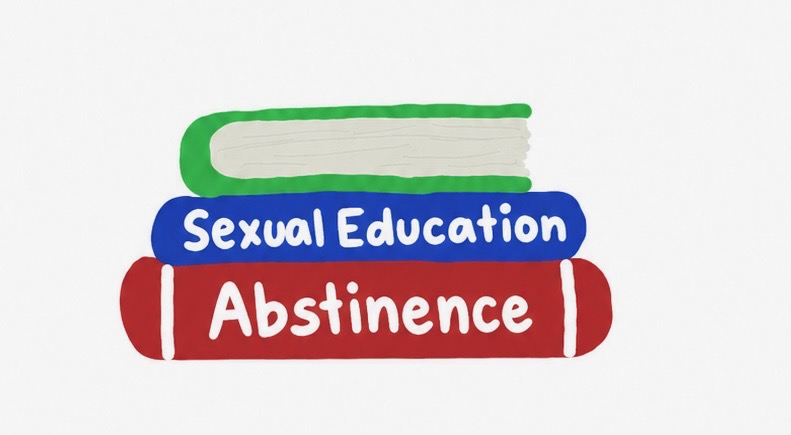
Mississippi teachers are not required to include instruction on consent, or the basic principle of bodily autonomy that is too often ignored in cases of sexual violence. Meanwhile, as delineated by Section 37-13-171 of the Mississippi Code of 1972, school districts are required to adopt “abstinence-only” or “abstinence-plus” education policies.
Telling hormonal teenagers to just “not have sex” might seem to some as the easiest way to go, but empirics prove abstinence instruction just doesn’t work. In fact, Mississippi consistently has the highest teen pregnancy and sexually transmitted disease (STD) rates in the nation.
Despite decades of evidence revealing abstinence-focused education is counterproductive, it remains some of the only information students receive, if at all.
Josh McCawley, a former educator in the Mississippi Delta who now serves as Deputy Director of Teen Health Mississippi (THMS), described the key issue as being beyond merely curricular.
“The Mississippi Department of Education, (which) is responsible for ensuring school districts are in compliance with the law, provides little to no oversight,” McCawley said. “School districts know this.”
The consequences of poor enforcement are far more grave than they appear.
“The vast majority of the districts in the state are either not teaching sex education or, if they are, they’re not doing what’s in compliance with the law,” McCawley said.
Prior to the COVID-19 pandemic, THMS had worked with the Mississippi Department of Health to assist about two dozen school districts in implementing abstinence-plus education curricula, providing free evidence-based curricula, conducting teacher training and helping pass policies that would sustain the program in the long term. McCawley outlines COVID-19 as a downward turning point for sex education instruction.
“Compliance with our state sex education law really dropped after COVID,” McCawley said.
During the pandemic’s devastating two-year interruption of typical classroom practice, nurses and health teachers shifted the majority of their focus from sex education to COVID-19 prevention.
By the time normalcy was restored, the instruction that did exist pre-pandemic never truly resurfaced, a product of administration turnover, faculty burnout and a lack of familiarity with what had been common practice before COVID-19.
Further, in 2023, lawmakers did something unexpected: By passing H.B. 1390, they deleted a repealer clause that compelled the state legislature to reexamine curricula every five years. Now, there is no review to keep an eye on the state sex education law.
“Our sex education is on the books, and it will be on the books forever, despite its flaws, unless the state legislature decides to act on it,” McCawley said.
Distrust of government-enforced education, particularly on issues such as sex education, is exactly why Mississippi has preserved the parental “opt-in” policy — students cannot participate in sex education without explicit parental consent. It might also explain why instruction on the usage and application of condoms and other contraceptives is prohibited in Mississippi.
Therein the uncertainty arises: Can parents really be trusted to provide sufficient information and resources for developing children?
When we confine sex to gender-segregated conversations with overburdened middle school biology teachers, we perpetuate a culture of shame, shunning awareness and preemptively denigrating disclosure.
A 2025 statewide survey from Tulane University’s Newcomb Institute found that sexual violence has affected 41% of Mississippians overall and 10% of Mississippians during childhood. Given the notorious rates of underreporting, we can only assume these numbers are higher.
Most Americans can probably agree that sexual violence is abominable and that we should do whatever we can to prevent it. But, when the opportunity arises, we procrastinate. Sex education is not only a matter of informing our most vulnerable. It is about preventing irreparable harm.
Children and adolescents who feel as if they are able to ask questions without repercussions are far more likely to disclose if they have been abused. Teenagers who have been repeatedly inundated with the necessity of asking for consent from a young age are more likely to respect each other and their future partners.
Stigmatization of sex helps no one and hurts everyone. Mississippi may have some of the worst outcomes when it comes to many issues, but the Magnolia State’s failure at sex education is far from inevitable. The birds and the bees should not be a sticky subject.
Lenora Collier is a junior international studies major from Hattiesburg, Miss.