



























College sports look dramatically different today than they did just six years ago; the landscape of college athletics is now unrecognizable. Here is a throwback to the old days that are not so old.
Name, image and likeness rules officially came to college sports on July 1, 2021. While the on-field product remains as intense and engaging in the NIL era as it always has been, with lawsuits and portal rules, the game looks different now than it did as recently as 2024.
Conference realignment
The SEC looks very similar to how it did before the NIL era. Geographically, all the SEC teams are located in the South, though two are a bit farther west. Texas and Oklahoma were in the Big 12, but they joined the SEC in 2024, three years after they requested to join the conference.
In 2012, Texas A&M and Missouri joined the SEC. They were the first schools the conference added since Arkansas and South Carolina in 1991.
There was a good bit of conference movement in the 2010s. Louisville and Pittsburgh did not join the ACC until 2014 and 2013, respectively. West Virginia joined the Big 12 in 2012. The Mountaineers do not geographically fit in with the Big 12, which hosts mostly teams in the West, but it is a far cry from what fans see today.
Many conferences today, particularly the Big 10 and ACC, have not attempted to maintain any resemblance of geographic purity. Oregon, UCLA, USC and Washington all joined the Big 10 even though most of the conference’s members are located in the Midwest. The ACC, which stands for Atlantic Coast Conference, now hosts California and Stanford, which are notably schools on the West Coast.
Those two teams were in the Pac-12 before it dissolved due to TV broadcasting issues. Since NIL began, the Power Five became the Power Four, but in reality, there are two top power conferences (the SEC and Big 10), two conferences a step down (the ACC and Big 12) and then everybody else. Fans have NIL to thank for that.
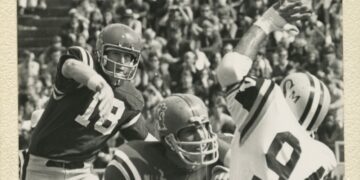
Ole Miss Football before NIL
In 2013, Ole Miss landed its biggest high school recruit ever: Robert Nkemdiche, the No. 1 player out of high school and the all-time highest rated Rebel recruit. Ole Miss also had three players with five stars: Laremy Tunsil, Laquon Treadwell and Tony Conner.
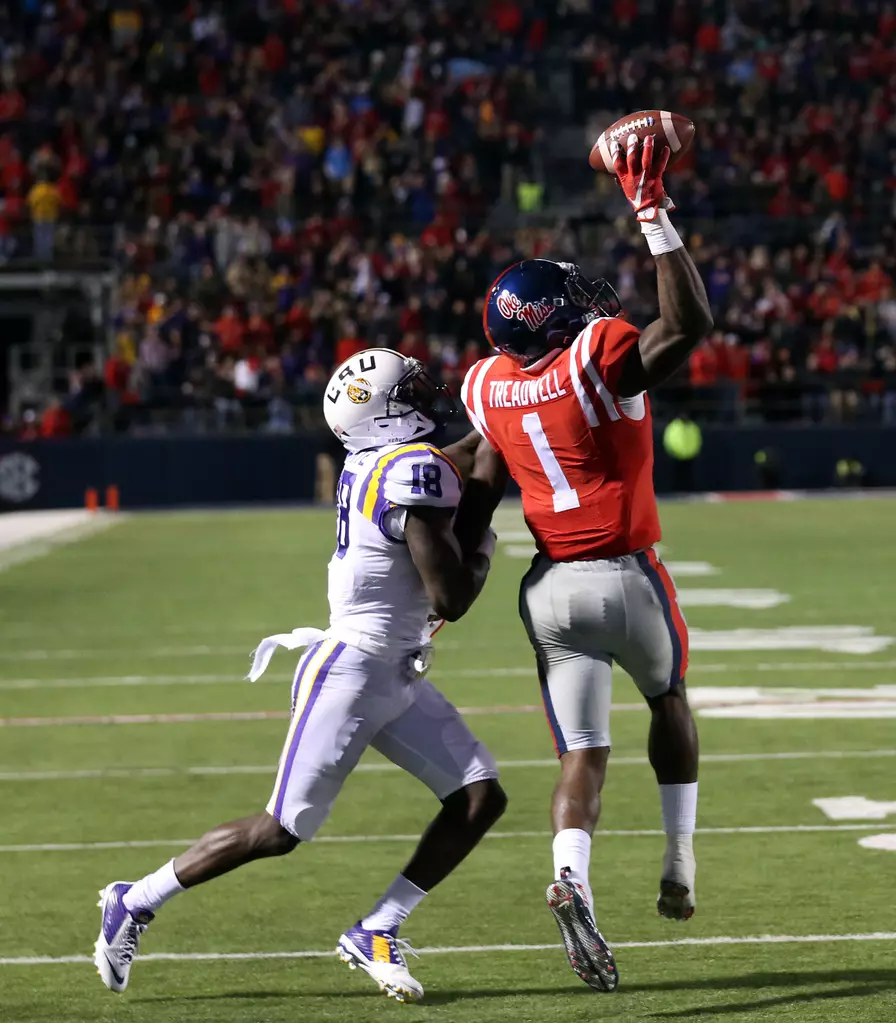
Ole Miss went 8-5 (3-5 SEC) in 2013. 2014 and 2016 were dark years because the Rebels had numerous wins vacated due to NCAA sanctions. Ole Miss Football records remained very poor for several years.
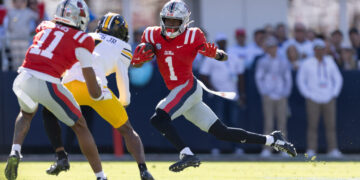
NIL and the portal changed the game for the Rebels. They were able to bring in top talent and reestablish themselves in the SEC. Without those things, Ole Miss would likely remain, at best, a middle-tier SEC team.
The transfer portal actually predates NIL by three years. Before the portal, teams relied heavily on high school recruiting. The better recruiting the program did, the better that program performed. Now, teams are mostly built from the portal.
The transfer portal started in 2018. Back then, it was just a website to ease the transfer process. Football programs could only sign 25 high school recruits or transfers a year — that was, until the NCAA suspended the rule in 2021.
Players used to have to sit out a year after they transferred, making it an undesirable choice. Additionally, coaches were allowed to limit a player’s transfer destinations in order to avoid playing against that player in the future.
Graduate transfers could play right away, while underclassmen had to sit out a year. Players sought waivers in order to play right after transferring. This changed in 2021 when the NCAA gave underclassmen eligibility upon transferring, but underclassmen could only transfer one time until 2024.
Postseason/bowl season
Bowl games used to mean something, but the 12-team College Football Playoff essentially killed that. There are some highly anticipated bowl games, such as the Citrus Bowl, which Michigan and Texas played in last year, or the ReliaQuest Bowl, which hosted Iowa and Vanderbilt. But, for the most part, teams only care about getting into the playoffs, not the Liberty Mutual Music City Bowl or the Pop-Tarts Bowl.
The 12-team CFP is only in its third year, and it may be replaced by a 24-team field as early as the 2027 season, which would really be the dagger for bowl season. Before it was 12 teams, the CFP was originally just four teams.
Mississippi State was the first No. 1 team in the first CFP rankings. Florida State, Auburn and Ole Miss were the other Top 4 ranked teams. Of those four teams, only FSU went on to qualify for the playoffs. Ohio State won the championship that year.
College football’s postseason has taken several forms. Before the CFP, there was the Bowl Championship Series from 1998 to 2013. Six conference champions from the SEC, ACC, Big 10, Pac-12, Big East and Big 12 earned automatic bids to the four prominent bowl games: the Fiesta Bowl, the Sugar Bowl, the Orange Bowl and the Rose Bowl. Two spots were reserved for at-large bids. The No. 1 and No. 2 teams competed for the championship.
The BCS was designed to prevent split titles; however, the AP poll did not always recognize the BCS national champion as the true champion, so it did not always work out that way.
In the 2003 national championship, No. 1 LSU defeated No. 2 Oklahoma, yet AP named the Trojans the national champion. No. 3 USC beat Michigan in the Rose Bowl. That was the last time teams split the title.
For fans, it feels like NIL and the portal feel have been around for many years, but they have been in the game for less than a decade. With federal legislation on the horizon, college sports could look very different in just a few months.