


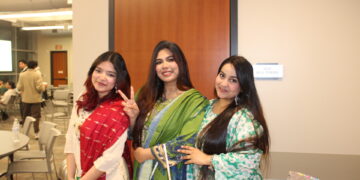



























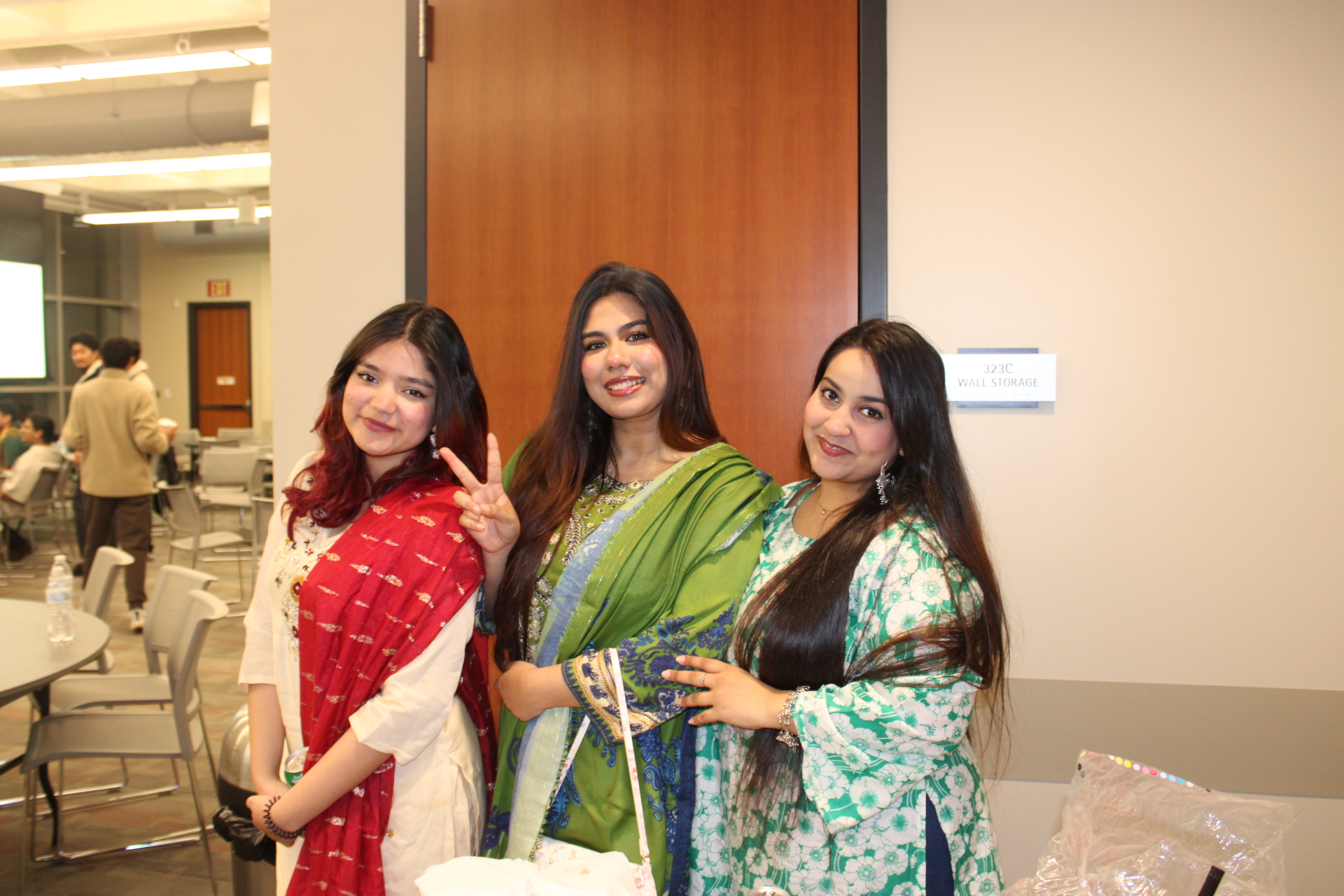
Nepalese Student Association (NEPSA) members and other students came to the Gertrude C. Ford Ole Miss Student Union room 323 to observe the Hindu holiday of Maha Shivaratri on Sunday, Feb. 15.
Maha Shivaratri is celebrated by hundreds of millions of Hindus in Nepal and across the globe. The festival day celebrates the marriage of Shiva, one of the principal deities in Hinduism and the supreme being in the Shaivism tradition, to the goddess Parvati.
“It’s called Shivaratri, which literally means ‘the night of Shiva.’ It means devotees of Shiva fast throughout the night and only eat milk, nuts and water,” NEPSA Vice President of Cultural Affairs and sophomore biomedical engineering major Aarzu Joshi said.
Joshi, originally from Nepalese capital Kathmandu, explained that this fasting was a part of the celebration and drew upon her experiences as a student to make her point.
“Shiva is god, but it literally transcribes to self-reflection. As students, we know how important self-reflection is and (this event) reminds us to take a break in between our busy lives. It’s basically just understanding who we are,” Joshi said.
Achala Gaihre, a public health masters student also from Kathmandu, similarly pointed out the interiority of the celebration while emphasizing the impact that inner feelings can have on others.
“(Lord Shiva’s) one of the greatest deities. We are offering him prayers, meditating,” Gaihre said. “This festival is all about looking into inner peace and finding your spirituality, loving everyone in the world.”
For Gaihre, the celebration is not just a religious one but also one of community. Having come from thousands of miles and continents away, finding something in Oxford that resembles home allows her to find comfort in its reminiscence.
“Once I came to Oxford, I don’t think I’ve missed Nepal so much because we have events going around,” Gaihre said. “I’ve called my friends (back home), and it is most like (a) cultural exchange, and I’ve made more friends. It is more homely and this association connects you to home.”
Utsab Acharya, president of NEPSA, biomedical engineering doctoral student and Kathmandu native, strives to create a sense of home and community for Nepalese students through his leadership.
“For me, it’s to unite all of those Nepalese people who are single, like most of the undergraduates and graduates, who will get a little bit of time outside their student life,” Acharya said. “Then, some meet-and-greets. I know the first and second year will be very difficult when somebody leaves (their) hometown, so I’m just trying to connect with them. I’m just helping and being social for them.”
Part of his efforts is the observance of cultural events.
“(Saturday) … most of the Hindus in Nepal already celebrated (Maha Shivaratri) and we are just resembling that so that we will do some kinds of (cultural activities),” Acharya said.
The NEPSA community is invaluable to Nepalese students like Joshi, who came to Oxford with few connections. She only knew one Nepali family through social media.
“I’m so thankful for (the) Nepalese Student Association, and also I’m very happy that I’m getting to be an executive member,” Joshi said. “First, I joined NEPSA as a membership coordinator, and now I’m the vice president. It has helped me connect with so many Nepalese people, and I did not even know so many Nepalese people are here on campus. … It’s like connecting back home.”
The event’s organizers desired to connect Nepalese students and to promote cultural recognition.
“We have a lot of deities, but we don’t have a position for the specific deity,” Gaihre said. “We believe that every deity is special. We have (a) deity for everything … and there’s (so many) that we never thought of giving it ranks. Everyone is special with special powers and special gifts, right? So every event is important in its own right, has its own story and its own religious beliefs.”
Not only does NEPSA find value in its culture and members, but to Acharya, it also strives to represent Nepalese culture to those outside of it.
“The main intention is I’m trying to show our culture to other diversities so that if you see over here, you can find different cultures, like people from different cultural backgrounds and different nations. I’m just trying to show our culture to them,” Acharya said.
Ultimately, sharing that culture can lead to commonality and even unity.
“We just want to share our views, share our culture and (try) to meet with other people, try to unite all of those,” Acharya said.