
























Since the United States and Israel launched a joint military operation against Iran on Saturday, Feb. 28, Americans nationwide have faced an increase in gas prices. University of Mississippi students and Oxford locals feel the price increases at the pump.
Lafayette County currently averages about $3.89 per gallon of gas, according to an April 15 AAA report. That mark puts the county as one of the highest average gas prices in the state, with a sharp increase of close to a dollar per gallon in the past month.
Nationally, the average gas price stands at about $4.10 per gallon as of April 15, up from the $3.45 national average one month ago. In Mississippi, the average price is $3.74, up from $2.99 in March.
Zach Paul, a freshman accountancy major from Oxford, has dealt with the effects of rising gas costs.
“Thankfully, I was able to fill up before spring break at the normal price, around $50, and I haven’t filled up since,” Paul said. “My friends have told me theirs have been around $90.”
Dylan Jensen, a freshman risk management and insurance major from Satellite Beach, Fla., initially was confused about the rise.
“I keep on waiting for the gas to go down, thinking there would be progress in the conflict, and yet it still keeps on rising and it is very frustrating,” Jensen said.”I hope this is over soon and we can all get back to normal. On a broader level, I am having to plan trips earlier because I expect prices to continue to rise.”
Since the military conflict started, Iran has stopped the flow of goods through the Strait of Hormuz, a major shipping corridor that connects the Persian Gulf to the Arabian Sea.
About 20% of the world’s oil and liquified natural gas passes through the strait. While the U.S. imports only a small fraction of that oil, the block still has implications for domestic gas prices.
This block has caused an increase in international crude oil prices, and U.S. gas prices follow those international price guidelines.
On Feb. 27, prior to Iran blocking the Strait of Hormuz, the global cost of crude oil was about $67 per barrel, according to the website Trading Economics. On April 7, amid threats of military escalation from President Donald Trump, including a TruthSocial post claiming that “a whole civilization will die tonight,” crude oil prices shot to over $112 per barrel.
This volatility and rise in oil prices leads to increased gas prices.
“As someone who does not like filling up gas and watching the money counter go up, it’s pretty frustrating,” Paul said.
A two-week ceasefire was announced between the U.S. and Iran on the evening of April 7. Among the conditions of the deal was that Iran would reopen the strait and grant passage to maritime traffic, projected to lower crude oil prices by about 15% (about $93) as of April 8.
This decrease in oil prices is usually matched by a decrease in gas prices, although the going rate for oil is still over $20 more per barrel compared to pre-conflict pricing. Additionally, it may take months for oil production in the Gulf states to return to normal levels, per reporting from the BBC.
Also feeling the effects were gas station operators in the Oxford area.
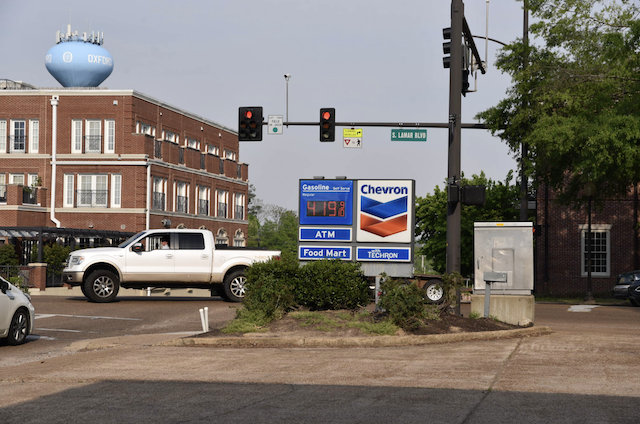
Ray Rupani is the owner of the Chevron on the Square with the renowned “Chicken on a Stick.”
Rupani found that the rise in prices, combined with general price inflation, has led to difficulties for consumers.
“People are having a hard time as it is with inflation,” Rupani said. “With the gas prices going up, it will be less traveling and going out because people need to pay their bills before they go on vacation.”
A decrease in gas prices is welcomed by Rupani.
“As an owner and as a customer, I obviously want prices to go down,” Rupani said.