


























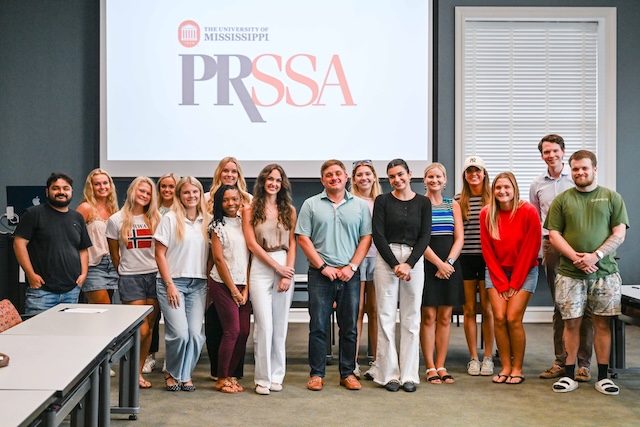
The Public Relations Student Society of America (PRSSA) hosted a panel on ethics in public relations in the Overby Center for its first meeting of the school year on Tuesday, Sept. 8, discussing how to navigate ethical dilemmas in a work environment.
PRSSA is a student organization for those interested in public relations, offering educational and networking opportunities to help members launch their careers.
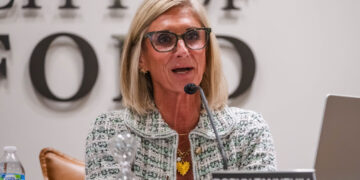
Ashlyn Minga, the first panelist, is a senior bioengineering major from Hattiesburg, Miss. She serves as the Associated Student Body Judicial Chair and is president of Compass, a student organization under the Center for Practical Ethics. Minga prioritizes advocacy when facing ethical responsibilities among students.
“I am the judicial chair (for ASB), so I see a lot of people struggling on campus,” Minga said. “It’s important that when you see someone else struggling, especially if you’re a leader, you speak up for people. In a leadership position like that, you can advocate for people that aren’t doing well.”
Minga’s student leadership roles afford her the opportunity to practice ethics in professional relationships.
“I have a promise to everybody that comes in the office to not spread their information,” Minga said. “I shouldn’t just do that because I’m going to get in trouble, but because it’s a promise to the person and to the people of (the University of Mississippi). You’re upholding confidentiality and the integrity of the person or organization. It’s important to get out honest, truthful information as much as you can. You have to remember that the people you’re dealing with are still real human beings.”
Second panelist Chase Parham, a local journalist for 247Sports and owner of the MPW Digital Podcast Network, said building trust with his audience has been crucial to his career success.
“Truth is what you have,” Parham said. “My constituents, readers and listeners are focused simply on me. The people are your own brand, in a lot of ways. Maintaining who is willing to take anything you say with any sort of value is paramount. That only comes from trust.”
Nathan Oakes, the final panelist, is the director of education and student programs for the Center for Practical Ethics. Oakes believes that when trusted sources make mistakes, honesty and transparency are critical.
“If you explain in straightforward detail what your motivations were when you mess up, that’s something people can get over,” Oakes said. “It shows that you’re capable of being trustworthy and transparent.”
Gabby Franklin is the ethics chair representative for PRSSA. Franklin highlighted that being friendly and respectful to sources is important for cultivating long-term professional relationships.
“When you’re going to people to be your source of stories or quotes, you need to treat them as someone who has value and not just as a pathway to information,” Franklin said.
Ava Martin, an integrated marketing communications major from Grafton, Mass., attended the event and said the panel inspired her and made her feel engaged in the topic of ethics and its real-life applications.
“I really enjoyed the panel because the speakers were informative without making it feel like a lecture, and I appreciated how honest they were when sharing real situations they’ve experienced and how they handled them,” Martin said. “I’m naturally outgoing and enthusiastic, but I feel most confident speaking when I really know what I’m talking about, so seeing how knowledgeable and confident the panelists were was really inspiring.”
The panel also discussed the consequences of breaking ethical codes for both workers and students. Minga said consequences for dishonesty in a workplace environment should focus on the promise of loyalty that was broken.
“That promise is not necessarily about the consequences to yourself, but more about loyalty and fidelity to whoever you’re making a promise with,” Minga said.
Oakes noted that it can be difficult to be forgiving to students whom he catches violating academic integrity standards.
“When students cheat, it can be hard to be gracious, forgiving and understanding,” Oakes said. “At the moment, it feels like a personal offense against me. But sometimes I think it’s appropriate to put effort into helping them not face the full consequences.”
Gretchen Piatt, a junior journalism major from Columbus, Ohio, attended the PRSSA ethics panel. She spoke on what she learned about the relationship between someone’s personal ethics and the work environment.
“One topic I found especially interesting was what to do if your boss asks you to do something unethical, particularly when the job market is challenging,” Piatt said. “The panel also emphasized that if you agree to do something unethical once, you will likely be asked to do it again. This discussion reminded me how important it is to ask thoughtful questions and pay close attention to the workplace culture during an interview.”