



























The University of Mississippi and Oxford communities have seen substantial population growth in recent years, and the need for innovative infrastructure developments has increased alongside it. Roundabouts are one of the many solutions city officials have selected to remedy densely populated roadways.
“We have interstate-level traffic counts on our highways and major thoroughfares across town,” Mayor Robyn Tannehill said in an email to The Daily Mississippian on Aug. 29. “Infrastructure is where we seem to feel the most growing pains both in developing creative solutions and funding those solutions.”
The U.S. Department of Transportation defines a roundabout as “an intersection with a circular configuration that safely and efficiently moves traffic.”
Oxford has 32 roundabouts, including those under construction and those located on campus.
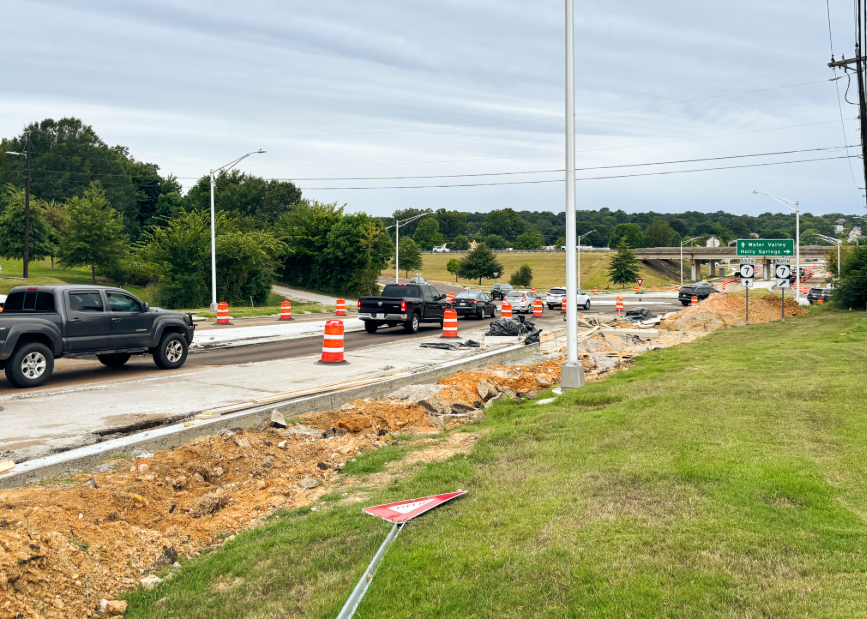
One roundabout in a high-traffic area, University Avenue at Mississippi Highway 7, has been under construction for several months, with a projected completion date in November, according to John Crawley, the city engineer.
Another roundabout project is creating temporary traffic congestion as well. Construction on one roundabout at the intersection of North Lamar Boulevard and Molly Barr Road was scheduled to begin over the summer but did not commence until late August. It is now projected to be completed in December, said Crawley.
Oxonian Anna Wood believes construction of a roundabout in this location was premature and that the construction delay has caused unnecessary increased traffic.
“I know with all of the building and development on this side of town they are expecting a major increase in traffic, as the other four (recently completed) roundabouts on Molly Barr and Highway 30 suggest, but it seems totally unnecessary until there is an actual traffic problem,” Wood said.
Crawley indicated in an email on Aug. 29 that roundabouts are an effective way to manage conflicting traffic, but only in specific cases.
“The primary factor in determining where we place roundabouts is the volume of traffic, specifically conflicting traffic movements such as intersections of two or more major roadways or intersections with multiple points of access,” Crawley said.
The city conducted a case study of one roundabout constructed at South Lamar Boulevard and Mississippi Highway 6 in 2007. By comparing the pre- and post-roundabout conditions, the city found that crashes were reduced by 37.5%, vehicle idle time was reduced by 77% and the roundabout paid for itself in two years.
Insurance claims specialist Mary Beth Mobley believes there are numerous safety benefits that stem from the implementation of roundabouts at intersections including a reduced number of crashes and crashes resulting in serious injury.
“The majority of injuries occur when vehicles collide with each other or other objects (i.e. trees, concrete barriers) at high rates of speed. The way roundabouts are configured, vehicles must slow down when approaching and entering them. Therefore, when there are accidents, the damages aren’t as severe as they would be if someone ran a stop sign or red light at an intersection,” Mobley said in an email on Aug. 28.
The American Society for Civil Engineers reported the Insurance Institute for Highway Safety found there is a 72%-80% decrease in crashes resulting in injuries where intersections have been converted into roundabouts.
A presentation on the U.S. Department of Transportation Federal Highway Administration website points out roundabouts reduce congestion by creating less delay for drivers, due to the continuous flow of traffic.
In an email sent to The Daily Mississippian on Aug. 27, Visit Oxford Executive Director Kinney Ferris insisted that city engineers are aware of Oxford’s busy tourist seasons and do all they can to avoid construction at those times.
Wood also stated that the north side of town, where she resides, was annexed into the city in 2018. Due to new developments, including roundabouts, the north side has still not received city water and sewage services promised to them.
UM criminal justice major Lauren Kirby also expressed dislike for roundabouts in general.
“I feel like the roundabouts here don’t work that well because a lot of people are coming from places that don’t use them, so everyone’s confused,” Kirby said.
In spite of the lengthy construction time, Crawley expects to see the construction of more roundabouts in the future because of their success in reducing traffic congestion on heavily trafficked roadways.
“They can be fairly disruptive to build, as evidenced by the ones under construction now,” Crawley said. “They require a lot more work than just adding a turn lane and a traffic signal. Roundabouts do take some time to get used to, especially if you’ve never been exposed to them.”
Tannehill agrees, emphasizing Oxford’s position as a state leader in infrastructure.
“We like to lead the way in Oxford,” Tannehill said. “We aren’t afraid to try new things and think outside of the box. Roundabouts have been extremely effective in solving some of our traffic woes.”