






























A bill to conduct a clinical trial to study ibogaine, a psychedelic compound derived from the iboga plant of Central Africa as a potential treatment for substance use and mental health disorders, has passed the Mississippi House of Representatives and now awaits a vote by the state senate.
Sponsored by Representative Samuel Creekmore IV, House Bill 314 passed the House on Jan. 21, and passed the senate’s public health and welfare committee on Wednesday, Feb. 27.
The bill aims to form a consortium, a collaborative partnership between researchers and institutions. The bill stipulates that the consortium would consist of a drug developer, an institution of higher learning and a hospital. Consortiums would apply for the opportunity to conduct a drug development clinical trial to the Mississippi Department of Health, with the eventual goal of getting ibogaine approved by the U.S. Food and Drug Administration as a medication.
Some studies have shown that ibogaine may be effective in treating opioid-use disorders, which is especially relevant because many Mississippians have struggled with opioid addiction.
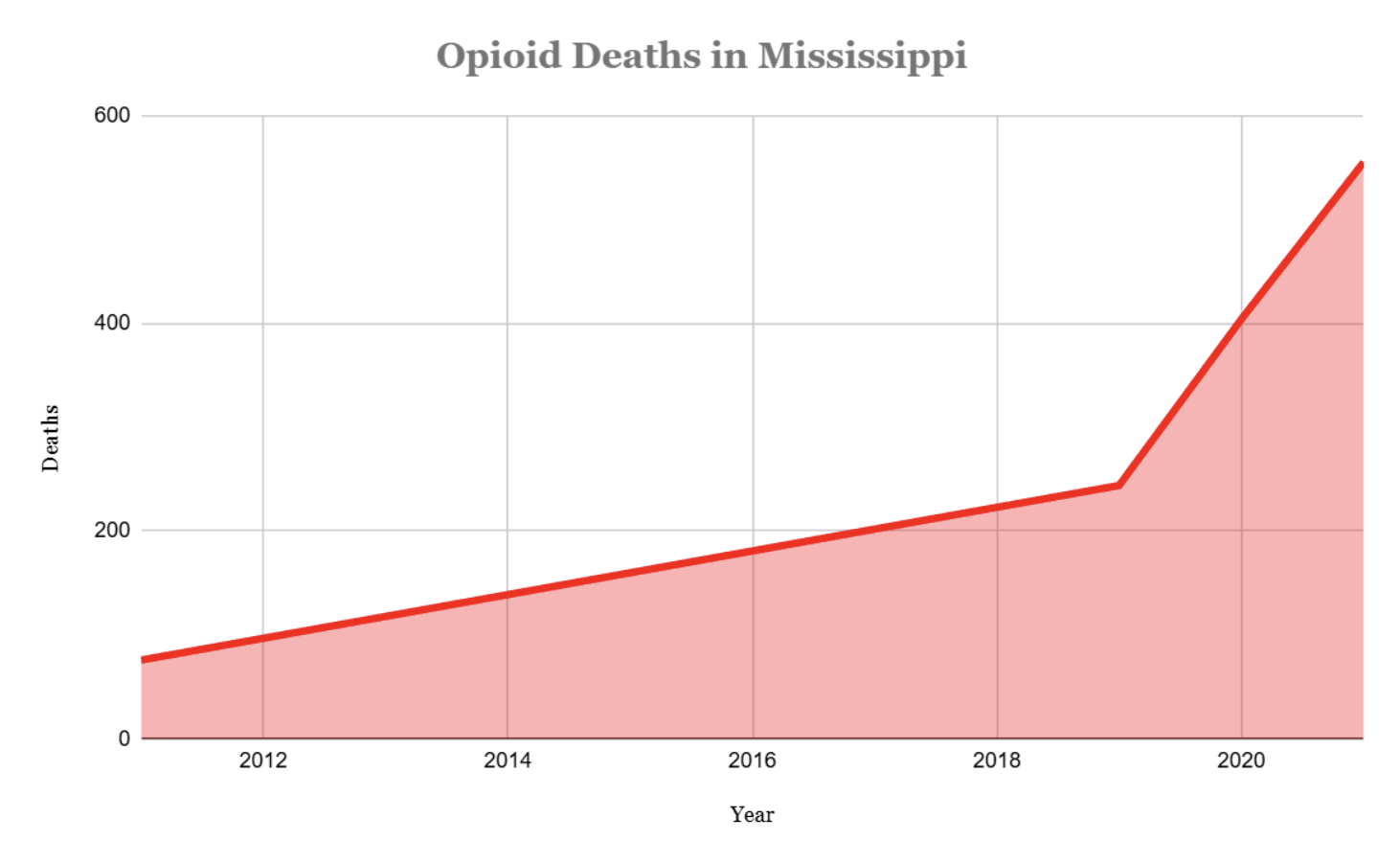
According to a report from the Mississippi State Department of Health, the number of opioid-related deaths in the state more than doubled from 2019 to 2021. A reported 555 people died from opioid overdoses in 2021 alone.
Such statistics have raised alarms for lawmakers like 14th district state representative Creekmore, who represents Union County. Creekmore has pushed for further research into the alternative treatment to treat these forms of addiction.
“It has been used in Africa for hundreds of years for rituals and that kind of thing, but it kind of caught on in the (1960s) for addiction,” Creekmore said. “People struggling with addiction could take ibogaine — not in America, but elsewhere, and it would curb their addiction withdrawals. They would just disappear.”
While allocating money the state has received from lawsuits filed against major opioid producers, Creekmore’s introduction to ibogaine could only be described as a flash of divine inspiration.
“I believe the Lord kind of puts things in front of you at times,” Creekmore said. “I was actually studying the opioid settlement bill, so I had addiction and all that on my mind. … I was working on my bill in this office on a Saturday morning, and my phone dinged. I don’t follow Joe Rogan or anything, but for some reason, there was this podcast that popped on my phone, and I’d never heard of ibogaine, but it was Rick Perry — former governor of Texas — and (an author) named Bryan Hubbard, discussing (it).”
Perry, following his political career, has become one of ibogaine’s top advocates. After undergoing ibogaine therapy at a clinic in Mexico in 2023, Perry has appeared at conferences on psychedelic substances, spoken on radio shows and podcasts and written an editorial published in The Washington Post.
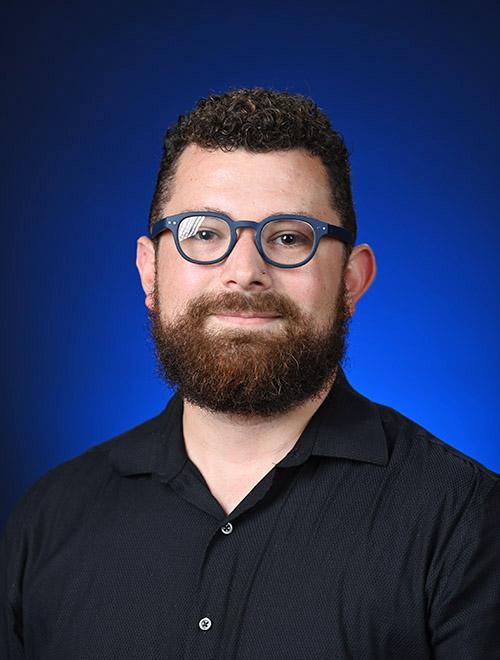
It was Perry’s backing that also inspired Andrew Yockey, assistant professor of public health at the University of Mississippi, to look into the substance.
“What actually got me started in ibogaine was … Rick Perry (helped secure) $50 million (for it),” Yockey said, referring to Texas’ approved research grant for the drug. “I’m like ‘What? I’ve heard of ibogaine, but what actually is it?’ … and there was a ‘60 Minutes’ piece on ibogaine, so I was like, ‘Okay, let me tie the two things together.’”
Yockey went on to research existing literature and studies of the drug’s effectiveness in combating substance use disorders. His article appeared in the Journal of Medicine, Surgery, and Public Health in December.
“It’s really a thought piece,” Yockey said. “The premise is, if you kind of take a step back, severe mental illness is present and there are treatment-resistant depression, anxiety (and) psychosis, and more research definitely needs to look at different types of treatments.”
While negative side effects of ibogaine are evident, such as sometimes fatal disruptions to cardiovascular and neurological processes, Yockey believes positive effects still need to be studied.
“Just looking through the literature, even though ibogaine does have toxic properties — there have been deaths, poisonings. My whole premise is that ibogaine not only needs more funding and more research, but it’s a potential avenue for treatment-resistant psychosis and mental illness,” Yockey said.
Under Creekmore’s proposed plan, more research may soon be on the way in Mississippi. The legislator has proposed dedicating around $5 million, taken from the 15% share of opioid settlement funds that the Mississippi Legislature controls, to research ibogaine.
“My plan for the bill is you apply for (an FDA) trial,” Creekmore said. “Mississippi would partner with Texas and use their application. We would take $5 million from the opioid settlement funds, which 15% goes to the legislature of what’s been coming in … to put toward this endeavor.”
The state would not be the only party putting up funding for the study, Creekmore added.
“As part of the bill, we would choose a pharmaceutical company that provides ibogaine,” Creekmore said. “There’s five or six in the world, they would have to match our $5 million, so we’d have $10 million in the FDA trial.”
Creekmore has been in talks with the University of Mississippi Medical Center to play a role in the trial.
“We would also partner with a hospital or clinic,” Creekmore said. “I would love for it to be UMMC; we’ve had conversations. They would administer the FDA trials, whatever hospital that is. Then, we could start taking applicants, who I predict a lot of them will be veterans, because ibogaine has significant success in curing PTSD, TBI (traumatic brain injury), as well as addiction issues, and a lot of those are hand-in-hand.”
Creekmore’s calls are not unprecedented. In March 2025, Arizona passed House Bill 2871, which allocated $5 million to a clinical trial of ibogaine. In June, Texas passed Senate Bill 2308, dedicating $50 million to study ibogaine.
“I’m hoping we could be number three, which is unusual for Mississippi to be leading the way in something,” Creekmore said. “We’re scheduled to get $400 million from this opioid settlement over the next 15 years, so let’s use it for treatment. Most of that money should go to (conventional treatments), but let’s also look at (ibogaine), where … we’ve got nothing on the market of our conventional ways of treating people right now that are anywhere close to those success rates.”

Studies that corroborate Creekmore’s claims do exist, including a report in the Journal of Psychedelic Studies, which claimed that 80% of test subjects found that “ibogaine eliminated or drastically reduced withdrawal symptoms.”
However, researchers have reported that many of these studies regarding opioid-use disorder treatment have a high risk of bias due to a lack of randomization and lack of blinding in research groups.
For Yockey, the research is still far too hazy to make any call regarding ibogaine’s benefits and not clear enough to support a move from a Schedule I federal classification (a drug with high risk for abuse and no accepted medicinal use), to a Schedule II classification (a drug with a high potential for abuse but with an accepted medicinal use).
“Would I support moving ibogaine from Schedule I to Schedule II? No, not yet. I think as we invest more research, I’d like to see a little more evidence,” Yockey said. “It takes years of research to show that ‘okay, maybe this drug isn’t so bad.’”
Creekmore believes the government has a responsibility to investigate the treatment, especially for the military veterans living in the state.
“We have a moral obligation, in my opinion, to at least study this,” Creekmore said. “It’s a shame that (we have) people who fought to protect this very country and this country’s not looking at options close enough that can heal these people. So that’s what we’re trying to do, give our veterans another option.”
Veterans are diagnosed with opioid-use disorders more frequently than the general population, with one study indicating that around 3% of veteran populations struggle with “problem opioid abuse,” compared to 1% of the general population.
While the effectiveness of ibogaine remains unclear, Mississippi is one senate vote away from becoming a major player in research regarding the psychedelic, hoping to clear the haze surrounding the drug.
“I believe that our government has failed in taking care of our veterans who suffered from many of these issues,” Creekmore said. “They’ve gone through the conventional methods of trying to be treated and have failed. This is another step, another tool that we could use. I think it’s a tremendous way we can help people in our state.”