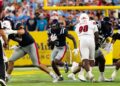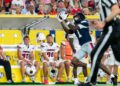









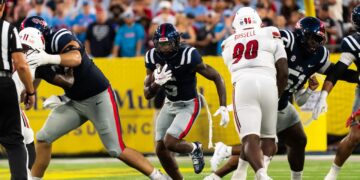
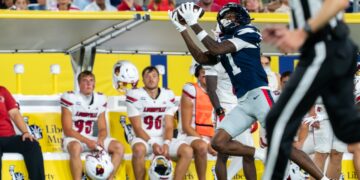
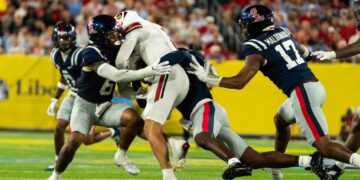




No. 9-seed Ole Miss Baseball is set to begin the 2026 SEC Baseball Tournament on Tuesday, May 19, at 9:30 a.m. against No. 16 Missouri. If they win, the Rebels will play No. 8 Mississippi State and, if they advance again, No. 1 Georgia. SEC Network will broadcast all games leading up to Sunday, then ABC will broadcast the championship.
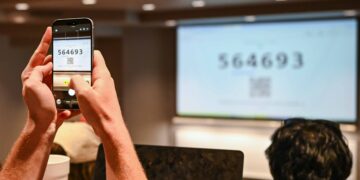
This year’s tournament will feature the Automated Ball-Strike (ABS) System, meaning that batters, pitchers and catchers from each team will be allowed to challenge ball-strike calls made by umpires. Each team will start the game with three challenges.
For the Rebels, this tournament could be the deciding factor in hosting a regional in the NCAA Tournament.
While anything can happen, last-seed Missouri is the clear underdog in the first round. The Tigers were 6-24 in SEC play this year.
After Missouri, the Rebels will face a gauntlet. They were swept by Mississippi State at home earlier this season and lost a midweek game to the Bulldogs. Georgia also defeated the Rebels at Swayze Field twice.
To save the usual weekend starters for the later in the tournament, head coach Mike Bianco will pitch Wil Libbert against the Tigers.
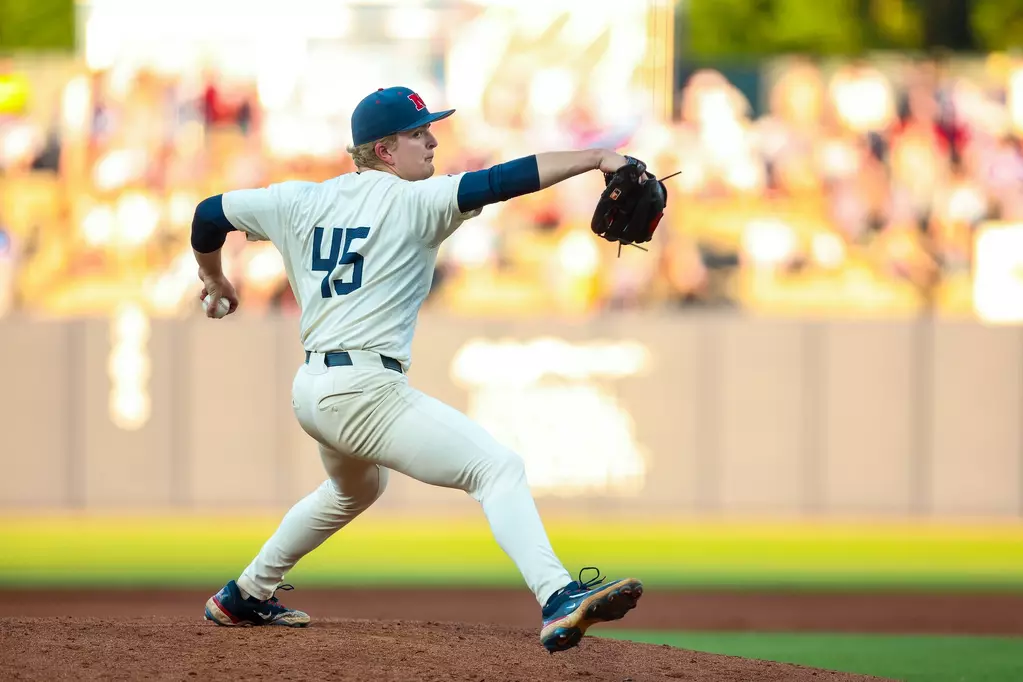
Libbert, in his first season with the Rebels after transferring from Missouri, began the season as a starter but was later moved to the bullpen.
He started last week’s midweek game against UT Martin on Tuesday, May 12. In three innings, Libbert allowed one unearned run, walked one batter and struck out three. The Rebel coaching staff already sees Libbert as the team’s fourth starter, pitching coach Joel Mangrum said in an interview with The Daily Mississippian after the game.
“If we started (the postseason) today, he’s probably our fourth starter,” Mangrum said. “Obviously, we’ve got three really really good ones in Hunter (Elliott) and Cade (Townsend) and Taylor (Rabe).
Mangrum noted that Libbert could come out of the bullpen in the postseason. He also discussed Libbert’s increased velocity and how that has affected his season.
“Obviously, he’s made a massive jump in velocity,” Mangrum said. “I know a lot of people are probably frustrated with some of the hits and contact, but he averaged 92 (miles per hour) last year, and he’s averaging 96 this year. That’s a different set of mechanics, so it takes time.”
After pulling Libbert against UT Martin, Bianco turned to Owen Kelly. Kelly pitched two innings, allowing one unearned run and striking out four.
Libbert and Kelly could piggyback off one another to begin the tournament.
The ABS experiment will allow batters, pitchers and catchers to challenge ball-strike calls made by umpires. The NCAA has not used ABS before; MLB, however, has used ABS in the 2026 season.
This experimental system creates a 19-inch strike zone, which equals the width of home plate plus the 1-inch black border on each side. The zone adjusts to the height of the hitter. Its upper boundary will be 58% of the batter’s standing height, and its lower boundary will be 23% of the standing batter’s height.
The MLB strike zone is 17 inches wide — 53.5% of the batter’s height at the top and 27% at the bottom.
A batter, pitcher or catcher will have approximately 2-3 seconds to challenge a pitch. The result will be displayed on the jumbotron — a rectangular strike zone will be shown, along with where the ball crossed home plate in relation to the strike zone. This will prove whether the pitch was a strike or ball.
Both teams have three challenges per game, one more than in the MLB. Successfully using a challenge will allow the team to retain it. If the challenge is unsuccessful, the team will not retain it.
How players use this system will be interesting, since it was not used during the regular season. Players may utilize challenges in swing counts like 1-1, or save them for late-game scenarios.