














Many years before the Grove became a sea of red and blue tents and elaborate buffet spreads, fall Saturdays in Oxford looked considerably different.
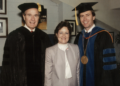
Thomas J. “Sparky” Reardon, a 1972 Ole Miss alum and the dean of students from 2000 to 2014, has witnessed many variations of tailgating in the Grove. During his own undergraduate years, the Grove functioned as a casual gathering place before games.
“The Grove wasn’t really a big deal when I was in school,” Reardon said. “You felt like you had to go to meet your parents.”
Back then, the majority of the Rebels’ biggest football games were played in Jackson, Miss., rather than Oxford. The Grove offered a quieter experience and smaller crowd than it does today.
“The atmosphere was very laid-back,” Reardon said. “(There were) cars in the Grove, mostly families and hometown groups. There were no tents or rush to claim a spot.”
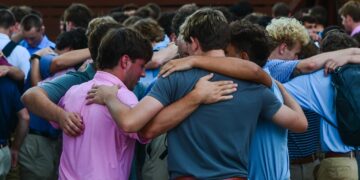
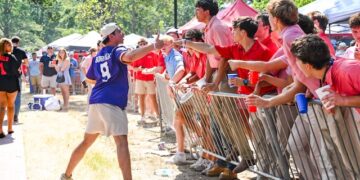
Today, on a typical game day morning, the Grove is a frantic jumble of students and fans hauling in supplies. The Grove atmosphere in the 1970s was more relaxed. Instead of waking up early, fans could drive their cars directly into the Grove and gather with family and friends. There were none of the elaborate tent setups that characterize the Grove today.

Food was simpler, too. Fried chicken, pimento cheese sandwiches and classic Southern barbecue were staples of traditional Ole Miss tailgates in the 1970s.
Although tailgating was considerably less extravagant than it is today, one game day tradition that holds true to this day is the attire. Even in the 1970s, fans took dressing up for game days seriously.
“Girls and guys both dressed up,” Reardon said. “Most guys — even (active fraternity members) — wore coats and ties to the games.”
Today, fraternities do most of their tailgating in tents in the Grove, but back then, Greek life functions took place primarily at fraternity houses.
Fraternities hosted brunches before games, receptions after games and parties on Friday and Saturday nights. Rather than gathering in the Grove, many students spent their game day weekends at fraternity houses.
“We didn’t have any night games,” Reardon said. “There was much more activity at the fraternity houses, where they had brunches and receptions after the game. The Square had nothing.”
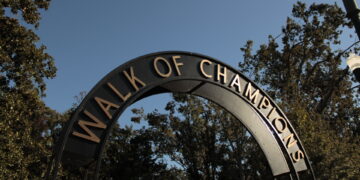
Many of the defining traditions that Ole Miss cherishes today also looked different. The procession of the football team down the Walk of Champions did not exist during Reardon’s undergraduate years. In fact, the tradition didn’t come about until Billy Brewer’s stint as head football coach in the 1980s.
For Reardon, the most memorable football moments of his college years took place outside of Oxford. He recalled the Rebels’ 38-0 win over Tennessee in 1969 in Jackson as one of the most unforgettable games during his time as a student.
As the game day culture and popularity of the university grew, the Grove began to take on a new appearance.
“It started when UM banned cars in the Grove, and people started setting up tents and more elaborate decorations and tables,” Reardon said.
The evolution of the Grove also reflected changes in campus culture. The display of Confederate flags was a practice that disappeared from the university’s game day traditions after the use of sticks and flagpoles were banned by Robert Khayat in 1997.
By the time Reardon stepped into the role of dean of students in 2000, the Grove had undergone a complete transformation. Although the scale of Ole Miss tailgating has evolved through his decades studying and working at the university, Reardon believes the underlying character of the Grove has persevered.
For Reardon, the most iconic part of the Grove has never been the decorations, food or football traditions. It has been the sense of community that ties Ole Miss fans together across the country and across generations.
“(The best part of the Grove is) the spirit of friendliness and hospitality and Rebel spirit, along with who we are as an Ole Miss family,” Reardon said.