




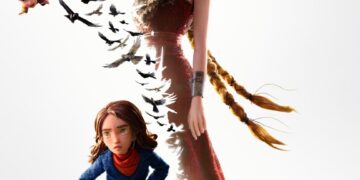
















“Wildwood” is the new stop-motion animated masterpiece from the powerhouse studio LAIKA, the same studio responsible for “Coraline,” “Paranorman” and “Kubo and the Two Strings.” Released on Oct. 23, the film proves human-made art can thrive amid the rise of artificial intelligence. This 16-years-in-the-making motion picture was directed and produced by Travis Knight, CEO of LAIKA.
Adapted from Colin Meloy’s novel, screenwriter Chris Butler and armies of animators crafted a stunning piece of visual art lasting over two hours. LAIKA is no stranger to the pain-staking creative process demanded by a stop-motion feature. The modern Narnia-esque world of “Wildwood” was composed of 233 handcrafted puppets, with thousands of replacement faces, and 132 practical sets, including over 700 handmade trees.
The sheer scope of the artistry, creativity and craftsmanship that went into every frame is simply astonishing, especially in a world where studios are defaulting to green screens and AI. Using tactile art in this age feels rebellious and right.
Director Knight described the stop-motion creation process as rebellious in a promotional press event with Empire Online for “Wildwood.”
“In an age where entire worlds can be generated at the click of a mouse, where a few words typed into a prompt can conjure moving images in seconds, stop-motion feels like a quiet act of rebellion,” Knight said. “It’s filmmaking at the speed of continental drift.”
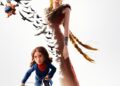
“Wildwood” is packed with casual displays of complicated artisanal mastery, making audiences stop and stare every time a character jumps through the air — given that animation sequence must have taken weeks to accomplish — or seeing hundreds of clay-constructed crows dart through skies in what feels like a natural occurrence that couldn’t possibly have been done by hand. The effortlessness of the characters’ and the environment’s movement is so well-executed, it’s almost forgetful the film was shot frame by frame.
The stunning visual details and worldbuilding only adds to the emotionally deep narrative of the dark fantasy adventure story itself. The headstrong teenage protagonist Prue McKeel (Peyton Elizabeth Lee) is instructed to watch her baby brother, Mac, while her father (Jake Johnson) and mother (Maya Erskine) head to a craft fair. Disregarding their rule of never letting Mac go outside, Prue bikes her brother around the city and a nearby playground, bumping into her nerdy classmate Curtis Mehlherb (Jacob Tremblay) along the way.
While at the playground, both Prue and Curtis subtly see Mac abducted by a murder of crows and carried off into the “Impassable Wilderness,” a forbidden and enchanted forest located just outside of Portland, Ore.
Determined to return her brother home, Prue and Curtis set off into the wilds and encounter a surplus of enchanted creatures and magic both good and evil. The film then follows a dazzling feat of anthropomorphic imagination, featuring giant eagles, rouge rats, and armies of coyotes in red coats, as well as bandits, bureaucrats, mystics and witches.
The Wildwood itself has been at a standstill between factions, with Dowager Governess Alexandra (Carey Mulligan) igniting most conflicts with her coyote soldiers in a non-stop pursuit to do whatever it takes to use Mac as a sacrifice to bring her long lost son back.
With her brother’s life on the line, Prue and Curits make multiple allies and enemies on their journey to save Mac and along the way Prue learns she has more magic within her than she ever could have imagined.
At its core, “Wildwood” is a story about the complicated nature of love, and how it can be both a powerful force of healing and an equally powerful source of grief and destruction. It’s a complex idea to explore, but at the center of the film are two characters who embody opposing sides of the same emotion.
Prue’s love for her brother drives every aspect of her character, from the guilt she carries to her unwavering determination to bring him home. Alexandra, on the other hand, has allowed her love and grief to consume her, transforming what was once a beautiful emotion into tragic obsession and madness.
In many ways, Prue and Alexandra are reflections of one another, demonstrating how the same emotion can inspire either extraordinary compassion or unimaginable destruction. By examining love through these opposing perspectives, “Wildwood” challenges the notion that love is inherently virtuous, grounding its fantastical world in profoundly human emotions and conflicts. LAIKA has proven through their mediums of film they excel in these types of characters and storytelling.
What LAIKA has accomplished with Wildwood is nothing short of game-changing. The scale and scope the film achieves through its world-building and impressive animation are unprecedented. The characters and themes are beautifully delivered with sophistication, maturity and humanity.
Wildwood is a powerful reminder of just how much cinematic ambition can be realized through animation, challenging an industry that too often underestimates the medium’s artistic and emotional potential and its importance, accomplishing with stop-motion animation of which some live-action films could only ever dream.
This labor of love is utterly captivating, despite some surprisingly frightening and violent bits. “Wildwood” is breathtakingly gorgeous, thrilling and poignant in equal measure and a defiant must-see in theaters.