





















The University of Mississippi hosted the 2025 Conference on the Civil War on campus this past weekend. The Conference on the Civil War is held every other year, centering around a different theme relating to the Civil War each conference. This year’s theme was “New Directions in the Legal History of the Civil War Era.”

The Conference on the Civil War consisted of panels of university professors, scholars and academics from across the nation, who brought their individual expertise to speak on a variety of Civil War era topics and the legal structures that influenced that period in history.
The conference is sponsored by the Center for Civil War Research and the university’s history department. Robert Colby is the associate director of the Center for Civil War Research and assistant professor of history at UM, and he helped organize the conference with Associate Professor of History and Director of the Center of Civil War Research April Holm and other volunteers.
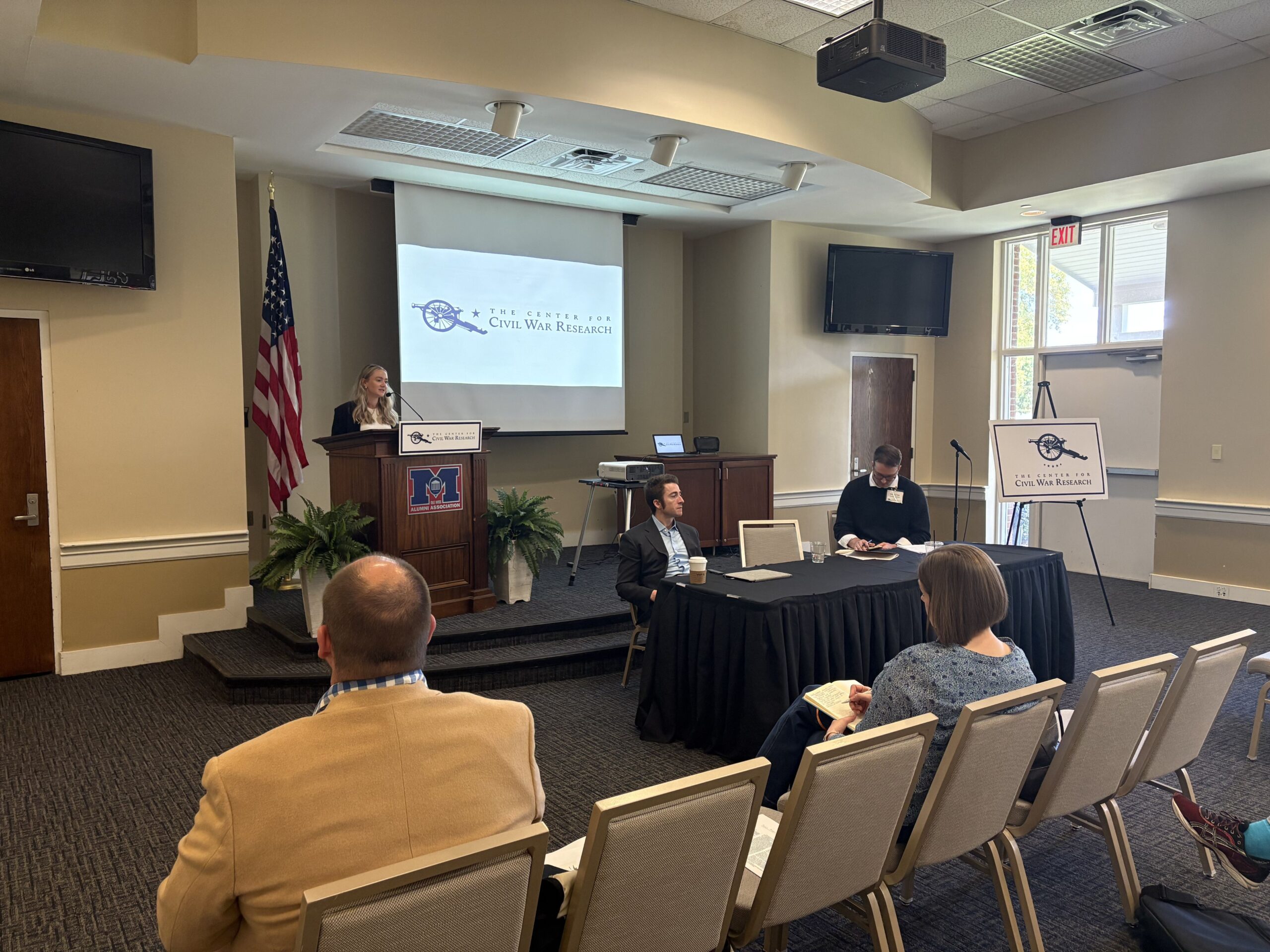
“Our center’s purpose is to promote excellence in the study of the American Civil War at Ole Miss,” Colby said. “Our conference advances this by bringing leading historians and emerging scholars to Oxford, where they can engage with the university community, the broader public and one another.”
The panels at the conference featured conversations about the war itself and the laws that influenced it, as well as the legal processes in place both before the Civil War and during the subsequent Reconstruction period.
Topics ranged from discussing the modern and historical interpretations of the three Reconstruction-era constitutional amendments — the 13th, 14th and 15th — to analyzing more niche forms of legal documentation and processes, such as Abraham Lincoln’s use of amnesty power to get Southerners and Confederate soldiers to join the Union and recognize the emancipation of enslaved people and notary records from the mid-1800s.
“We hope that people take away how profoundly transformative the Civil War ultimately proved for major questions in American law and for the Constitution itself, as well as how relevant so many of those questions remain today,” Colby said.
The Fourteenth Amendment, which touches on birthright citizenship and immigration, was a prominent topic panelists touched on at the conference, as both issues have faced increased attention in recent years.
Mark Elliott is the associate professor and associate head of the history department at the University of North Carolina, Greensboro. He spoke on the first panel on Thursday and read from his paper titled “‘The Great Right of Migration’: Human Rights, Nationalism and the Constitutional Debate over Chinese Immigration in the 1860s.”
“My paper was about the discussion and debate around migrant rights. Particularly the assertion that there was a human right to migrate and that … within revising citizenship laws, they should also be revising immigration laws, naturalization laws and the right to migrate,” Elliot said. “With all the discussion of the rights of immigrants … I thought it was interesting when they were rethinking fundamental law during reconstruction.”
Evan Bernick is an associate professor of law at Northern Illinois University, who spoke on the last panel of the conference. He also spent his time discussing the Fourteenth Amendment with his paper “Reactionary Constitutionalism and Birthright Citizenship.”
“I’m definitely going to talk about birthright citizenship, but what I’m not going to talk a great deal about is whether birthright citizenship is in fact guaranteed by the citizenship clause of the Fourteenth Amendment because it’s not a particularly difficult or interesting question,” Bernick said. “If you’re born in the United States, if you’re governed by the United States, you’re a citizen, full stop — end of story.”
The conference is also used to announce the recipient of the Wiley-Silver Award, which is given to a new author considered to have written the best debut book on the topic of the American Civil War.
The purpose of the award is to encourage up-and-coming authors and scholars to continue publishing works about the Civil War and to give those authors recognition within that field. The award also comes with a monetary prize of $2,000, with the winners being asked to speak at the university.
Cecily Zander was this year’s winner, an assistant professor in the history department at Texas Woman’s University, for her book “The Army Under Fire: The Politics of Antimilitarism in the Civil War Era.”
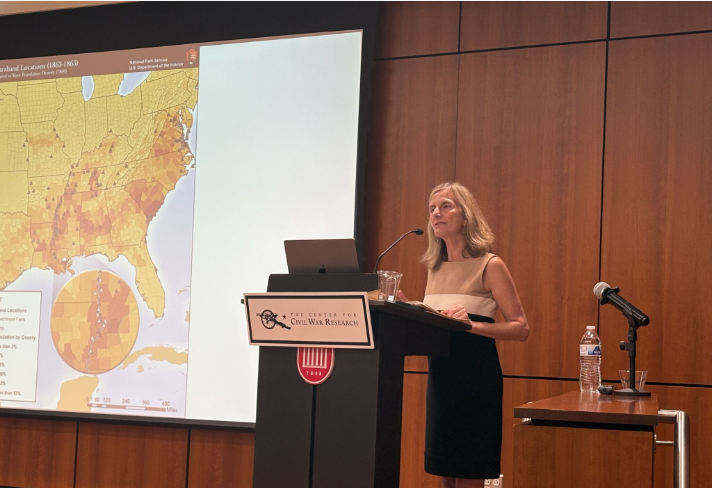
The conference also featured a keynote address from Ariela Gross, an award-winning distinguished professor of law and history from the University of California, Los Angeles. She used her speech to discuss her upcoming novel with the pending title, “Erasing Slavery, Rewriting Freedom: How Stories of Slavery and Emancipation Shape Battles Over the Constitution,” which is set to be published next year.
Gross keynote address and novel focus on slavery and the myths surrounding it today.
“I got really interested in the question of how our memory of the past shapes the law,” Gross said. “And in particular, how we use histories and imagined histories of slavery and its legacies in constitutional politics and constitutional law…”
The Conference on the Civil War was attended by out-of-state and in-state professors, graduate and PhD students alike. Andrew Boldt is a third-year UM PhD history student, who came to the conference and is conducting research on the Confederate’s military occupation of the south during the Civil War.
“The biggest takeaway is how, legally speaking, the Civil War and Reconstruction have been greatly and purposely misinterpreted,” Boldt said. “ … Just like everything, history is complex … and it’s important to understand all of it, not just what makes you feel good about yourself or your country.”