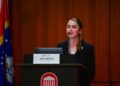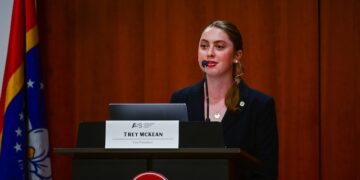


















The University of Mississippi Associated Student Body Senate held its third meeting of the 2025-26 school year on Tuesday, Oct. 28 in the Gertrude C. Ford Ole Miss Student Union auditorium. At the meeting, the senate passed numerous pieces of legislation and approved new senators. The senate also observed a moment of silence for Knox Boudreau, a UM student who was found dead on Friday, Oct. 24.
Two ASB Senate Proclamations also were approved. The first proclamation’s purpose was to honor the Fulton Chapel Protest, the Ole Miss 8 and the scholarship created by the university in the name of that protest and the people who attended it.
The Fulton Chapel Protest in 1970 highlighted Black students’ dissatisfaction with ways they were being treated by the university.
This protest was recognized by the university earlier this year when a plaque was erected in front of Fulton Chapel. The proclamation recognizes not only the protest but also the recipients of the scholarship created in its name. The proclamation was passed unanimously.
“(The university) raised a placard honoring that protest that happened at Fulton Chapel, and they also created a scholarship in which they honored those students,” Chairman of Inclusion and Cross-Cultural Engagement Jalon Hightower said. “The reason why we chose to highlight the scholarship winners is primarily because this is the first time this scholarship … has recipients.”
The second proclamation’s purpose was to show ASB Senate’s support for LGBTQ+ students on campus.
“We have a population on campus that does not feel represented. In our creed, we have to honor and respect the dignity of each person,” Senator Blake Williamson, who presented the legislation, said. “If our constituents come (to) us with concerns, I feel like we need to address those.”
Senator Nick Menendez made an objection on the grounds of religion.
Menendez cited catechism 2357, which describes homosexual activity as “acts of grave depravity” and “contrary to the natural law” and that “Under no circumstances can they be approved.”
The resolution passed in a non-unanimous senate vote.
ASB also passed 10 bills unanimously, all of which adjusted language in the ASB Senate Code to edit out redundancies and inconsistencies.
The senate then presented six resolutions covering a variety of issues, particularly regarding the infrastructure on the UM campus.
SR 25-12 addressed the presence of micromobility transportation devices on campus and the regulations concerning where the devices can travel, including whether they have right-of-way on crosswalks or sidewalks and where those devices can be parked. Micromobility transportation devices include vehicles such as electric scooters and bikes.
Chairman of Infrastructure Williamson and Senator Fred Williams presented the resolution after ASB received student complaints regarding electric scooters on campus.
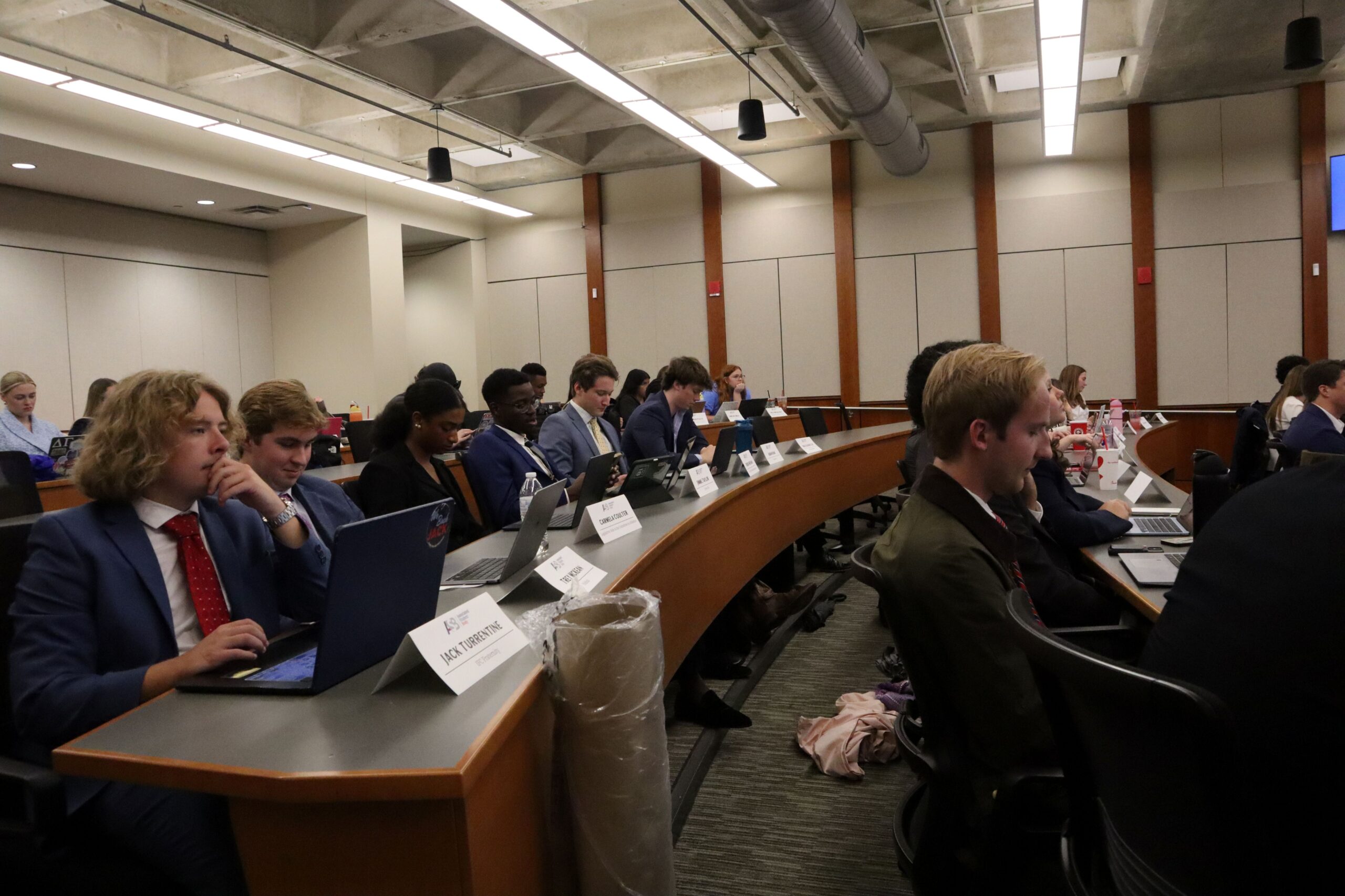
The senators found that the university has regulations restricting where micromobility transportation devices can be ridden or parked, but these regulations are not enforced to the fullest extent according to the university policy. SR 25-12 was about creating an initiative that would make the student body more aware of the university’s already existing policy and promote an effort to enforce it.
“Moving forward we’re going to give to y’all a ‘no wheels’ policy,” Williamson said. “We’re not bringing in any new rules and regulations, we’re just educating people with signage, education initiatives, public service announcements and collaboration in all departments.”
Other resolutions dealt with repairs and replacements done to water fountains in the Turner Center and at the pickleball courts, the installation of a crosswalk on Fraternity Row, the addition of new landmarks including family restrooms to the university interactive map, new accommodations to be implemented in campus dining options for Jewish students during Passover and an increased effort to put QR codes with university disaster protocols on the back of doors in on-campus housing.
ASB also posted a message via Instagram Wednesday morning regarding private funding for registered student organizations. Earlier this semester, in a response to Mississippi House Bill 1193, the university discontinued RSOs’ direct access to Student Activity Fee money.
“ASB has established a UM Foundation account to provide private funding in support of registered student organizations. This funding is intended to assist with operational and promotional costs,” ASB said in a statement via Instagram. “The amount of funding available will depend on contributions to the account.”
ASB has set up a form for RSOs to use to request funding from this new account.
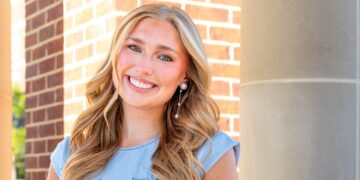
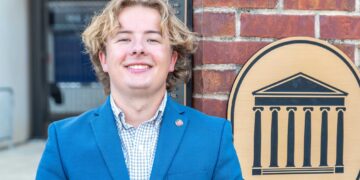
ASB also approved two newly elected senators. Jalyn Brock, a sophomore political science major from Mantee, Miss., and George Monroe, a freshman accountancy major from Oxford, were approved during Tuesday’s meeting.
Brock wants to use her position to advocate for sports that she believes are less attended, and she hopes to champion initiatives to increase student involvement in the crowds at those sports’ games.
“I brought up proposing a points-based system for students who attend smaller sporting events and to incentivize going to those under-appreciated sports,” Brock said. “I’ve always enjoyed some of the smaller sports, like tennis, volleyball (and) track and field, things like that, and I think that those athletes deserve to be supported just as much as football players, basketball players, things of that sort.”
Monroe hopes to use his new position to focus on mental health on campus, specifically by working with the William Magee Center.
“For me in high school, when I was a part of my mental health outreach group … we were trained by one of the leaders of the William Magee Center. … We became certified peer educators, which basically meant that we were allowed to teach our fellow students about topics on stress and anxiety,” Monroe said. “So early on, even in high school, I knew what a great resource the Magee Center was, and now (that) I know that as a freshman, I want to work with them even more, especially when it comes to student leadership.”