






























In contrast to the rest summer brings for many students, Ole Miss student athletes have been training hard for the 2025-26 academic year. While football players take part in intensive preparation during their annual fall camp, athletes in other sports train in ways less widely publicized.
These long, laborious days are rarely seen by fans, yet they are instrumental in planting the seeds of athletic success.
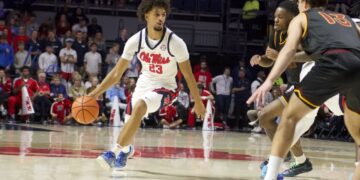
Men’s basketball
Once coach Chris Beard’s team hits the floor on June 10, they are allowed only eight weeks of practice, per NCAA rules.
“To me, the first day of summer workouts is always kind of the first step of the journey,” Beard said in a June press conference. “Those practices are sacred … probably more important than anything is building our culture and building our team.”
Practices are accompanied by intersquad scrimmages, weightlifting and recovery in the training room. Summer is a crucial time for newcomers to make their mark.
“Time is our biggest factor,” transfer Travis Perry said in a June press conference. “Working on not focusing on the day but maybe focusing on each rep — win each rep, win each drill.”
These eight weeks are also a great time for coaches to see players with their own eyes and reevaluate expectations.
Volleyball
The NCAA allows coaches only three weeks of volleyball-related contact with their players in the summer. This requires the Lady Rebels to coordinate most of their practicing and training themselves, especially since matches begin at the end of August.
“They’re doing it all on their own,” head coach Bre Henry said. “They’re here all the time. Sometimes I have to kick them out of the office just to get my own work done.”
A typical summer day consists of captain’s practices, lifting, mobility and recovery exercises and summer classes.
Athletes take pride in their player-led training and conditioning. Most players stay in Oxford for the summer.
“It really comes from the top down,” Henry said. “We’re constantly emphasizing recovery, mental health and volleyball IQ — even off the court.”
The Rebels are expected to be ready to compete come those three weeks of coach-led camp at the end of summer. By the second day of camp, they are already playing full six-on-six matches.
Soccer
For head coach Molly Rouse, this summer is about more than just conditioning. After finishing winless in SEC games in 2024, Rouse knew changes were in order, and she believes that the difficulties of last season may yield resilience this season.
“The honeymoon phase wears off, and you start to really see who has bought into the direction you’re moving,” Rouse said. “But the group that remains? They’re completely bought in.”
The women each competed on a summer team and returned to Oxford when their seasons finished.
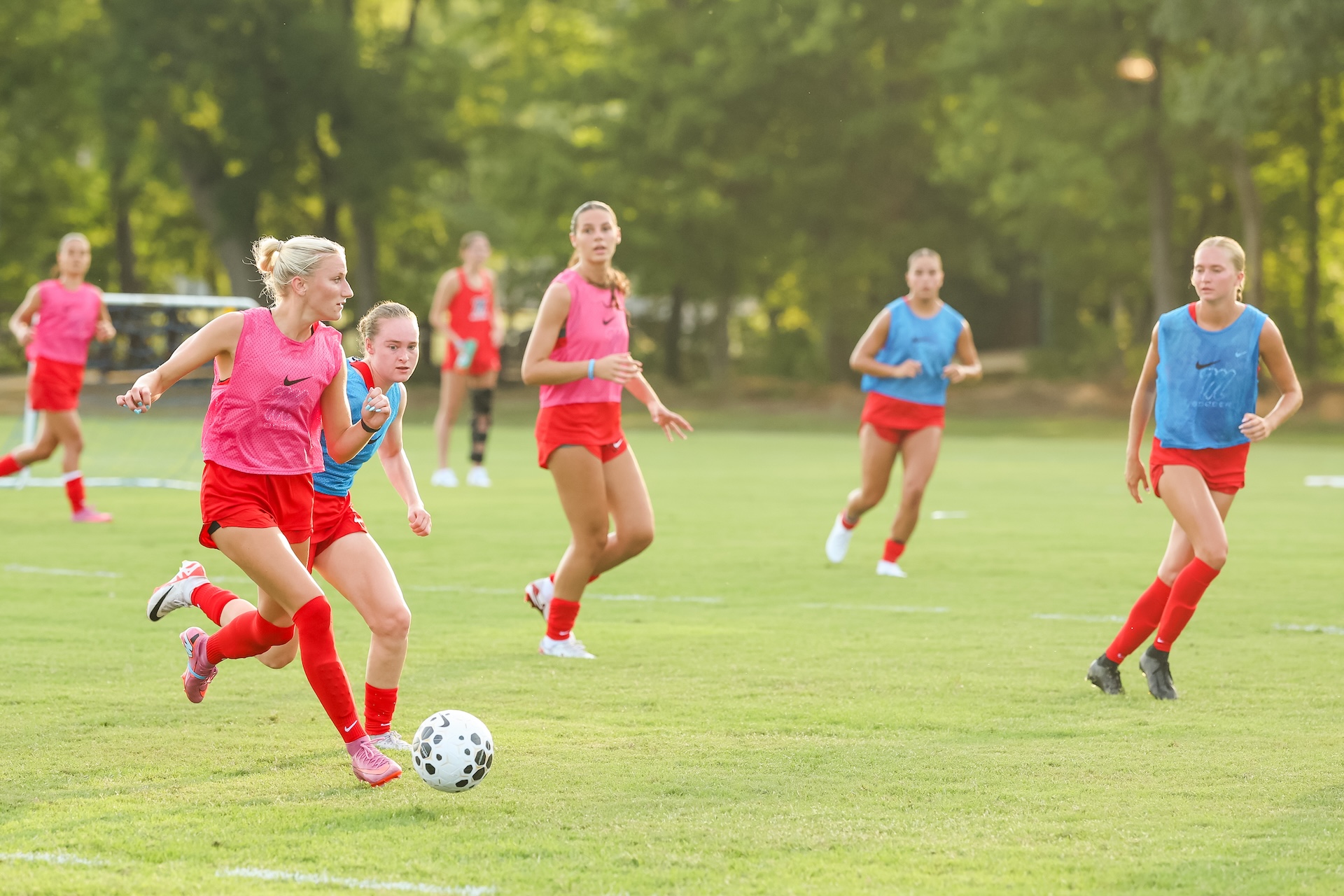
For soccer, coaches cannot begin practices with the team until July 28, so most of July was team-led practices.
“Without coaches, we really would get a few balls out there and do a few drills … to warm up,” Rebel forward Katie Smith said. “A lot of it is fitness-based. So we’ll play on a bigger field with fewer numbers, just to get our fitness up.”
This summer is unusual for the soccer team because their home field is under construction. Rouse credited the university, athletic department and community of Oxford for ensuring that the team is still getting the training resources they need.
“We have a fantastic facilities department here at Ole Miss,” Rouse said. “And they have done a great job of ensuring that while our field is under construction, there is still space and resources for our student athletes to prepare for the upcoming season.”
With the field off-limits for most of the summer, the team has been training at mTrade. Players and coaches are excited about the support they have received and look forward to this year’s kickoff.
“We have an awesome support group around us to be able to help us still maximize our preparation for the kickoff of the season,” Rouse said.
Women’s tennis
The women’s tennis team takes on summer practices differently than other teams around campus. Every player goes home for the summer, each having a plan to sharpen their skills while away from coaches.
These plans include international tournaments they could play in, where and how they will train and the amount of matches they should play over the course of the summer.
“I think match play is incredibly important for the summer,” head coach Grant Roberts said. “That’s one of the things that’s tough. If you go home and maybe you train a lot, and you feel like you’re physically in good shape, but you aren’t in match shape anymore … you can get a little rusty with that.”
The coaching staff helps identify tournaments that are close to where athletes live or train.
“Obviously, in Europe, it’s a little bit easier to go from country to country to play these tournaments,” Roberts said. “So they can hop a quick train ride or even drive sometimes to other countries to play within these tournaments.”
Coaches cannot force players to play in tournaments during the summer, but those players who choose not to compete often struggle when the season resumes.
Since players are dispersed throughout different continents, technology keeps the staff and players connected.
“There’s so many ranking systems now like (Universal Tennis Ratings), country rankings, (Women’s Tennis Association) points,” Roberts said. “Plus, a lot of tournaments stream matches. I can literally pull up Amazon Prime and watch from my phone.”