





















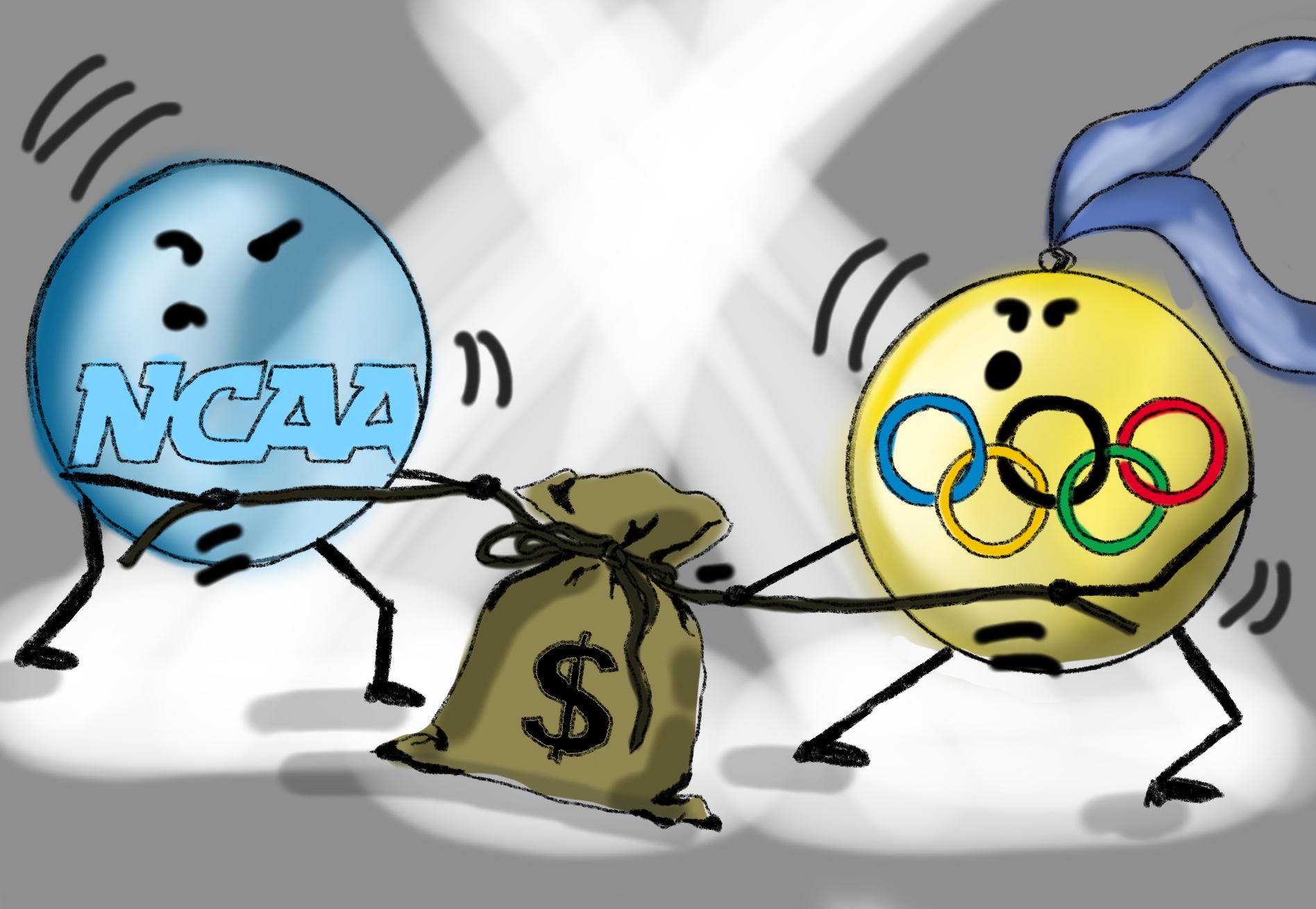
The Milano Cortina 2026 Winter Olympic Games were yet another great success for the United States on an international stage. The U.S. finished second in medal count (33) and second in gold medals (12), trailing Norway in both categories. However, the recent prevalence of NIL in college athletics and the uneven dispersal of money among sports raises questions of how long the U.S. will be able to continue its dominance.
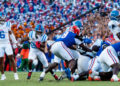
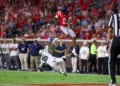
The majority of NIL deals — and the NIL deals that are most lucrative — are typically found in the most popular American sports, namely football, basketball and, on a smaller scale, baseball and softball. According to estimates from the NCAA, 75% of NIL allotment goes to football, 15% goes to basketball and 10% goes to all other sports. This comes out to an average of about $4,500 per year for every athlete outside of football and basketball.
Is it possible that NIL funding is drawing more athletes to high-revenue sports and simultaneously causing a shortage of athletes in non-revenue sports, which are part of the Olympics?
Approximately 75% of Olympic athletes who competed for Team USA in the 2024 Paris Summer Olympics also participated in college sports, according to the NCAA.
One of the most gifted athletes of all time, Olympic swimmer Michael Phelps, spoke about how NIL could be affecting the Olympics in an article from The Edvocate.
“We’re already struggling to attract and retain talented athletes,” Phelps said. “If the best young athletes are now lured by lucrative endorsement deals in non-Olympic sports, the future of American Olympic success is in jeopardy.”
Brennan Berg, an associate professor and director of the sport and recreation program at the University of Mississippi, echoed that NIL could be creating a talent vacuum in Olympic sports.
“That (money) could have influenced someone even before they became a high-level athlete, when they were just starting sports … (to) associate more prestige with one sport, and say, ‘Well, I want to go do that because it’ll get me more attention and higher status in my community,’” Berg said.
South Carolina wide receiver Nyck Harbor competed as a sprinter in 2024 and missed spring drills but focused on football in 2025 and did not compete in track and field.
Harbor finished fifth at the SEC Indoor Championships in track and field in 2024. In 2025, he had 30 receptions for 618 yards.
However, Berg believes that all NIL money is still worthwhile.
“I think NIL that’s available to all athletes is beneficial, even if for some of the Olympic sports athletes it’s just a few thousand extra dollars,” Berg said. “That can be a huge relief to someone that has a really constrained budget.”
A possible solution for this disparity in earning across sports would be compensation of Olympic athletes by the U.S. government. Many countries pay their athletes for medals won or at least provide resources for training and living.
For instance, the Italian National Olympic Committee promised to pay the equivalent of approximately $213,000 to Italian athletes who win gold medals. In the United Kingdom, Olympic athletes can apply for Athlete Performance Awards, which, according to UK Sport, are “offered … as a contribution towards (an athlete’s) living and training costs.”
However, Berg does not anticipate any U.S. government funding for athletes, at least for the foreseeable future.
“I think it would happen if the U.S. as a country started doing poorly on the international stage,” Berg said.