


























The University of Mississippi Faculty Senate passed a resolution supporting free speech protections for university workers at its monthly meeting on Tuesday, Nov. 11.
Representatives from all eight Mississippi Institutions for Higher Learning schools attended the 6 p.m. meeting at the Robert C. Khayat Law Center. This is the first of what is expected to be annual joint meetings with representatives from faculty senates at all IHL schools in attendance. Next year’s joint session is set for the University of Southern Mississippi.
“We, the members of the University of Mississippi Faculty Senate, affirm that the foundation of a university rests on the free exchange of ideas, and any action taken against members of our community for expressing constitutionally protected speech undermines both academic freedom and the integrity of higher education,” the resolution’s opening paragraph reads.
The resolution passed by a vote of 40-4.
Leading up to the vote, UM Faculty Senate President Hans Sinha, clinical professor and director of the Externship Program, cited the case of Jackson State University Associate Professor of Psychology and Faculty Senate President Dawn McLin, who was fired in August 2024.
With support from free speech organizations and other faculty senates in Mississippi, McLin was reinstated in her tenured professor role in June. Sinha said this highlights the role of faculty senates in defending free speech in academia.
Faculty senate members who opposed the resolution — such as Thomas Andre, associate professor of health, exercise science and recreation management at UM — found it to be “redundant” and “obvious.”
Similar resolutions are expected to be adopted at the other IHL universities. All institutions in attendance are either considering a free speech resolution or have already drafted and circulated a resolution. USM and Mississippi Valley State University passed free speech resolutions in the past weeks.
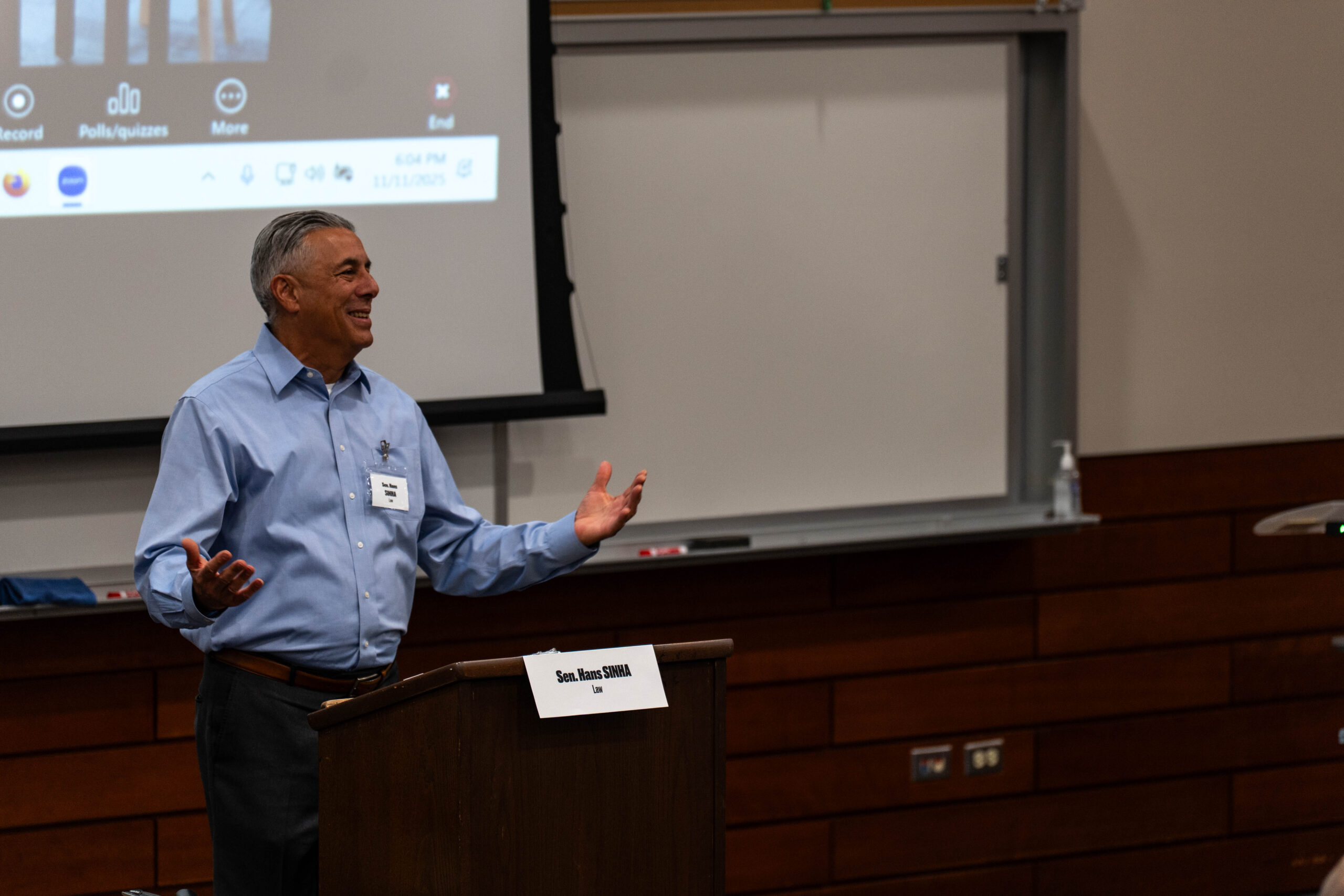
In an interview with The Daily Mississippian, Sinha expressed his pleasure with the passage of the resolution and the willingness of other universities to consider similar motions on free speech.
“And I think, as I said at the meeting, it’s a symbolic statement when it tagged a senate resolution, but the symbolism carries more weight when all nine IHL institutions will consider the same resolution, potentially vote (on) the same resolution,” Sinha said.
Sinha also detailed the context and rationale behind the resolution.
“There was no specific thing, but there’s a lot of things that have been going on in our society this last year or this past year that touch upon academia,” Sinha said. “I think, fair to say, there was a feeling among some of the people that power in academia needed to be adjusted somehow. And there’s a feeling among some faculty across the country that suggested adjustments may have been unfair. So there was some concern about free speech by faculty members as a whole, and that’s what drove this. There’s no specific one incident.”
Attending the meeting were representatives from faculty senates at Alcorn State University, Delta State University, JSU, Mississippi State University, Mississippi University for Women, Mississippi Valley State University, UM, the University of Mississippi Medical Center and USM.
Also in attendance was University Faculty Senates Association of Mississippi President Josh Bernstein, who serves as an associate professor and graduate studies coordinator in the English department of USM.
In an interview with The Daily Mississippian, Bernstein said the meeting demonstrated a willingness for collaboration from institutions across the state. He also expressed the need for more participation from faculty senates across the state.
“I think increasingly academics and faculty and educators realize that we’re all in this together,” Bernstein said. “If any of us are going to have a future in learning, if we’re going to ensure that our students grow and learn — we need to work together.”
The governance committee of the faculty senate also presented suggested changes to UM’s policies, specifically regarding employee evaluations and assessment criteria.
The committee believes that the current rules regarding assessment criteria during employee evaluations are too ambiguous, with no concrete details on who approves changes to assessment criteria and when the changes can take effect.
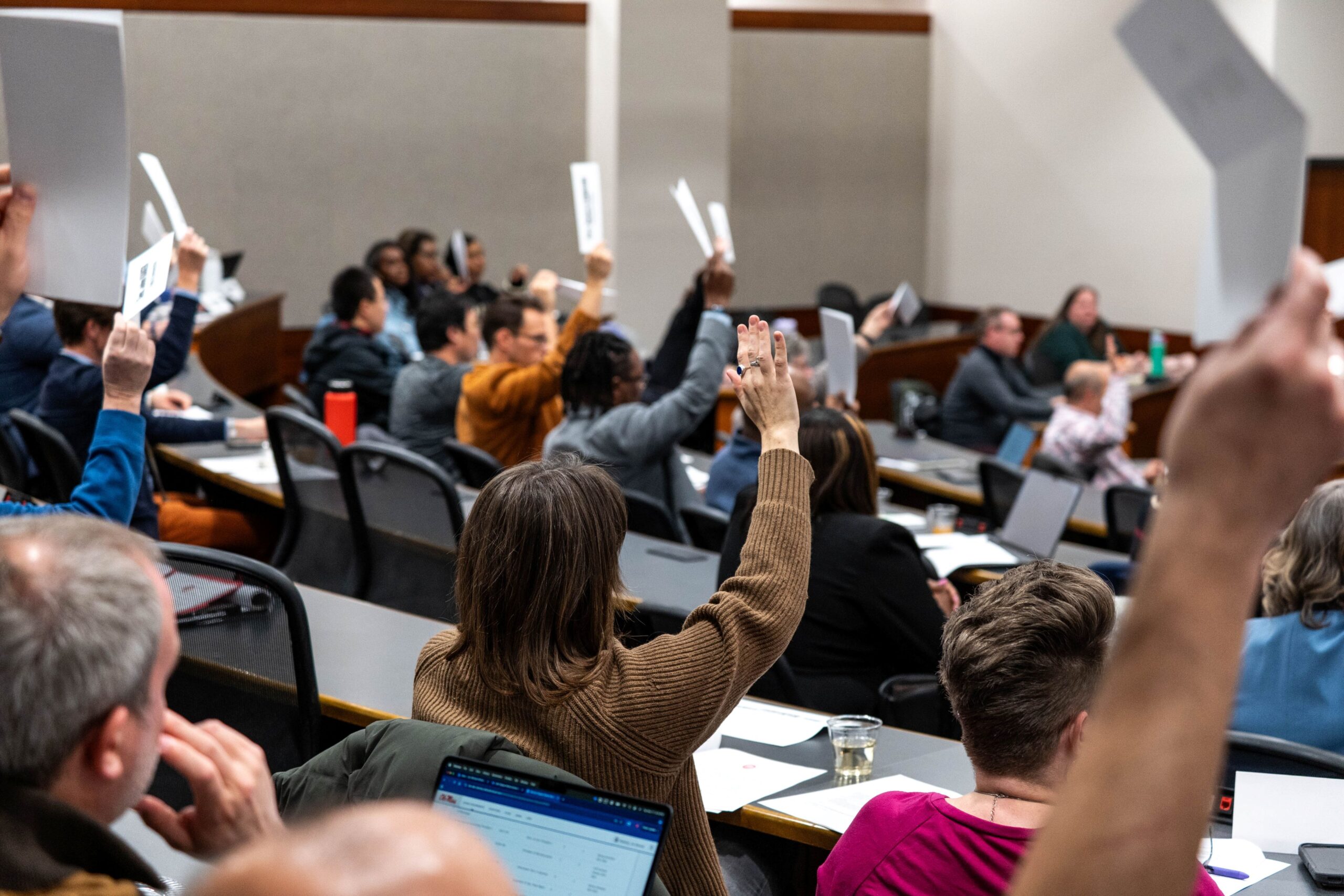
The committee’s suggested amendments to existing policy would make it so that a two-thirds majority of tenured faculty must approve departmental changes and that changes must take place after a full evaluation cycle has passed.
Tamar Goulet, chair of the UM faculty senate’s governance committee and professor of biology, explained the need to prevent retroactive changes or changes without adequate notice to assessment criteria mid-evaluation cycle in an interview with The Daily Mississippian.
“What’s happening now in some departments, faculty are told of criteria changing, even retroactively, and they didn’t even know that,” Goulet said. “Let’s say you wrote an exam for a course, and then after the class ended, the professor said, ‘Okay, those that wrote in black ink, you’re going to get one point. Those that wrote in blue ink, you’re going to get two.’ Well, if you knew that ahead of time, you would have written in blue ink. So we’re trying, by inserting language and making it clear that after (criteria changes) … there will be a full evaluation cycle before those criteria take into effect.”
Copies of the proposed policy changes were given to senators, who will debate and deliberate the amendments during the senate’s next meeting on Tuesday, Dec. 9.
Editor’s Note: A previous version of this article cited the University Faculty Senates Association of Mississippi as the United Faculty Senates Association of Mississippi. The article now reflects the correct name.