


























Ole Miss Baseball was three outs away from a crucial series win over Arkansas on the road last Sunday. The bats did just enough to claim the lead late in the game, and closer Walker Hooks was dealing; however, the prior day’s bullpen usage came back to bite the Rebels and they lost on a walk-off.
With six SEC games remaining, Ole Miss needs to go 4-2 to host a regional. If they go 3-3, they could host with a good run in the SEC Tournament. Either way, bullpen usage has to improve.
After the Rebels took a seven-inning, run-rule loss to open the series on Friday, they responded with an 11-4 win on Saturday. Starter Cade Townsend pitched 5 ⅔ innings and gave up two earned runs.
Townsend surrendered a two-run homer for the first Razorbacks runs of the game and walked a batter, then head coach Mike Bianco brought in Hudson Calhoun. He is often used in important, high-leverage situations, but the Rebels had a five-run lead when Townsend left the game.
His 4.33 earned run average looks bad, but he has kept Ole Miss in numerous games this year, like when he pitched four innings against Georgia in extra innings.
Bringing in Calhoun was a crucial mistake in the series. Since Calhoun threw 41 pitches in 1 ⅔ innings on Saturday, he was not available on Sunday when the game was much closer.
When Calhoun entered the game, several other arms were available. Using any of them could have saved Calhoun for Sunday. Ole Miss used relievers Landon Waters, Landon Koenig and Terry Hayes Jr. in game one, but none were overworked.
Waters pitched two scoreless innings and faced the minimum on 27 pitches. Koenig allowed five runs, but only one was earned. He recorded two outs on 24 pitches. Hayes got two outs with just eight pitches. None of these pitchers appeared in games two or three.
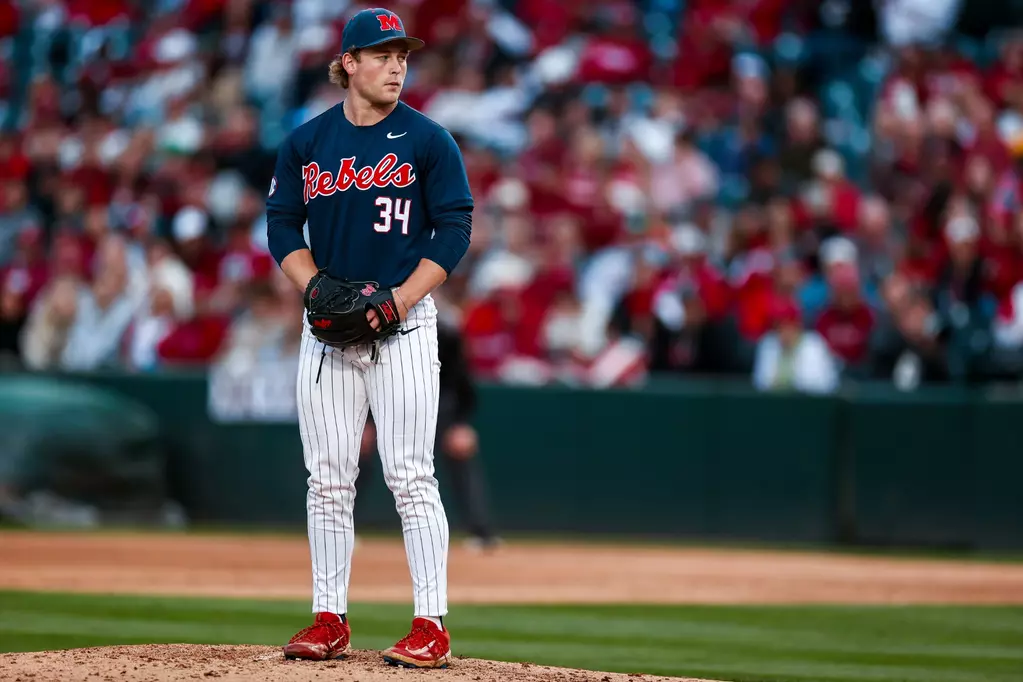
Waters has been one of the most reliable arms out of the bullpen in the SEC this year. He has a 0.90 ERA and has only allowed two earned runs.
Koenig has a 3.06 ERA but has faltered at times, so not using him the rest of the weekend is more understandable. He has allowed four runs in one outing twice this year.
Not using Hayes on Sunday, who has only pitched in two SEC games this season, is reasonable, but he could have been used on Saturday when the Rebels had a large lead.
Even Owen Hancock, who only has three appearances in SEC play, could have come in and worked with the Rebels’ large lead.
After Calhoun gave up his second homer and walked a batter, Hooks came into the game. At this point, Ole Miss still had a five-run lead, 9-4. The Rebels added two more runs in the ninth to make it 11-4, yet Hooks came out to end the game
Hooks only needed 23 pitches to get five outs, but that played a major role in game three. Even with a mild workload in game two, he did not have enough energy to complete the series win on Sunday.
Starter Taylor Rabe pitched five innings and only allowed two runs in the rubber match. JP Robertson, another usually reliable Rebel arm, relieved him to begin the sixth. Robertson gave up a game-tying home run in the sixth and worked into trouble in the seventh before Hooks came in for relief.
Bringing in a closer in the seventh is unusual; however, Hooks has dominated this year and the Rebels needed to escape the pickle with the tie intact.
He inherited two runners on base with no outs in his second consecutive day of work. The lefty got a sacrifice bunt for an out and back-to-back swinging strikeouts to wiggle out of the jam.
In the top of the eighth, Judd Utermark gave the Rebels the lead with a solo homer. Hooks had no problem in the bottom of the inning, but things unravelled in the ninth.
He had already thrown 24 pitches in the two prior innings. He got both batters in the ninth to two-strike counts, but his off-speed stuff did not have enough bite. He was unable to generate swings and misses.
Ole Miss’ decision to use Calhoun in a low-stakes situation cost them one of their best arms in crunch time. Pitching the closer with a five-run lead on Saturday, then asking him to get a nine-out save to win the series was too much to ask.
The Rebels have the arms to make a deep postseason run, but the time between games will only get shorter. For Ole Miss, getting to the SEC Championship means playing at least four games in five days against high-caliber teams. Winning does not get easier with a regional weekend of must-win games. They must deploy relievers more appropriately.