





























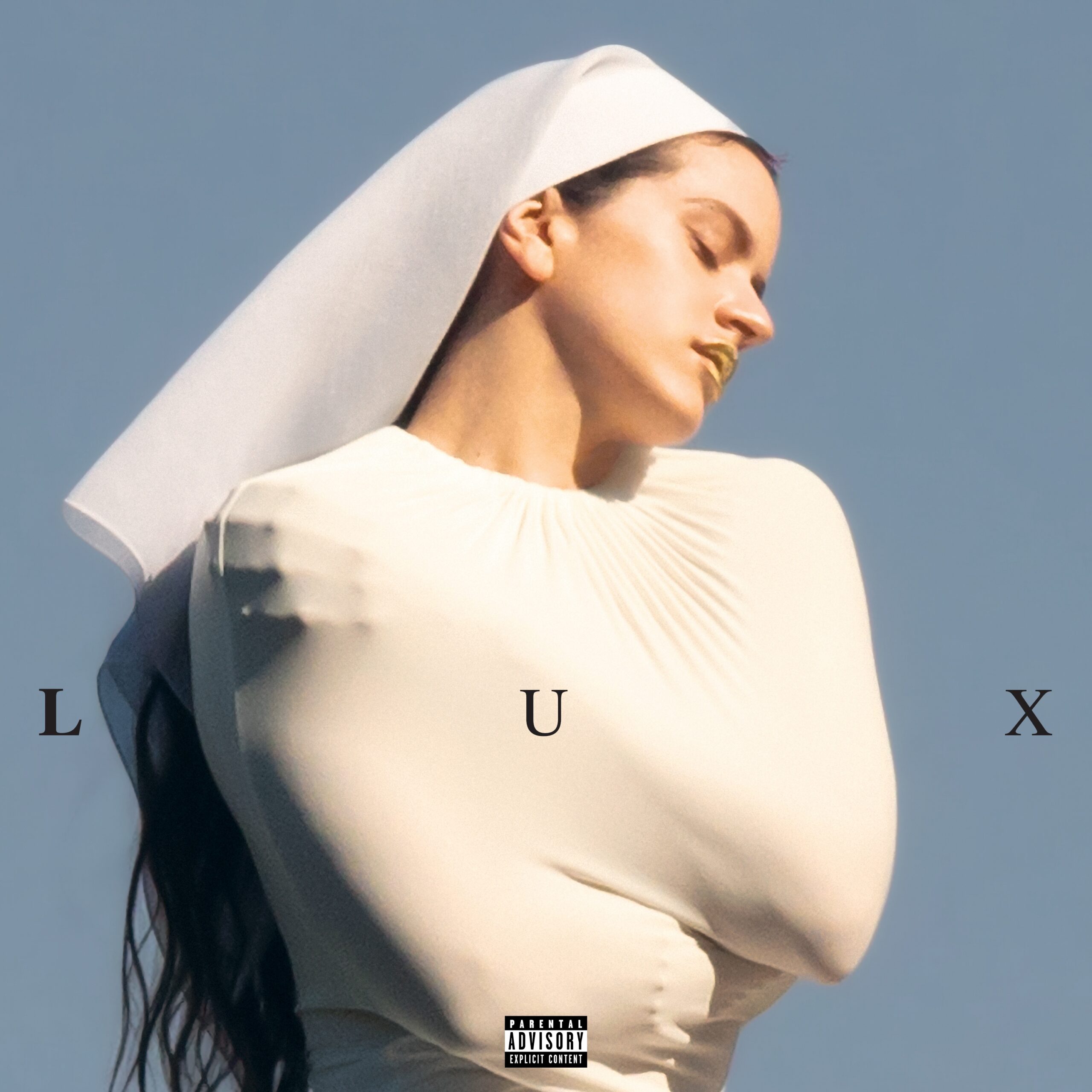
Spanish singer-songwriter Rosalía released her fourth studio album, “LUX,” on Friday. “LUX” features 13 different languages and marks a shift away from Rosalía’s more traditional Latin pop style to a more symphonic sound.
“LUX” has a strong feminine-mystical energy and, with impressive vocals from Rosalía, the album feels like a transcendental experience.
Rosalía collaborated with the London Symphony Orchestra on instrumentals, giving the album an operatic feel.
The first song on the album, “Sexo, Violencia y Llantas,” opens with a soft piano, ramping up to a full orchestra sound with Rosalía then taking the spotlight with her vocals and lyrics of the crossover between sex and violence, implying that a lover could be violent or that sex was sought after in the relationship despite the violence.
This song, as well as the whole album, has a theme of religion and a spiritual experience, one that Rosalía claimed herself to be “not like previous works.”
Rosalía, according to an article from BBC, told her fans to listen to the album with headphones and in a dark room, which enhances the dreamy feel of the album.
The album features popular artists such as Björk, who contributes powerful vocals on track six, “Berghain,” which is a popular techno music club in Berlin.
The song starts with an orchestra intro, then transitions into a mysterious and alarming chorus: “Seine Angst ist meine Angst / Seine Liebe ist meine Liebe / Sein Blut ist mein Blut,” which translates to English as “His anger is my anger / His love is my love / His blood is my blood.” Rosalía’s lyrics show how she has merged with this person in an act of full dedication.
The chorus is repeated with Björk singing the same line with captivating vocals that invoke a haunted feeling for the listener. In the bridge, Björk sings, “The only way to save us is through divine intervention / The only way I will be saved is through divine intervention.”
These lines could allude to Rosalía’s past engagement to Puerto-Rican singer-songwriter Rauw Alejandro, which she broke off in 2023.
In “La Perla,” Rosalía opens with “Hey, peace thief,” before later singing “emotional terrorist,” among other insulting descriptions of this person that she has had a previous relationship with — one that was toxic. She ends with “He’s a pearl / He can’t be trusted / He’s a pearl / A nasty piece of work.”
Rosalía does not hold back on her insulting lyrics in this album, which could be directed to her previous engagement but is not explicitly stated by the artist.
The album shows that Rosalía is not just a pop singer, but she can create an illuminating album experience that is combined with an orchestra.
Ending the album with track 15, “Magnolias,” a beautiful and, again, magical way to end the album. Grab the tissues because by the end of the album with this song, you will be a mess.
The vocals are magnificent in this song — very clear and emotionally packed. A choir filled with background vocals sings “Tírame Magnolia,” or “Throw me magnolias.”
Historically, magnolias represent dignity and purity, connecting Rosalía’s transcendence into a more spiritually awake person in the album to someone or something giving her dignity and purity.
An awakening experience to different genres and languages, as well as themes of transcendence, spirituality, and renewal, “LUX” is a brand-new angelic sound for Rosalía.