

























Ibrahim Williams is the winner of the first Oxford Micro Memoir Contest during the 2026 Double Decker Arts Festival on April 25.
The contest was put on by the Greenfield Farm Writers Residency and sponsored by Visit Oxford. Finalists were invited to read their work on stage. Williams received $750 for winning first place, and second-place finisher Shirley Gray earned $250.
Beth Ann Fennelly, distinguished professor of English and Mississippi Poet Laureate from 2016-21, announced Williams as the winner. Fennelly helped create the micro memoir, a form of creative writing that blends flash fiction, poetry and memoir, allowing writers to take a brief, yet in-depth, examination of a small facet of their lives. Earlier this year, Fennelly published a book of micro memoirs titled “The Irish Goodbye: Micro-Memoirs.”
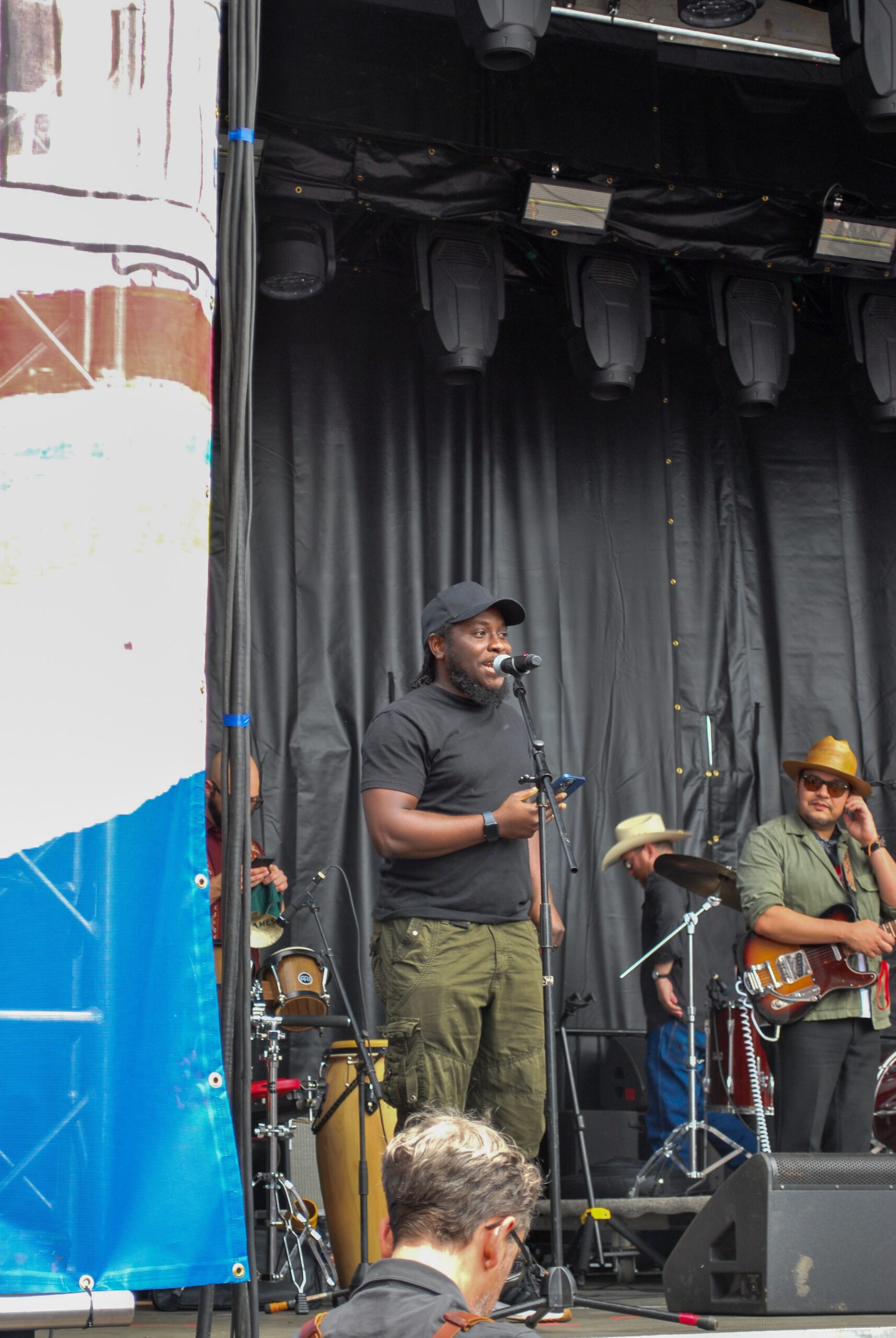
Submissions were required to be 300 words or fewer. The competition was judged by Lyn Roberts, general manager of Square Books, and Susan Nicholas, the awards program coordinator for the Willie Morris Awards for Southern Writing.
Williams is a fourth-year English doctoral student at the University of Mississippi. His area of expertise is African-diasporic literature, and he previously studied at the University of Lagos in Lagos, Nigeria. Despite his focus on literature around the globe, his memoir focused on his time in Oxford.
“I’ve lived in Oxford for four years now, and it just feels so good to be able to share a little facet of the experiences I’ve had,” Williams said.
Having conquered the micro memoir, Williams is setting his sights on a much larger literary project.
“I know I’m going to write a book very soon, so it’s kind of in the pipeline for me. For the past few years, I’ve been trying to figure out exactly what I want to write about,” Williams said.
Williams’ micro memoir, “Stories That Pass Through,” consisted of his experiences and interactions working at Square Books.
“I’ve had the fortune of working at Square Books, where I meet a lot of people every day, and I have a lot of interesting conversations,” Williams said. “Stopping and taking in all the interactions I have with people every day and making that into my memoir was my inspiration.”
Greenfield Farm, once a pasture owned by William Faulkner, now serves as a creative hub for the writers. Fennelly serves on the program’s advisory committee.
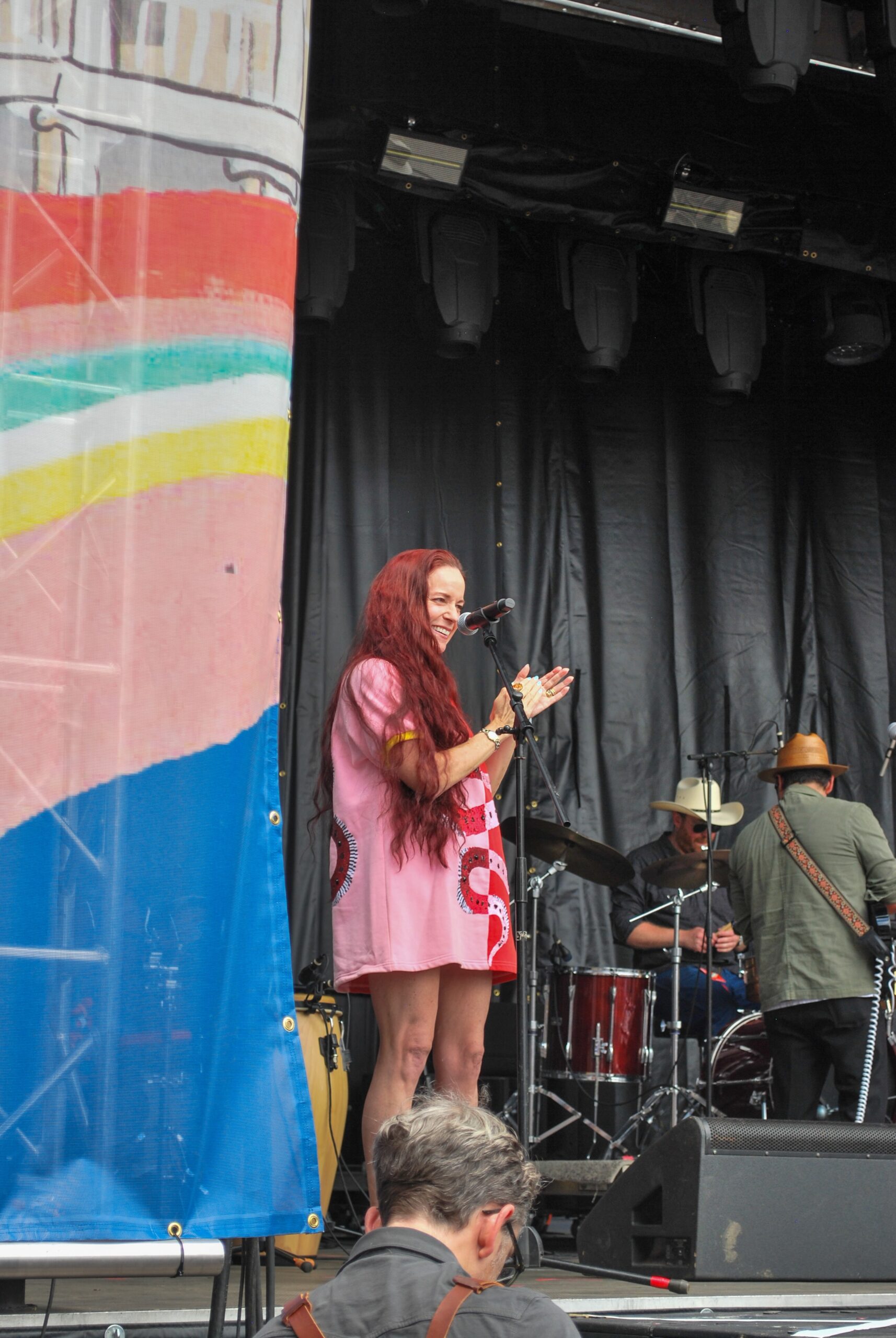
“Our local genius, John T. Edge, had the idea to take this farm and build cabins on it and invite people to come to Mississippi and tell their Mississippi stories,” Fennelly said. “Greenfield Farm is the host of this micro-memoir contest because we started thinking, ‘Before people started telling their big Mississippi stories, what if they tell their local Oxford stories?’ We had a contest for everyone to write one true story about their life.”
Gray, the runner-up and a resident of Oxford, wrote about the kindness of a local liquor store worker.
“My husband and I had just moved to Oxford, and we moved from a larger city,” Gray said. “I’m at the liquor store, and the man just tells me, ‘Don’t worry,’ he shrugged. ‘Take the wine and pay me next time you come in.’ That immediately told me we had found the right town.”
Fennelly pointed to the micro memoir form’s accessibility as part of its appeal. Its shorter length and open-ended structure allows writers to focus on one moment or idea instead of building a long, complex narrative, which can be good for those new to writing.
“Micro memoirs combine the abbreviation of poetry, the narrative tension of fiction and the truth-telling of nonfiction,” Fennelly said. “I feel like this is a very user-friendly form that allows people who … might not even have a tremendous background in literature to compose a story that captures the spirit of a place.”