































The 2026 film adaptation of the video game “Resident Evil” marks director Zach Cregger’s third horror feature and, possibly, his most entertaining film yet. Cregger’s masterful mix of gruesome horror set pieces with dark, funny character moments has never felt more at home than it does in this adaptation of the iconic game series.
The film stars Austin Abrams as Bryan, a medical courier in the wrong place at the wrong time who finds himself tasked with delivering an undisclosed package to the fictional American Midwest town of Racoon City, which is overrun with a terrifying virus, Tyrant Virus.
As the events of the film mostly unfold in real time, the film keeps up a continuously exciting and engaging pace for its 90-minute run time. The story rolls along with a smooth point-A-to-point-B structure that will feel familiar to anyone who has played a “Resident Evil” game or, for that matter, any survival horror game.
The film’s most impressive feat is Cregger’s artful direction of the film that perfectly emulates the genre of horror video games. Entire scenes tensely and quietly follow Bryan as he sweeps the corners of his surroundings, anxiously pointing his flashlight as the camera alternates between third- and first-person perspectives.
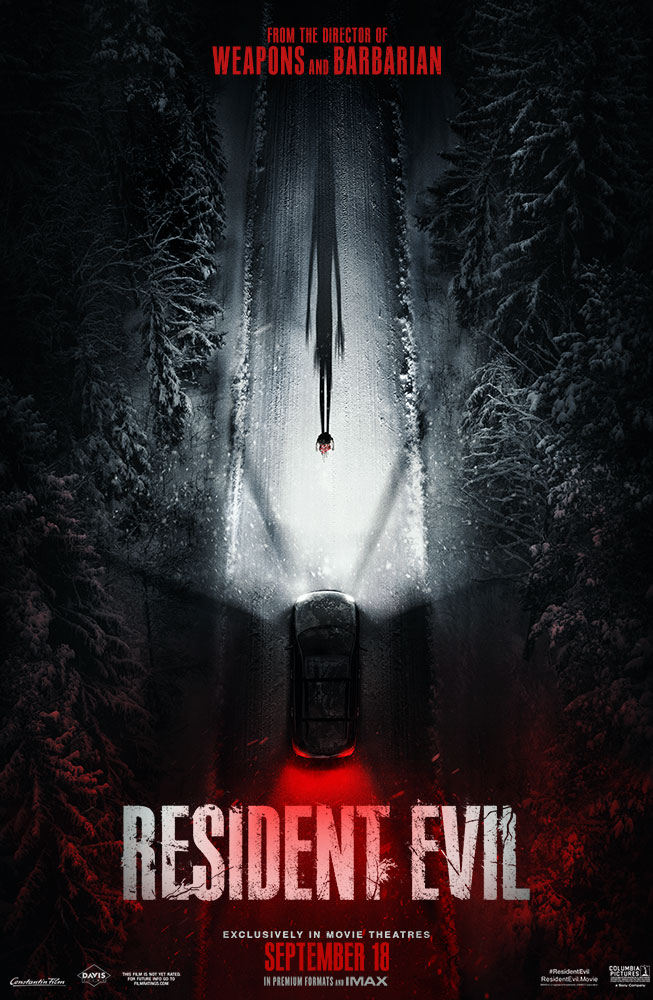
The violence is bloody, splashy and, at times, quite gross, but all of it remains true to the physics and gore effects of the games. The creature designs stand out as well, with some of the monsters being hilariously disgusting. The monster transformation scenes are reminiscent of David Lynch’s “Eraserhead” (1977), replete with the tense, slow camera movements, an ominous score and delightfully repulsive imagery.
Bryan has the exhausted cadence of someone who has died multiple times already. His dialogue is composed primarily of mumbled curses and irreverent commentary — all of which is eerily similar to a frustrated gamer struggling through a survival horror game.
“Resident Evil” has been adapted into eight different live-action adaptations and four animated films. This film takes an innovative approach when it comes to the art of game-to-movie adaptation. Rather than devolving into a breathless recitation of the game’s lore, Cragger leans into how it feels to play the game, making this adaptation accessible to everyone, not just hardcore fans of the games.
As with many survival horror games, the middle of the film gets a bit repetitive, with small-space exploration and scattered jumpscares. Throughout the run time, however, the film never loses its sense of direction, with nearly every shot construction feeling as if it was lifted from the game.
As with Cregger’s other films, the abrupt ending may prove disappointing to some, but it does cleverly recontextualize the events of the film. At its core, this is a film about a background character in a horror game world and, thus, the film ends the only way it could.
“Resident Evil” is a big stylistic swing for one of the most exciting horror directors of the moment. The film uses a uniquely relatable protagonist, artful gore effects and lots of black comedy that will prove a great time for anyone who has ever sat down with any horror video game — and even a great time for those who haven’t.
In a market where video game film adaptations are becoming increasingly prevalent (and successful), this one stands out for its impressive stylistic commitment to capturing the mechanics of one of these games rather than falling back on mindless fan service.