




















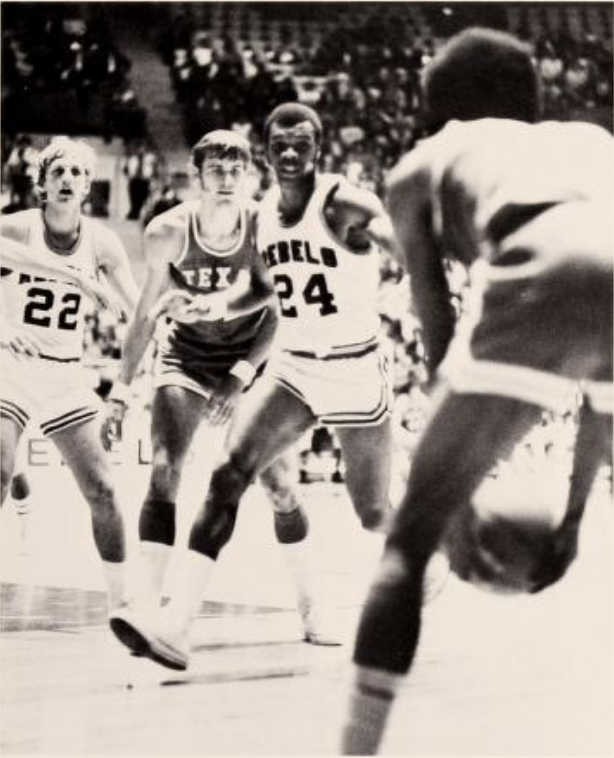
History was made at the University of Mississippi in 1970 when Coolidge Ball signed a scholarship to play basketball for the Rebels, making him the first African American student-athlete at the university.
Ball, a native of Indianola, Miss., just two hours south of Oxford, had chosen to attend New Mexico State and signed the school’s scholarship papers. But Ball didn’t sign a national letter of intent because he kept Ole Miss in mind.
In August 1970, Ball decided not to go to New Mexico State and instead signed a national letter of intent to play for the Rebels.
Initially, it was an uncomfortable atmosphere for Ball and his teammates, given that this was the first time the school had had an African American student-athlete. But over time, and as they got to know each other, Ball’s teammates realized how he could help the team in a positive way.
“I’m just trying to feel them out; they’re just trying to feel me out,” Ball said in a 2006 interview with Ole Miss about the first time he practiced with his college teammates. “A lot of them probably never had played with Black (people) before.”
In the same interview, Ball went on to say, “As we talk and as we practice, they (his teammates) said, ‘Wow, this is a tremendous player.’ And that just gave them a lot of respect for me.”
During his three seasons (1971-74) playing for the Ole Miss varsity team as a forward, Ball scored 1,072 points and had 752 rebounds. Ball was named All-SEC second team during the 1971-72 and 1972-73 seasons.
Although he averaged 14.1 points, Ball was better known for his rebounding skills. He averaged 9.9 rebounds per game during his collegiate career, which is the best in school history.
In 1991, Ball was inducted into the Ole Miss Athletics Hall of Fame. In 2005, he was a part of the SEC Basketball Legends class, and three years later he was inducted into the Mississippi Sports Hall of Fame.
On May 15, 2021, the university created a statue of Ball, honoring his legacy and the impact he made on the Rebels.
“It’s a beautiful thing,” Ball said during the ceremony. “I’m excited about having a statue. I never dreamed of having one, and I thank the university for it.”
Ole Miss women’s basketball head coach Yolett McPhee-McCuin talked about the inspiration Ball created for her.
“He’s inspired even me,” McPhee-McCuin said in an interview with Ole Miss during Ball’s statue dedication. “And the type of legacy that I want to leave for my children and the people that come behind me.”
Ball paved the way for many young African American student-athletes not just in Mississippi, but also across the country as he broke the color barrier and achieved something that had never been seen before. As Ole Miss’ first African American student athlete, Ball’s legacy will live on forever.