

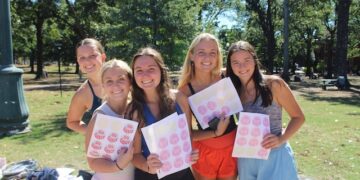















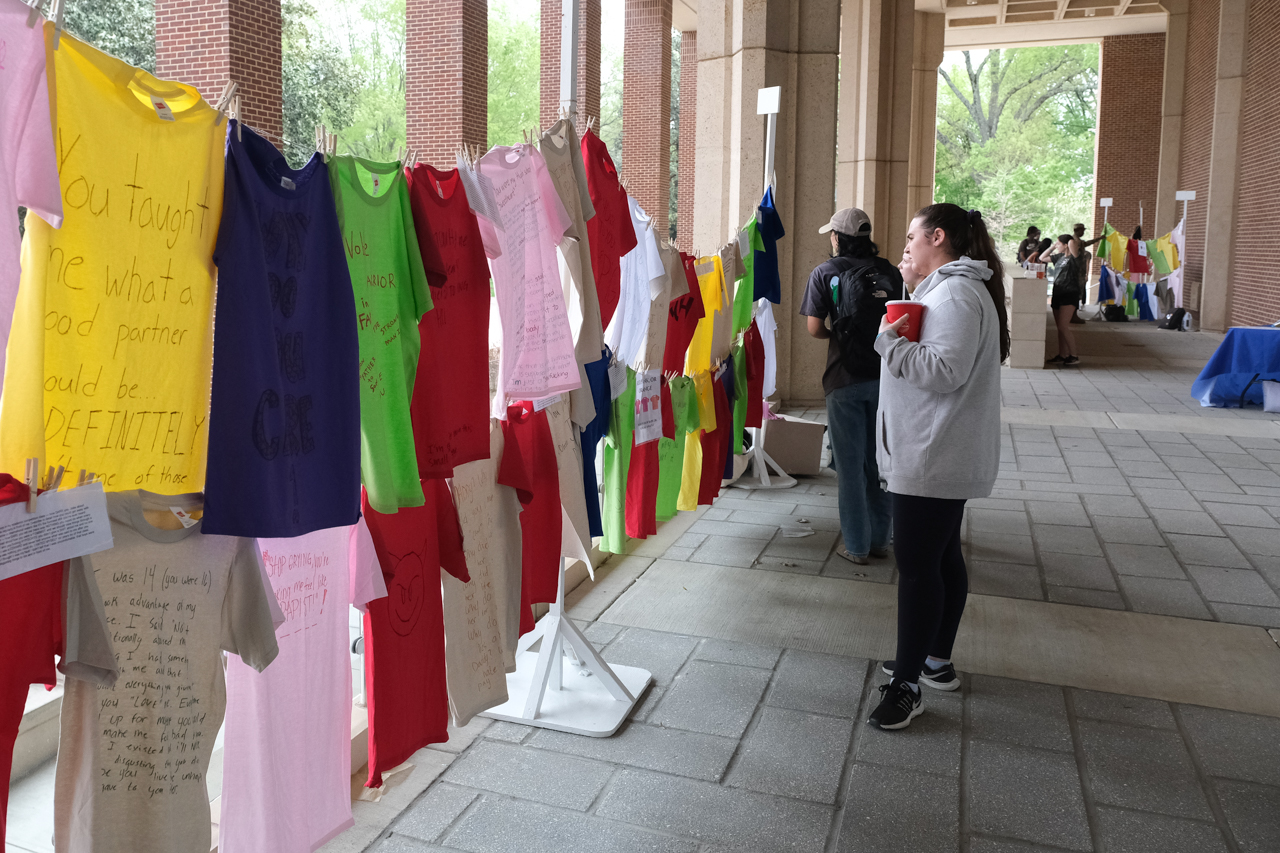
Rallying Against Sexual Assault held a T-shirt decorating event for the Clothesline Project on Tuesday night in the Thad Cochran Research Center. Students brought awareness to sexual violence by creating T-shirts to express their stories.
RASA is an open student organization under the Violence Intervention and Prevention: Survivor Support office that brings education and awareness of gender-based violence to students who are passionate about the topic. The organization is comprised of confidential advocates that work with students that have experienced sexual assault, intimate partner violence and stalking.
The Clothesline Project is an interactive exhibit that features written experiences by survivors of interpersonal violence and all forms of violence. T-shirts created during Tuesday night’s event were put on display Wednesday, April 5, on the Union Terrace.
The organization hasn’t been consistent in putting on The Clothesline Project exhibit, but co-advisors Bhakti Patel and Christin Dobbs are glad they brought the event back to campus this year.
Patel, a second-year graduate student who works in the VIP office, thinks the event is a “cathartic” experience for everyone involved and hopes the exhibit will bring awareness to the community.
“Making a T-shirt is really for empowerment in itself,” Patel said. “I think it’s always powerful reading the T-shirts on a clothesline in the middle of campus because you always think ‘Maybe that could be my friend.’ It definitely brings awareness.”
Dobbs, in addition to being the co-advisor of RASA, is the program manager of the VIP office.
“I think it’s always really amazing to see students engaged in activities where you can see how it’s impacting them and how it’s building community for them,” Dobbs said. “I think that’s really valuable and rewarding.”
“Just being able to have this opportunity to educate campus, I’m grateful for,” Dobbs said.
Freshman nursing major Breanna Moseley is a RASA member. She attended Tuesday night and described feeling supported by her fellow attendees.
“It’s emotional. Especially seeing other people’s shirts. It’s good to know that there’s people around me that have shared the same experiences,” Moseley said. “They don’t compare traumas here. Everyone is here for each other, and that’s what I really like about it.”