




























This year’s Academy Awards’ Best Picture category offered a wide range of films, from obvious prestige contenders to large-scale crowd-pleasers to performance-driven dramas. This year, however, not every nominee seemed to be competing on the same terms.
Some films clearly arrived with awards ambitions built into their DNA, while others earned their place through strong performances, technical achievements or cultural impact. In an age where many are choosing to watch movies at home instead of enjoying them at a theatre, Best Picture should exemplify a film that reinforces to audiences that the medium is one that still deserves a place in modern society.
“One Battle After Another”
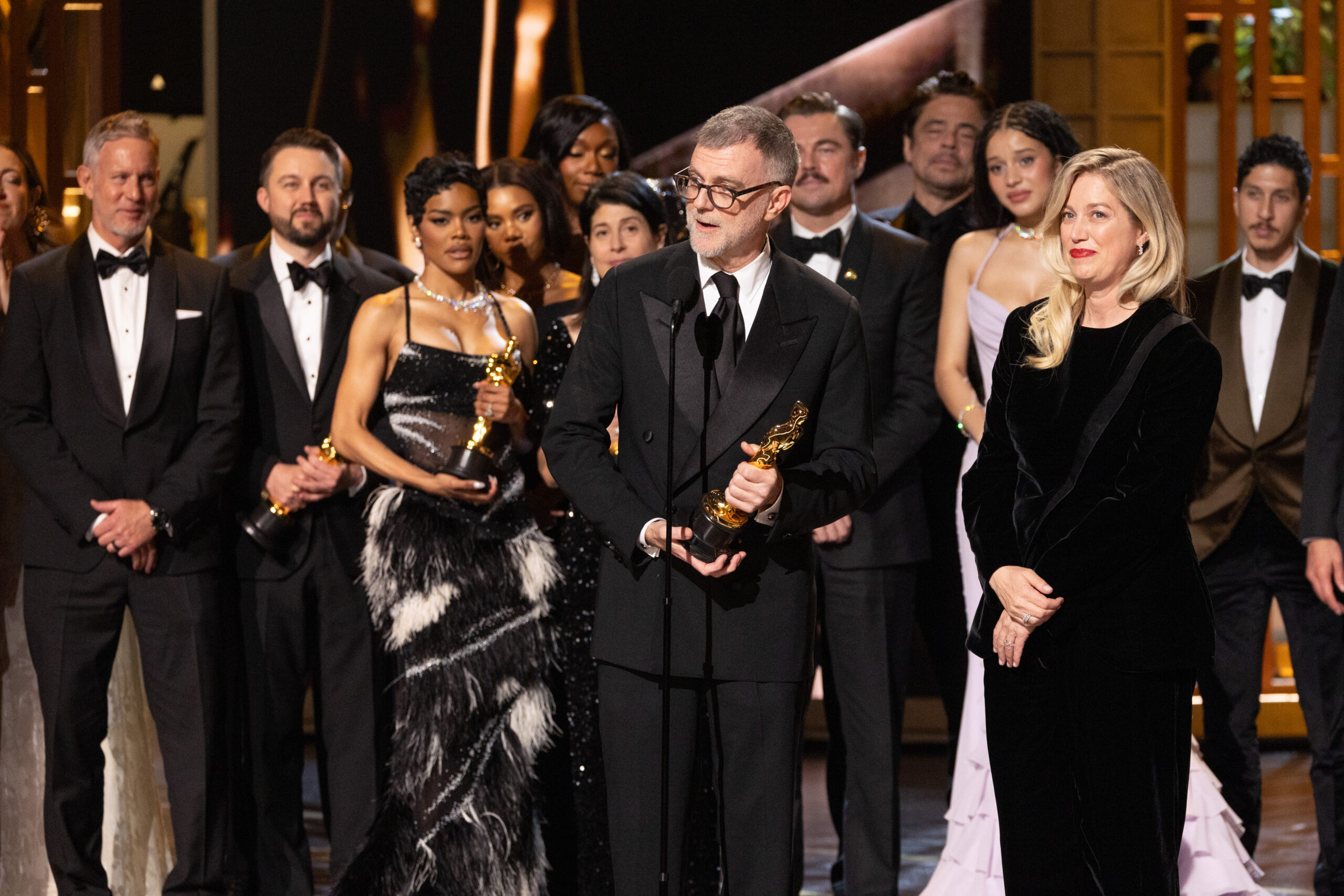
Both the Academy Award voters and I agreed that Paul Thomas Anderson’s epic “One Battle After Another” deserved the award of Best Picture this year. It is rare for a movie to feel both ambitious and fully controlled from beginning to end, but this one does exactly that. It is just as rare for a political drama to be so humorous and to feel so applicable to our modern day while seeming timeless. The writing is excellent, and the editing keeps every scene moving with purpose.
The thrilling spectacle of “One Battle After Another” never wastes a moment trying to convince the audience of its own importance. It simply works.
Even if “Sinners” may ultimately stand the test of time as the more culturally significant and talked about movie of the year, “One Battle After Another” feels like the strongest and most complete film, making it the correct choice by the Oscars. Sinners deserves all the respect it has earned, but “One Battle After Another” is one of those movies I will rewatch for the rest of time.
“Sinners”
Near the top of my list is “Sinners,” which seemed to be the fan favorite going into this awards season. It has the feeling of a film that will continue growing in reputation over time and likely become one of the defining movies of 2025.
Michael B. Jordan winning his first Academy Award for Best Actor felt surprising at the very least, but it seems near impossible to root for his sheer charisma for the craft. Director Ryan Coogler also continues to prove himself as one of the most dependable directors working today. Their collaborations as an actor and director duo have reached a point where it feels automatic that whatever they produce will be talk of the town. For a film titled “Sinners,” the only real offense here is making greatness look like routine.
“Marty Supreme”
“Marty Supreme” comes next largely because, even though I did not enjoy it as much as previous works from director Josh Safdie, it remains difficult to ignore the dorky brilliance of Timothée Chalamet’s career thus far. He increasingly feels like this generation’s Leonardo DiCaprio: constantly making ambitious choices, constantly appearing in major films and constantly remaining near Oscar recognition without fully breaking through.
Chalamet’s latest loss continues that pattern. Whether that reflects voter hesitation about recognizing him as a serious dramatic actor or outside controversy affecting perception, his presence remains one of the strongest reasons to pay attention to the film even if he blocked his own shot at the award.
“Bugonia”
One of the biggest snubs of this year’s Academy Awards was the omission of Jesse Plemons from the Best Actor category for his performance in “Bugonia.” Year after year, he seems to give outstanding performances, and this certainly should have been his year to shine, even if it was just through a nomination.
My main criticism with “Bugonia” is that the film feels shorter than it should be. The headspace and environment in which the film creates is one I want explored much further, and the ending left me feeling like there was much more to be said. A longer runtime could have allowed it to become more immersive and ultimately more memorable, but this film ultimately alienates itself as a go-to recommendation.
“Hamnet”
“Hamnet” succeeds almost entirely on performance. It is a slow and quiet film, one that is borderline uneventful for long stretches, but Jessie Buckley completely changes that with what certainly was the best lead actress performance of the year. The fact that the Oscars and the larger awards circuit recognized her work felt deserved albeit expected. Alongside Paul Mescal, she gives the film emotional weight that the pacing alone could not create. The scenery is beautiful and the story is touching, but the performances here command the frame.
“F1”
The racing blockbuster “F1” starring Brad Pitt feels like it was thrown into the Best Picture race in order to hit the 10-film quota for the category, but that is not to say that there are not things to enjoy about the movie. In fact, its Sound Design win was one of the easier Oscar decisions to agree with this year because the technical work is clearly the film’s strongest element. Whether seen in theaters or at home, the sound consistently stands out.
Brad Pitt, however, gives a performance that never fully commits. He often seems caught between effortless charisma and complete emotional detachment, and too often the result feels closer to the latter. Kerry Condon ends up being the strongest presence in the film, giving it energy whenever it starts to drift or drag.
“Train Dreams”
At the bottom of my Best Picture ranking is “Train Dreams,” a film that often felt like the definition of the term “Oscar-bait.” “Train Dreams” loves to lie in its own pretentious ways, always hinting at a textured meaning and depth that it never actually presents. It has all the visible qualities that usually attract awards attention: beautiful cinematography, carefully designed music and a serious tone that constantly suggests importance. Despite all of that, it never fully develops into something emotionally or intellectually substantial.
Joel Edgerton does strong work in the lead role and brings as much weight as possible to the material, but the film itself never breaks through its own surface. A longer runtime might have helped, but only if that extra time had been used to deepen what the film was trying to say rather than simply extending its atmosphere. As it tracks, I could not have imagined this winning Best Picture.