






























The Arabic Flagship freshman cohort at the University of Mississippi will no longer be traveling to Jordan over the summer as originally planned due to safety concerns because of the conflict between the United States, Israel and Iran. Instead, the freshman cohort will be joining the graduating seniors on a trip to Morocco.
Graduating seniors will stay in Morocco for their capstone year, but the freshmen will stay only over the summer. Both trips are mandatory to graduate from the Arabic Language Flagship Program.
The United States and Israel launched joint strikes against Iran on Feb. 28. Iran retaliated by firing missiles at U.S. military bases in Qatar, Kuwait and the United Arab Emirates. A two-week ceasefire with Iran was announced on April 7.
Due to rising conflict in the Middle East and uncertainty regarding when the U.S.-Israel-Iran conflict will conclude, the language flagship program will no longer fund a study abroad program in Jordan. The program receives partial funding from the U.S. Department of War.
Emma Lane, project coordinator for the Arabic Language Flagship program in the Department of Modern Languages, offered insight on the funding for the study abroad opportunity in Jordan and how it impacts students’ ability to travel there during the summer.
“It’s not that our students are banned from studying in Jordan. They just won’t receive the typical scholarship for students going to Jordan,” Lane said. “The flagship program in D.C. said scholarships can only be used for summer abroad in Morocco.”
Students who wish to travel to Jordan are allowed to, just not with scholarship money from the flagship headquarters.
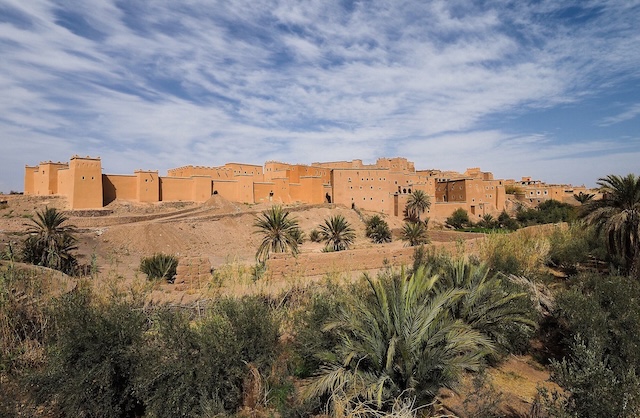
The language flagship will still fund the graduating senior Arabic students’ study abroad capstone year in Morocco, which is why Morocco is a summer abroad option for the freshmen cohort.
Daniel O’Sullivan, chair and professor of modern languages, said the university and language flagship staff want to give their students the opportunity to study abroad in Jordan, but the decision is not up to the university.
“We want to send students everywhere we can,” O’Sullivan said. “It’s just that world events, we have no control over them whatsoever, so we just have to wait and see the attitude. Ideally, we would like to take our students to Jordan.”
The continued conflict between the U.S., Israel and Iran has increased the travel advisory warning for countries such as Jordan. Travel advisory warnings come from the U.S. Department of State and range from one through four, with one being the safest and four being the most dangerous.
A level three travel advisory means that people should reconsider traveling there due to safety and security concerns. Before the conflict with Iran, Jordan was a level two. Morocco currently sits at a level two, which recommends travelers to exercise increased caution.
“It was just from a safety standpoint (that) Jordan was raised to a level three warning by the State Department,” Lane said. “While things on the ground are fine, there’s missiles going overhead, and sometimes missiles fall from the sky. Flights get canceled and a lot of other programs in Jordan that were there this spring had to evacuate.”
There are nine students in the Arabic flagship freshmen cohort that have the option to go to Morocco this summer. Keagan Rupp, a freshman Arabic and international studies major from Cottleville, Mo., plans to go to Morocco. He was disappointed but not surprised by the cancellation of the Jordan trip.
“I was disappointed because I was excited for many things in Jordan, like the desert and Petra, but Morocco still sounded exciting,” Rupp said. “My expectations didn’t really change, but it definitely serves a purpose in teaching us that nothing is absolute, and the world and politics play a large role in our area of study.”