

























The House v. NCAA settlement, which ends three federal lawsuits claiming the NCAA was illegally limiting the earning power of college athletes, has been finalized. U.S. District Judge Claudia Wilken approved the settlement on June 6. Athletic departments can now directly pay athletes, and a firm is now overseeing NIL deals. Despite the approval, two major issues remain and could require further litigation: Title IX implications and employment status.
“I think we’re kind of right where we thought we would be,” Keith Carter, vice chancellor for intercollegiate athletics at the University of Mississippi, said in an interview with The Daily Mississippian. “The goal was to get the settlement approved. We knew there were going to be some Title IX things to work through, and obviously the employment status issue. So I think those are still the two main topics.”
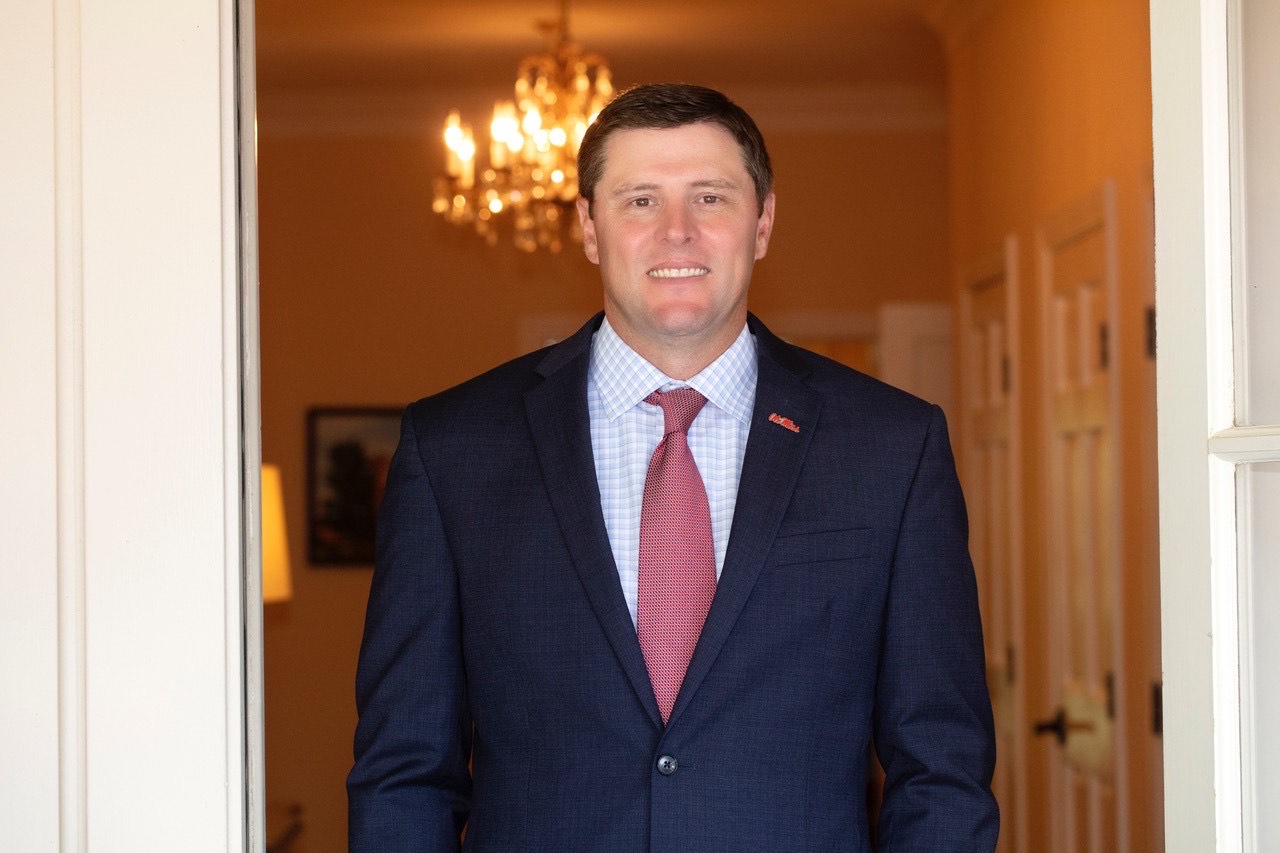
The 119-year-old NCAA has limited power in the post-House era. It has essentially been replaced by the College Sports Commission (CSC), an organization that rules over college athlete compensation that is led by Bryan Seeley. However, an NCAA-friendly bill, the SCORE Act, has been introduced in Congress to give the NCAA more power
Title IX and women’s college sports
The House v. NCAA settlement did not address Title IX implications on NIL or revenue sharing. Universities are not legally required to divide revenue share between women’s and men’s sports.
While Title IX, a federal law that prohibits discrimination based on sex, still applies across college sports, its impact on the post-settlement era is still unknown.
Women’s sports are on the rise. In 2022, the Women’s NCAA Basketball championship game drew 4.85 million viewers and the 2024 championship between Caitlin Clark’s Iowa and South Carolina drew 18.5 million. Even in the post-Clark era, women’s basketball viewership is up from prior years, as the 2025 championship between Connecticut and South Carolina drew over 8 million viewers.
The gap in general fan interest between women’s and men’s sports is shrinking, but women’s college sports could be in trouble financially.
“The gap had been closed dramatically, as evidenced by Caitlin Clark’s NCAA run,” ESPN personality Paul Finebaum said in an interview with The Daily Mississippian. “But I think we’re right back to where we started because I was interviewing the commissioner of the SEC the other day, and he defended women’s sports. But he also talked about the reality — and the reality is that, and nobody wants to say this out loud: women’s sports don’t make money, and we now live in a world where you have to make money.”
The House settlement established the College Sports Commission, which is designed to oversee “the new system that allows schools to share revenue directly with student-athletes and ensures that NIL (name, image and likeness) deals made with student-athletes are fair and comply with the rules.”
In theory, the CSC now has the power to help women’s sports by ensuring that women get fair treatment in NIL and revenue sharing.
“In reality, I don’t think (the CSC) can do anything (to ensure that women’s sports are getting equal treatment),” Finebaum said. “They’ll issue a lot of manifestos. They’ll sound like somebody in Congress. I think we’re at a tipping point with women’s athletics. I think there’s so much popularity. I do believe that is in women’s sports’ favor. I just don’t know how they’re going to address the financial part of it because even the most successful women’s programs in the country lose money.”
The CSC got off to a tough start. It distributed a memo to Division I athletic directors to offer guidance on NIL deals in July but quickly rescinded and revised the memo before issuing a second one three weeks later.
Brennan Berg, an associate professor and director of the sport and recreation administration program at UM, weighed in on the CSC’s actions so far.
“It wasn’t a good look for them to issue one of (its) first public statements about what is a valid business purpose (and) what is a legitimate NIL activity,” Berg said. “And then they quickly had to retract that when people threatened to bring litigation against them.”
In the final days of the Biden Administration, the president issued a nine-page guide on NIL compensation regarding Title IX. However, in February, the Department of Education’s Office for Civil Rights in the Trump Administration rescinded that guidance.
“The NIL guidance rammed through by the Biden Administration in its final days is overly burdensome, profoundly unfair,” acting Assistant Secretary for Civil Rights Craig Trainor said in a memo. “Without credible legal justification, the Biden Administration claimed that NIL agreements between schools and student-athletes are akin to financial aid and must, therefore, be proportionately distributed between male and female athletes under Title IX. …Title IX says nothing about how revenue-generating athletics programs should allocate compensation among student-athletes.”
While Title IX does not say anything about revenue sharing, student-athletes could file lawsuits regarding disproportionate distribution of funds.
“I don’t know where we go here because I think as one lawsuit ends, I think we’re about to see a myriad of Title IX lawsuits,” Finebaum said.
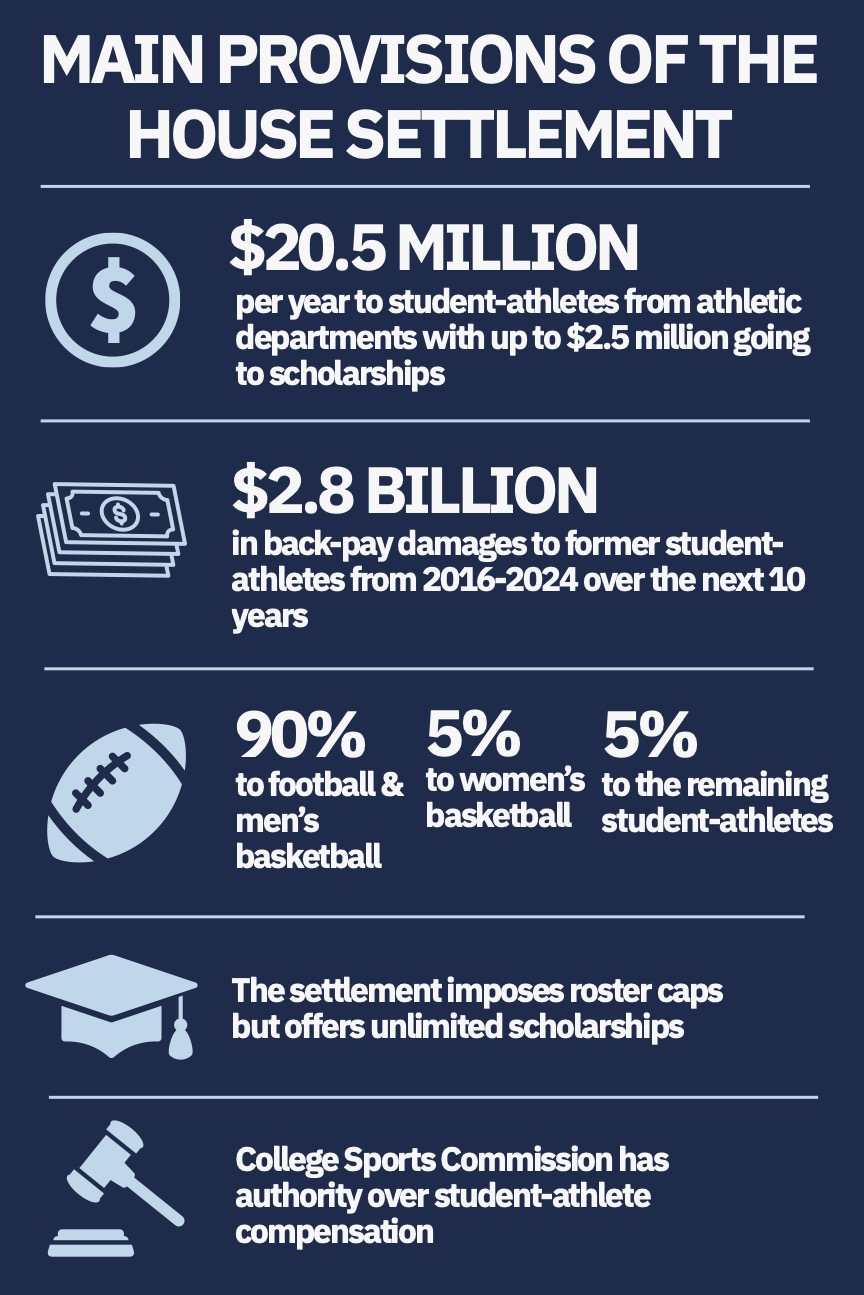
As part of the House v. NCAA settlement, athletic departments can now pay student-athletes up to $20.5 million. Additionally, the NCAA and Power Five conferences will give $2.8 billion in back pay damages to athletes dating back to 2016 over the next 10 years. However, just five days after the settlement was finalized, legal challenges were made to the back pay issue and it is on pause until they are sorted out.
The NCAA and major conferences were set to distribute 90% of the $2.8 billion to football and men’s basketball student-athletes at Power Five schools that competed between June 15, 2016, and Sept. 15, 2024. Five percent will go to women’s basketball student-athletes and the last 5% will go to all remaining student-athletes.
Eight female student-athletes filed an appeal on June 11 that the back pay damages portion of the settlement violates Title IX. While on appeal, back pay will not be granted.
Notably, the judge of the House v. NCAA settlement determined that the case had nothing to do with Title IX, but the door was left open to future challenges.
Women’s college sports issues do not stop at Title IX implications on NIL or revenue sharing. While the gap in popularity between women’s and men’s sports has been smaller over the past few years, unequal treatment persists.
People with opposing views may say that women’s teams earn less than men’s to justify funding discrepancies, though there is no concrete evidence to confirm this.
“Critics often note that women’s teams earn less than men’s to justify funding discrepancies,” contributor Halle Young said in an article for Bold.com. “Yet, the Department of Education data shows that revenue matches expenses for both men’s and women’s teams.”
The Women’s Sports Foundation estimates that 80%-90% of all educational institutions are not in compliance with Title IX as it applies to athletics.
“We certainly do (comply with Title IX) from a balancing perspective,” Carter said. “That’s a federal mandate. If you want Title IX funding for your institution, you have to do that … but certainly from a scholarship and aid balancing (perspective), we all have to adhere to Title IX regulations.”
Jennifer Saxon, executive associate athletic director at Ole Miss, oversees the human resources department within athletics and is the senior women’s administrator.
“So Title IX is reviewed in three areas,” Saxon said. “The three prong test … the first of those being your participation numbers, so your male student-athlete population to your female student-athlete population.”
Those numbers are measured against the university’s population. Since Ole Miss is predominantly female, they work with an outside counsel to ensure their numbers are in alignment.
“The second prong focuses on … additional sports interests,” Saxon said. “The last is interest in abilities and accommodations. What are students interested in? Are those sports that we need to be looking at adding?”
Even with all the challenges facing women’s sports and questions about Title IX, the Ole Miss Athletic Department has people in place to ensure women’s sports are treated fairly.
“I know Dr. Jennifer Saxon, who works very closely with (Title IX),” Carter said. “We have an outside legal consultant that helps us with our Title IX questions and (makes) sure that we’re balanced and where we need to be. … We certainly want to do it the right way here.”
Employment status
Student-athlete employment status has been a long-time conversation in college sports. By profiling players as “student-athletes,” the NCAA exempts universities from paying wages, giving benefits to players and recognizing union rights.
The U.S. Court of Appeals for the third circuit ruled on July 11, 2024, that athletes could be considered employees under the Fair Labor Standards Act (FLSA) when they “perform services for another party; do so necessarily and primarily for the other party’s benefit; are under that party’s control or right of control; and receive express or implied compensation or in-kind benefits.”
The court rejected the NCAA’s amateurism defense and emphasized the control that universities exert over student-athletes schedules, training and financial contributions to their institutions.
The FLSA establishes a federal minimum wage and overtime pay requirements for most private and public sector employees. Under this act, an employee is defined as “any individual employed by an employer,” with “employ” defined as “to suffer or permit to work.”
“College athletic leaders have been adamantly opposed to (recognizing student-athletes as employees) for the most part,” Berg said. “But at the same time, you have college football coaches coming out and even saying, ‘Well, we should just treat them like employees.’”
The Trump Administration is against employment status of college athletes, while the Biden Administration supported it. Berg believes political instability will leave the issue unsettled in the near future.
Recent trends have signaled increasing support for employment status of collegiate athletes, but this could come at a cost to non-revenue sports and Division III programs.
With the current revenue share system, from the House v. NCAA settlement, a portion of up to $20.5 million is dispersed among athletic programs, with football receiving the most money at Ole Miss.
If athletes are deemed employees, student-athletes from all levels of college athletics — from Division I football to Division III tennis — could receive wages. That could lead to program cuts at lower levels.
According to UM law professor Ronald Rychlak, universities would not be required to pay wages. They could opt out; however, they would fall behind other schools and not be competitive.
If colleges pay wages to student-athletes, the SEC and Big 10 could further separate themselves. They would be able to pay the maximum amount of money to athletes that is allowed under the House v. NCAA settlement.
Unionization is a perk of employment status, which means athletes could bargain for better wages, benefits and working conditions. A good example of a union in sports is the National Football League Players Association (NFLPA).
There are significantly more student-athletes and college teams than in the professional ranks, which could cause problems with unionizing.
Whether or not employment status comes to college sports, a collective bargaining agreement (CBA) is likely. A CBA is a contract between an employer, like the NFL, and a labor union, like the National Football League Players Association.
“I’m not sure which would come first (employment status or a CBA),” Berg said. “I definitely think collective bargaining will happen at some point in the future, because you can either take that part of collective bargaining or you can just continue to deal with litigation after litigation for the foreseeable future.”
A CBA could prevent further lawsuits against the NCAA, but it also could further push the agenda of student-athlete employment status in the long term because a CBA is linked to employment.
CBAs are not permanent contracts; they have expiration dates. Once the CBA expires, players and the NCAA would need to collaborate to create a new agreement.
The SCORE Act
The SCORE (Student Compensation and Opportunity through Rights and Endorsements) Act is a bill introduced in the U.S. House. The act sets rules regarding the student-first model, specifically student fees like Tennessee’s “talent fee” or Clemson’s “athletic fee” and how transferring regulations will be set for athletes. Additionally, it would give the NCAA limited antitrust immunity.
“As we think about our work with Congress, we want a future where we have national standards,” SEC Commissioner Greg Sankey said recently at SEC Football Media Day. “We’re able to play national championships on an equitable basis and support healthy economic opportunities for student-athletes, but I think the bipartisan effort represents an indication that college athletics, just as it does in football stadiums every Saturday, can bring people together for conversation. And we hope for the restoration of national standards for college athletics on the topic of eligibility.”
Supporters of the bill believe that while athletes attend college to play a certain sport, their first priority should be to advance their education and prepare themselves for their lives after sports.
The bill requires all colleges to provide student-athletes with access to academic and career counseling. This education-first approach would mean that student-athletes would continue to be considered students rather than employees. It also ensures that student-athletes will not have the opportunity to unionize.
On July 16, the Subcommittee on Commerce, Manufacturing and Trade voted to advance the SCORE Act with a party-line vote, 12-11. While the bill advanced to the full House, passing it will be a challenge.
“First, the bill entrenches the NCAA’s authority at a time when the NCAA’s governance structure is becoming increasingly dominated by wealthier conferences,” Sen. Maria Cantwell (D-Wash.) and Rep. Michael Baumgartner (R-Wash.) said in a letter to subcommittee Chairman Gus Bilirakis and ranking member Jan Schakowsky. “The SCORE Act hands the NCAA unfettered ability to set rules that would make the rich schools richer, like representation on NCAA championship selection committees – and the tournament revenue that comes with it.”
Currently, all colleges are allowed to use regular student fees, typically a portion of a student’s tuition, to boost their athletic programs. This gives large schools a competitive advantage over smaller ones with fewer students and less money.
The SCORE Act would prevent this by requiring universities to publicize how they are using student fees to fund their athletic programs. No schools will be allowed to use the fees to fund any sort of payment made toward an individual athlete from the school.
Finally, the SCORE Act addresses the transfer portal. Currently, athletes can transfer as many times as they want without any penalty. Under the SCORE Act, a college athlete would have one opportunity to transfer to a school and be automatically eligible to play. The act also provides a way for the credits of transferring student-athletes to automatically transfer into their new school.
Critics argue that a major issue with the SCORE Act is an increase in government involvement in college sports.
“I’m torn because I think that (Congress) seems to be where the answer has to come from,” Rychlak said. “And yet, I don’t know, A, that I want Congress messing with my sports, and, B, I don’t know that Congress should be spending time messing with sports when there are enough other huge issues going on in the world.”
The SCORE Act would provide the NCAA more authority to create rules regarding transfers, including eligibility and recruitment, powers they currently do not have.
The SCORE Act is just one example of legislative and judiciary issues that are likely to arise despite the House settlement over the next few years, leaving the future landscape of collegiate athletics uncertain.