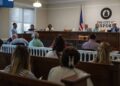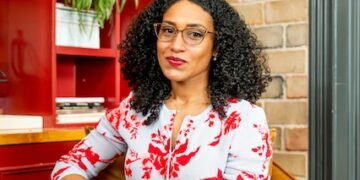








Commissioner Anna Gomez of the Federal Communications Commission (FCC) spoke at an event on Thursday hosted by the Overby Center for Southern Journalism & Politics. The event served as part of her “First Amendment Tour,” on which she discusses her views on free speech and the current status of the FCC in the era of President Donald Trump.
“I am visiting colleges (and) community centers. I’m doing all sorts of different events throughout the country … because I think it’s important for me to visit different communities, to have people understand that their First Amendment (guarantee to free speech) rights are actually being violated almost every day by this administration, and we need people to speak up and push back,” Gomez said.
Gomez explained that the FCC’s mission is to provide licensing and resources to broadcasters.
“The reason we license broadcasters is because they use the airwaves which we manage, and as part of the licensing of those airwaves, the broadcasters do have some obligations. One of them is to serve their local communities and to offer them a diversity of viewpoints, not just by an individual broadcaster but by having multiple broadcasters that can enable that diversity,” Gomez said. “Our job is to ensure that we provide the resources they need and to ensure that there is plenty of competition so that consumers get the value of those free licenses.”
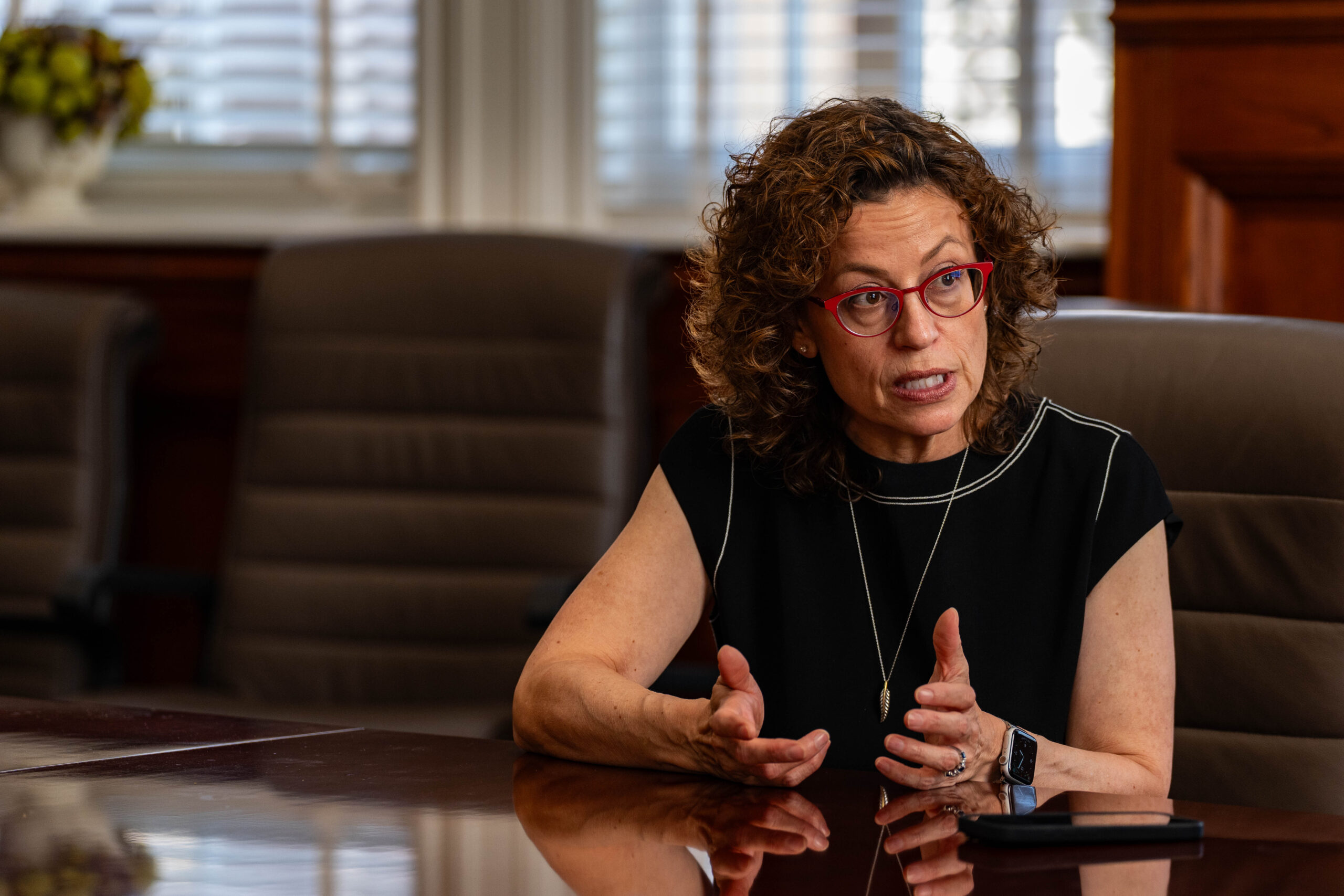
As the sole Democrat on the current three commissioner panel, Gomez has a limited say in what the commission pursues. Instead of promoting a diversity of viewpoints, Gomez said the two Republican FCC commissioners have led efforts to censor other viewpoints via threats and investigations.
“The FCC has been weaponized by this administration, and it is doing so by initiating investigations against broadcasters because of the content of their news and also threatening broadcasters because of content that they don’t like, such as the Jimmy Kimmel Show, which is completely contrary to the First Amendment,” Gomez said.
Gomez elaborated further.
“But it’s the threats and the investigations that are the point, because if this ever got to some final action by the commission, the courts would reverse the commission because it’s antithetical to the First Amendment to go after broadcasters for their lawful broadcasts and for the news editorial decisions,” Gomez said.
Even though these threats would not stand in a court of law due to First Amendment protections, they have created an environment of fear and extraordinary caution for broadcasters that sometimes involves self-censorship.
“What’s happening is this administration is threatening broadcasters. It’s threatening individual reporters, and their corporate parents are capitulating because this weaponization of the licensing authority threatens their bottom line, and they are prioritizing their bottom line over our democracy,” Gomez said. “Our job is not to censor their content.”
The FCC has been engaging in what Gomez describes as “sham phishing investigations,” or what Gomez explained as investigations undertaken by the FCC against broadcasters like NPR without specific incidents. The FCC then loops Congressional representatives into these investigations with the hope that they then decide to seek further funding cuts.
“The FCC initiated sham phishing expeditions against public broadcasters in order to give Congress another reason to defund them, and sadly, Congress has defunded public media, and what’s so worrisome about that is that communities are going to lose a very important voice. We are seeing news deserts now because newspapers are closing shop. We are seeing major consolidation of local broadcasters, which is going to lead to the nationalization of news where you have corporate behemoths dictating how local broadcasters can broadcast. So, we lose a voice that’s really important in communities if we lose local public media,” Gomez said.
Gomez emphasized that losing public media can also have life-altering effects in emergency situations.
“I don’t know if you’re aware of this, but (public media can) provide the infrastructure for getting emergency alerts out in communities. If we lose that, we’re losing an important public safety feature in times of emergencies,” Gomez said. “If there’s a tornado, if there’s a hurricane, if there’s a wildfire, it is public media that’s out there telling either radio listeners or TV viewers how to react. So the FCC needs to stop these sham investigations, and it needs to continue to support the public broadcasters.”
Seeking to raise awareness about the threats public media is facing on account of the FCC, Gomez took to the stage at the Overby Center to deliver remarks and field questions sent in from those in the audience and online.
“The duty to defend the First Amendment does not rest just with the government but with all of us. When corporations surrender in the face of government pressure, they endanger not just themselves, but the right to free expression for everyone in this country. That’s why I’ve repeatedly asked companies, journalists, elected leaders and citizens alike to stand up and to speak out,” Gomez said in her remarks.
Executive Director for the Jordan Center for Journalism Advocacy and Innovation Steve Herman believes that it was important for Gomez to deliver her message to the university, as it aligns with the center’s mission.
“What we’re trying to do is figure out a way forward for journalism in this country, and also to speak up for good journalism, because it’s under attack,” Herman said. “The criticism is coming from both the left and the right, and people distrust at record numbers now the media, especially journalism. We need to figure out why that distrust is so high, and the technology is changing. I suspect that most people that will read this article or look at it online are not getting their news and information these days from old fashioned television and radio.”
Herman hopes to get more important figures to come to UM to discuss their viewpoints — maybe even another FCC commissioner.
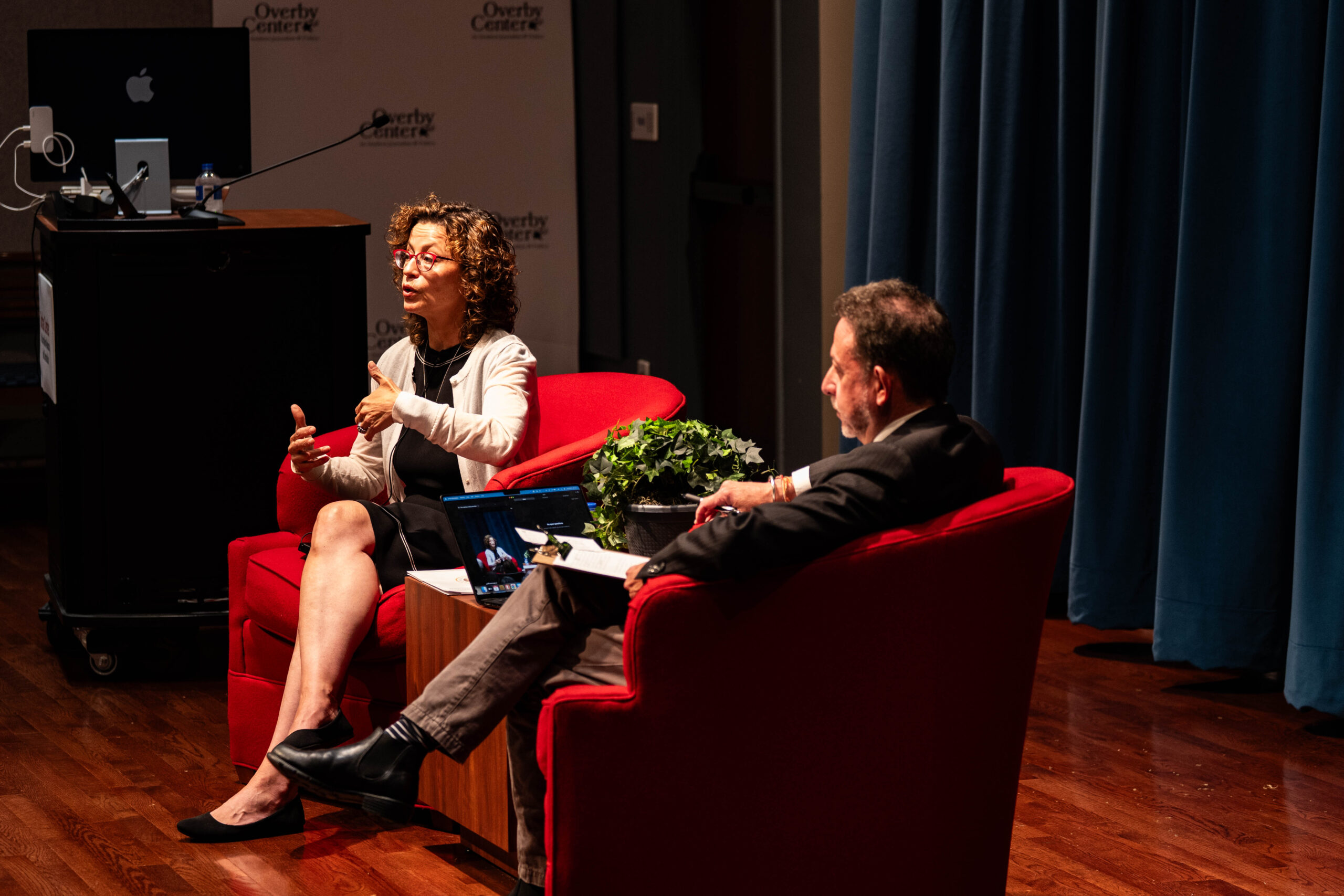
“I’d love to have one of the other two commissioners of the FCC down here who will have a decidedly different partisan point of view on things. What I hope that students and faculty and staff and members of the public that attended today do take away is the importance of the FCC, what it does, what it does not do that according to the guests we had today, that it is being politicized. I’m sure that the Republican commissioners would say the same thing about the Democratic Party commissioner on the FCC, but also that they have a little bit of understanding of what’s going on with the technology, from the questions from the audience,” Herman said.
Junior history major William Wheeler thought that Gomez’s remarks illuminated his understanding of the importance of the FCC and that it was important for her to deliver her message.
“I thought that it was just a good point of view, especially from someone in such a high position, from the Federal Communications Committee to give her perspective on what’s been happening recently,” Wheeler said. “I thought it was very crucial for people to understand what’s happening and what are some ways we can fix this, and how people can gain a greater understanding of why (censoring free speech is) not a good thing.”
Freshman psychology major Aziza Darwish thought it was important for her to be informed, as well.
“I’ve always been very active about our freedom of speech and being able to advocate for our rights and for what we believe in. And when I saw the poster about her talking about our democratic values and the First Amendment, especially within the time that we’re in right now, I thought it was very important for me to be informed and to attend the event,” Darwish said.
Gomez’s remarks made Darwish realize that she can be active in helping uphold the First Amendment as well.
“It opened my eyes as to how I should be doing more. Even though I am doing what I can, I should still be pushing towards that freedom of speech and for us to be able to fulfill those rights within our First Amendment,” Darwish said.
Gomez, for her part, encouraged student journalists to continue their work and to understand their importance in upholding the First Amendment.
“The most important thing that I would like students in journalism to understand is that you are the bulwark of our democracy. You are the fourth estate, and so, therefore, learn your journalistic ethics, report the facts and don’t be afraid to push back because, like any bully, bullies respond to pushback, like Disney did with Jimmy Kimmel, like the corporate parents of the local broadcasters did when they finally stopped preempting it because consumers pushed back,” Gomez said. “But you are the fourth estate. You hold power to account. Reporting on the facts serves your communities. Don’t stop. If you push back against a bully, they do stop. If you capitulate to a bully, they come back for more.”