





























Ole Miss Athletics announced Marlon Bailey as the new associate athletics director for sports psychology last month.
“I inherited a program built by a passionate clinician who cared deeply about the athletes,” Bailey said. “I share that same passion, but I’ve also brought my own ideas and ways of doing things. I’ve been excited to implement new approaches that reflect my background and skills. We’ve already started introducing some changes that I think will make our program stronger and more holistic.”
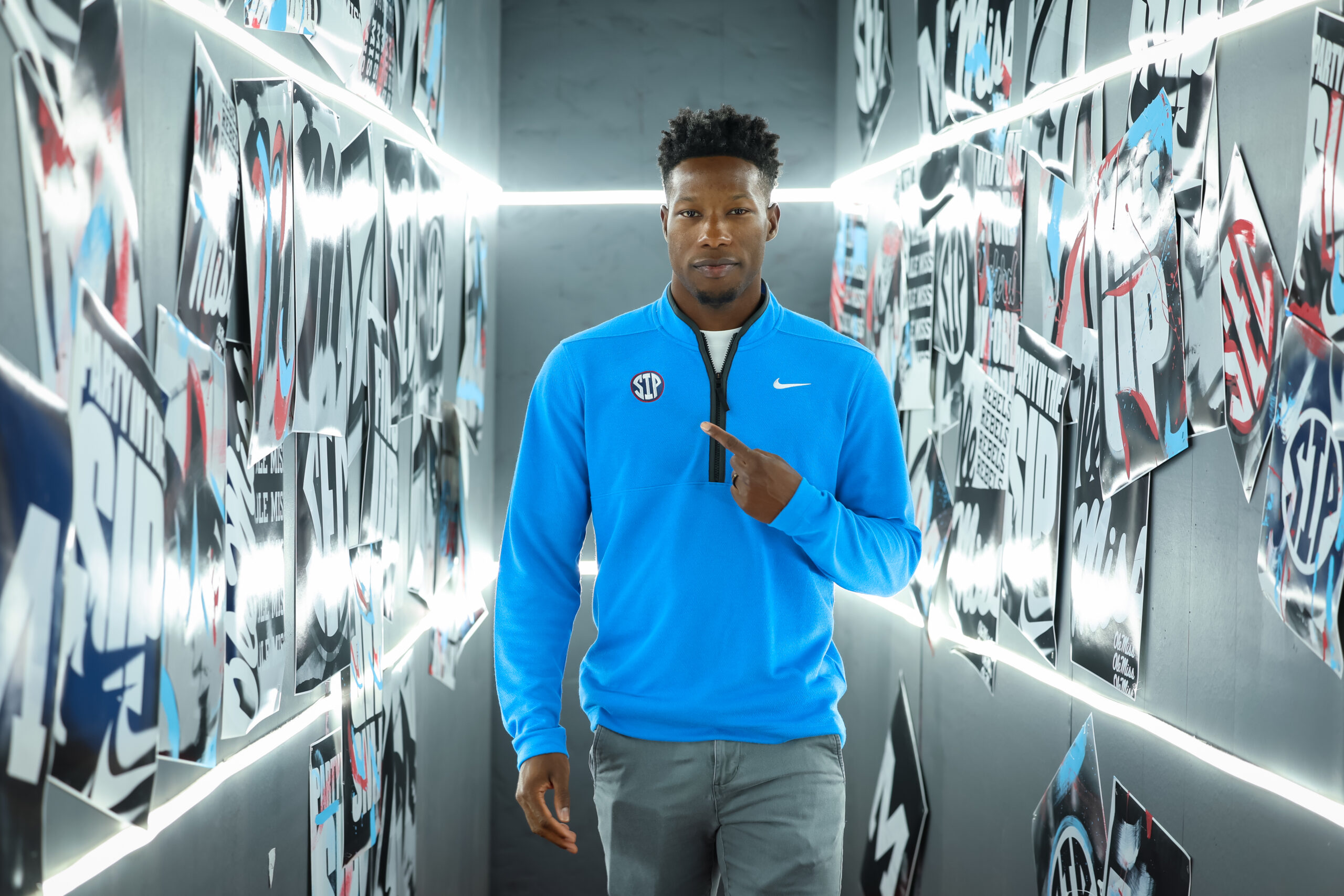
The core of Bailey’s job is to serve athletes. Bailey and his team provide mental health and performance services to student-athletes in an attempt to create a culture where athletes have the tools to succeed both on and off the field.
Bailey earned his bachelor’s degree in psychology, master’s degree of science in social work and doctorate in counseling psychology at the University of Texas. Before coming to Oxford, he worked at Vanderbilt University, as well as Expansive Insight, a private practice that specializes in a variety of mental health measures.
Ole Miss has steadily developed a strong support network within sports psychology. Including Bailey, three clinicians are currently on staff, and another will begin work soon. All are trained mental health practitioners who are also pursuing performance certifications, which allows the team to work in clinical and athletic performance settings.
Student-athletes face stressors like performance expectations, academics, social pressures and family responsibilities. Sports psychology clinicians lead appointments, performance sessions and annual mental health screening with every student-athlete to improve their ability to handle daily stressors.
Though Bailey and his team almost always work directly with student-athletes, they also consult with coaches and staff to optimize team performance and overall well-being within each program.
Bailey hopes to build on what is already in place while expanding resources and adding approaches to better serve student-athletes in every sport. He has been working in Oxford for only a few weeks, but he has already noticed stark differences between the University of Mississippi and other universities.
“I’ve worked at bigger and smaller places, but this place has a unique energy. People here are proud that it’s like nowhere else,” Bailey said.
He highlighted the athletic culture in particular.
“Athletically, Ole Miss consistently punches above its weight. For a school of this size, in this location, the success is impressive,” Bailey said. “That ‘never count us out’ mentality really resonates with me personally. It’s part of why I love being here.”
Another key aspect of Bailey’s approach is understanding that no two teams are the same. With more than a dozen varsity programs at Ole Miss, each with its own identity and dynamics, his team focuses on addressing issues on a case-by-case basis.
“It’s all about collaboration,” Bailey said. “We don’t come in and dictate, we work with coaches and athletes to support what they’re already doing. Sometimes that means helping to create a new skill or tool. Other times, it’s helping athletes navigate relationships with teammates or coaches.”
Bailey emphasized that every team has its own culture, and his staff adapts to those unique environments while reinforcing shared goals of growth and performance.
“I focus on meeting athletes where they are, while being fully myself,” Bailey said. “There’s a clinical concept called ‘use of self,’ which means my presence and authenticity are tools in the therapeutic process.”
For Bailey, human-to-human connection with his clients is essential to his practice.
“A big part of it is just being a normal human. Not every conversation I have is about mental health or even sports,” Bailey said. “When athletes see me as a full person, not just ‘the mental health guy,’ it lowers barriers. Mental health shouldn’t be treated differently than anything else. Some people naturally experience less emotional stress — that’s great for them, but their experience isn’t universal. We work to push back against that ‘just tough it out’ narrative.”
Bailey aims to make Ole Miss the model for how sports psychology should look — clinicians trained in both clinical care and performance, operating in an environment where mental health check-ins are viewed as indispensable.
Editor’s note: A previous draft of this article said that Bailey viewed his clients as friends. This version now reflects that Bailey maintains a professional relationship with his clients.