































The 2026 SEC football season will be the first season with the conference’s new nine-game schedule policy. Not only are all SEC teams required to have nine conference games, they must also play a team from the ACC, Big 10, Big 12 or Notre Dame. The goal is to give more SEC teams a better shot at making the College Football Playoff.
According to the SEC website, “The College Football Playoff has adjusted its schedule strength metric to apply greater weight to games against strong opponents. An additional metric rewards teams for defeating high-quality opponents while minimizing the penalty for losing to such a team.”
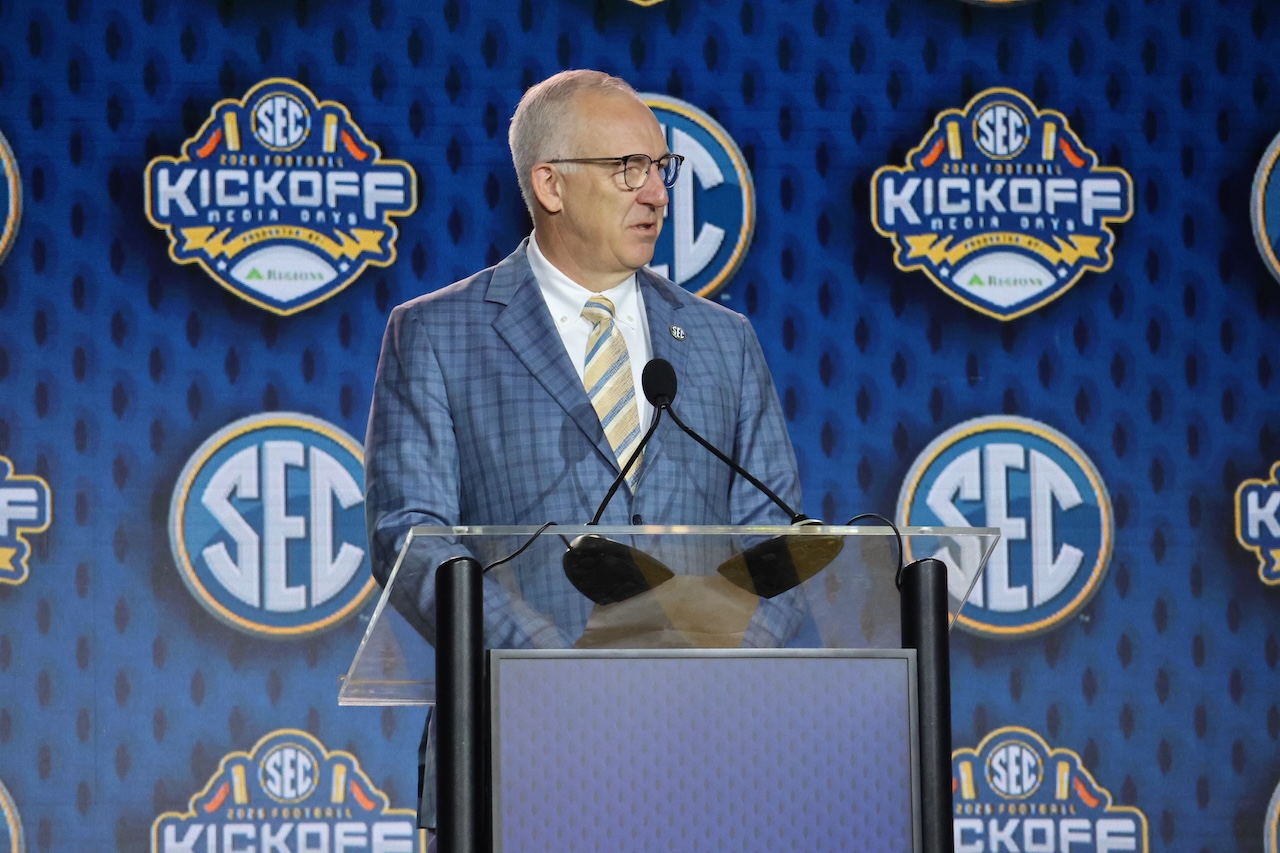
However, that may not be the result of the new rule. SEC Commissioner Greg Sankey spoke about the conversations the conference has had with the CFP regarding the schedule change.
“We had what I’ll call an unsatisfactory conversation with members of the College Football Playoff staff and some of their advisers in Destin (Fla.,),” Sankey said at SEC Media Day on Monday, July 20.
While facing more SEC teams improves the strength of schedules and gives teams the opportunity for more quality wins, it forces the conference teams to beat each other, allowing for more losses. A harder schedule, for even the best team in the country, can mean more losses.
Last year, before this policy was implemented, getting to the postseason was not the issue; winning in the postseason was. The SEC had five teams in the CFP: Ole Miss, Georgia, Alabama, Oklahoma and Texas A&M. Eleven SEC teams went to bowl games. Its teams went 4-10 in the postseason, including a 3-5 record in the CFP.
Not only did the Big 10, the SECs biggest rival, win the national championship, the conference also had the best bowl season record, 11-5. The ACC went 9-5 and sent a team to the national championship game.
The Big 10 went 2-1 against the SEC in the postseason, including Indiana’s 38-3 thrashing of Alabama.
SEC teams now have far and away the hardest schedules in the country. Sixteen of the top 20 hardest schedules belong to SEC teams, including the seven toughest. Ole Miss comes in at No. 5.
“I recognize that a nine-game Southeastern Conference football schedule, coupled with our expectation that we maintain a high-quality non-conference opponent, creates, without question, the most demanding sets of football schedules in all of college football,” Sankey said.
Other aims of the new schedule policy are to ensure competitive fairness, increase frequency of matchups with opponents and maintain traditional rivalries.
Sankey and the SEC have created an opportunity for their teams to win against top-tier teams … Ultimately, this rule may not have its intended effect, but it will result in even more must-watch SEC football games every Saturday in the fall.
“The nine-game schedule reflects confidence in our universities, our student-athletes and in our football programs,” Sankey said. “It preserves great rivalries, historic rivalries, many of which are played every year. It creates more compelling conference matchups and reinforces our long-standing commitment to competitive excellence.”