


























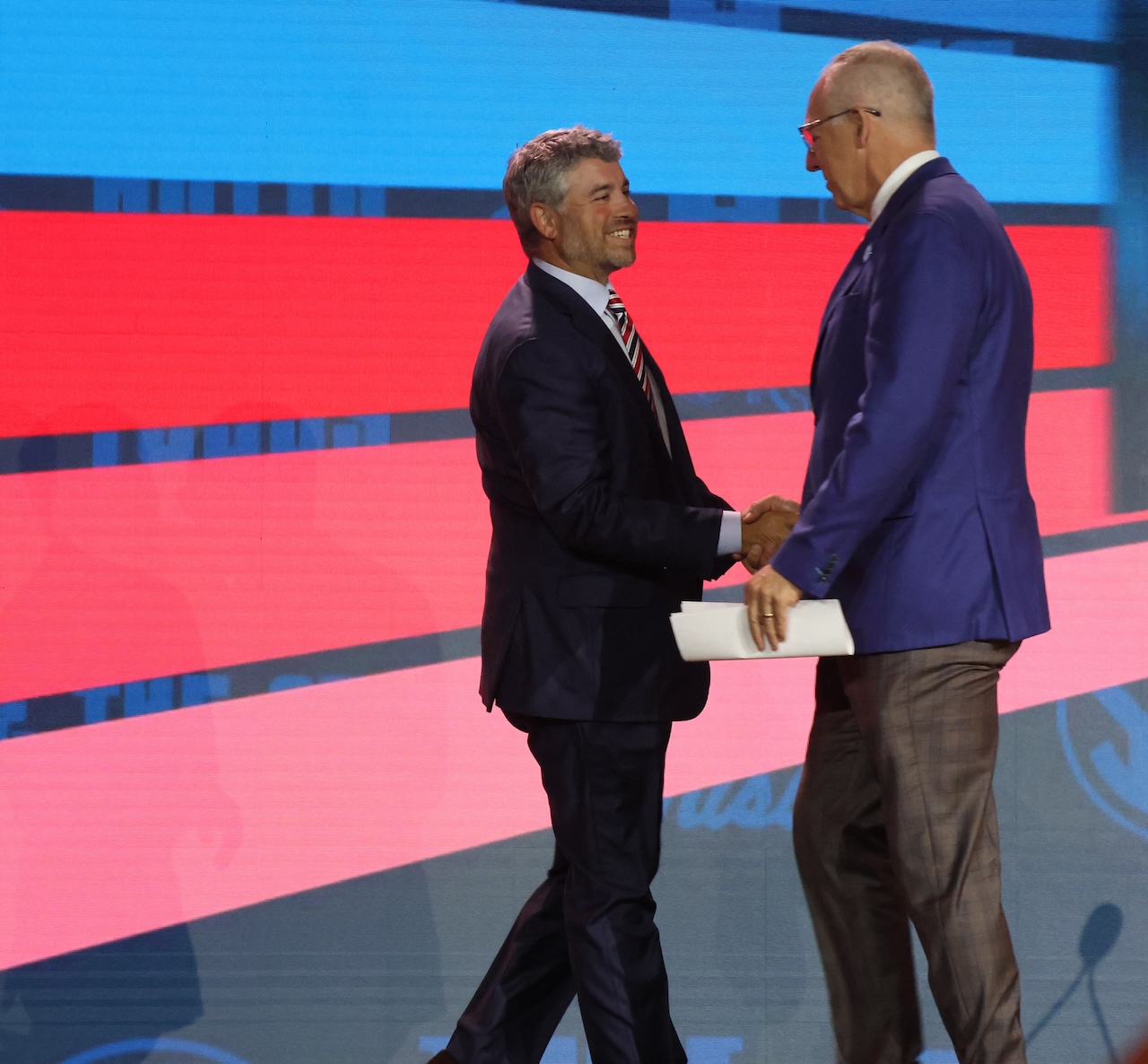
Last January, Ole Miss Football signed Luke Ferrelli, a transfer linebacker from California, who initially signed with Clemson out of the portal before flipping to Ole Miss. This sparked outrage from Clemson head football coach Dabo Swinney and led to an NCAA investigation into Ole Miss. Rebel head coach Pete Golding was asked about player tampering at SEC Media Days.
“We got a compliance department. They get paid to do their job. They do a really good job,” Golding said. “It’s our responsibility to recruit really good players, coach them extremely hard, get them ready to win football games, so we’re going to continue to recruit really good players in the high school market and the portal market and continue to do it how we’ve done it.”
Golding was asked how he would fix tampering. While he did not have an exact answer, he offered a different perspective.
“Let me put it to you this way: You’re a reporter. Would you quit your job before interviewing for another job or being offered another job? No. Nobody would,” Golding said. “We have a portal we can go in with a do-not-contact (tag and say) ‘I’m going to quit my job where I’m getting paid, and I’m going to go in saying I need a new job, which nobody can call me to interview.’”
The current landscape of college football gives athletes the responsibility to secure pay and opportunities that meet their expectations. Many athletes seek representation from agents. To Golding, this puts everyone in a bad position. Moreover, not even coaches are exempt from the effects of tampering.
“The model obviously has been broken. I’m all for everybody being on the same playing field and doing the same things,” Golding said. “I get it, but that’s in any job. Like coaches, we’re under contract. You don’t think other (athletic directors) are calling us during the year? Same ones that are b—hing about all this stuff are the same ones calling coaches to come to other schools, so it’s everywhere in every profession.”
The first-year head coach did not delve into details of the Ferrelli controversy with Clemson, but he believes Ole Miss followed the rules and did what the current landscape of the game allows.
“We go by the rules of the program and the flow. Like when you’re on the interstate and people are flying by you, what do you start doing? (Drive faster) or you’re going to get hit,” Golding said. “In this profession, you’re going to get fired … I think there are a lot of people doing an unbelievable job, Greg (Sankey) being one, to make sure everything is catching up. College football is always changing. Hopefully, we’ll all decide on what’s fair for everybody.”
Ultimately, tampering is just another chapter in the long, amoral history of college football recruiting.
“Let’s not act like recruiting in college football for the last 100 years is the most moral thing,” Golding said.