




























Nathan Oakes, the director of education and student programs at the Center for Practical Ethics (CPE), hosted this semester’s first “Just Conversations” on the evening of Monday, Sept. 22 in the gallery of Bryant Hall. The event presented students with two moral issues to discuss in small groups.
“We take the issues from the Ethics Bowl cases every year,” Oakes said. “It’s kind of like debate, but it’s ethics-based.”
The first case chosen centered on overtourism. Discussions focused on how it can impact communities and how tourism could be made beneficial for locals of said communities.
The second case was titled “Oh, SNAP!” and discussed the issue of using the Supplemental Nutrition Assistance Program (SNAP).
The issues were picked decisively to interact with the varying personal viewpoints of students.
“It’s weird to think of Oxford as a tourist destination, but it really kind of is on game days,” Oakes said. “Then, food stamps, in Mississippi in particular, that’s just a thing that impacts so many people.”
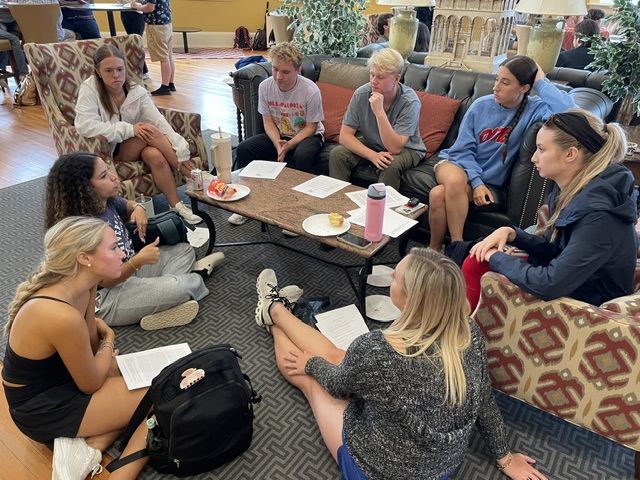
Photo courtesy Nathan Oakes
One of the ways facilitators helped students hear each other out on differing views was through a “linking activity” where facilitators linked students’ opinions to established ethical frameworks. Oakes said this activity is especially helpful for students who might be uneasy about an opinion expressed by someone at their table.
“(The activity) really helps them understand other people, to see it phrased in a way that has been refined,” Oakes said.
Events like these could make the exchange of ideas on campus less hostile and more productive. While this event is just a starting point, it still fills a need at a time where personal opinions have caused fractured relationships for some.
“There’s a lot of people on campus who are great people, who would be friends under normal circumstances, but sometimes ideology and viewpoints get in the way of that,” Oakes said.
No matter how controversial, opinions are deeply shaped by the things people hold close to their hearts. When facilitators break arguments down into personal ethics and values, it is hard for participants to find personal fault with someone at their table.
“Behind the sort of mean ways people can portray themselves, there’s almost always a reasonable person with a somewhat reasonable view,” Oakes said. “When you’re discussing important value-laden things with people, it’s important to not stay too superficial but try to dig down to those values.”